



NASA has launched a space rocket with the aim of searching for planets similar to Earth, where life could exist beyond our solar system.
The plan is to discover 20,000 new planets.
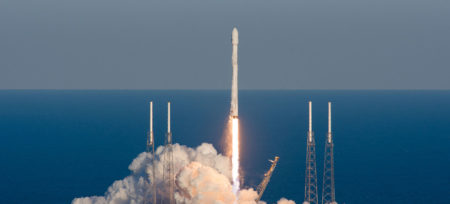
The satellite Tess – Transiting Exoplanet Survey Satellite – which will carry out the mission was launched from Florida in the USA with a Falcon 9 rocket from the private space company Space X.
The satellite, which cost the equivalent of 2.8 billion kronor and is the size of a washing machine, will search for light variations around stars. This could be a sign that planets are orbiting them.
The focus will be on planets within about 10 to 100 light-years away. The satellite is expected to discover 20,000 planets beyond our solar system, including over 50 Earth-sized planets and up to 500 smaller than twice the size of Earth.
Larger areas
The planets will then be studied with telescopes for signs that they are habitable: mountainous terrain, a size similar to Earth's, and a distance from the planet's sun that allows for the right temperature for water to exist.
“The stories about these plans will continue long after they are discovered,” says Martin Still, a researcher on the TESS project.
Tess will be able to search much larger areas than the Kepler telescope, which was launched in 2009. Both use the same planet-hunting system, to find the shadows that arise when the planet passes in front of its sun.
”All kinds of planets”
Kepler has found over 2,300 planets outside our solar system, but most were too far away or too faint to be investigated further.
“One of the many amazing things that Kepler showed us was that there are planets everywhere and that all kinds of planets are out there,” says Patricia Boyd, manager of the TESS program.
The first attempt to launch the Tess rocket was aborted two hours before liftoff on Monday. After a fine-tuning effort by SpaceX engineers, Wednesday night's launch was completed without a hitch. Less than ten minutes after liftoff, the rocket's first stage returned to an unmanned platform in the Atlantic Ocean.
Source: TT