



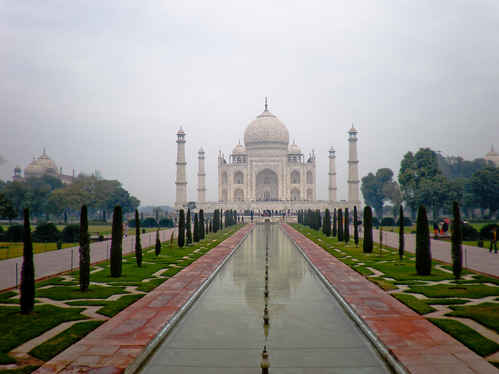
Travelers dreaming of visiting the Taj Mahal without the usual crowds around the domes were about to get a rare chance when the world-famous mausoleum was set to reopen.
But less than a day before the gates were to be opened again, the news came that they would continue to be closed due to the rampant spread of infection.
Starting Monday, India's most popular tourist attraction – also named one of the New Seven Wonders of the World – will reopen its doors after three and a half months of Covid closure.
At least that's what many believed. But on Sunday, after the government reported the highest daily number of new infections since January, the news came that it was now considered far too dangerous to reopen the Taj Mahal.
According to a document from local authorities in Agra, where the monument is located, in the densely populated state of Uttar Pradesh, the area is still a ”containment zone.” These zones are areas where many infections have been confirmed and where all but the most essential activities are stopped.
Other monuments in the area that were supposed to open on Monday also remain closed until further notice.
The mausoleum was built between 1632 and 1643 by the Mughal emperor Shah Jahan for his wife Mumtaz Mahal.
The government said on Sunday that another 24,850 new cases of infection were confirmed on Sunday, as well as 613 deaths. This brings India's total to 673,165 cases of infection and 19,268 deaths.
The idea, right up until Sunday, was that visitors to the Taj Mahal would enjoy significantly less congestion than normal. Instead of the normal 80,000 daily visitors, 5,000 tourists a day would be allowed in.
All monuments will be sanitized and visitors must wear masks and keep their distance from each other and the white marble of the mausoleum, India's tourism authority said via Twitter.
India's economy has been hit hard by the pandemic and is estimated to have left large numbers of Indians without income.
As the country's borders are still closed, it was initially mostly domestic tourists who would have been allowed to visit the Taj Mahal.
Source: TT