


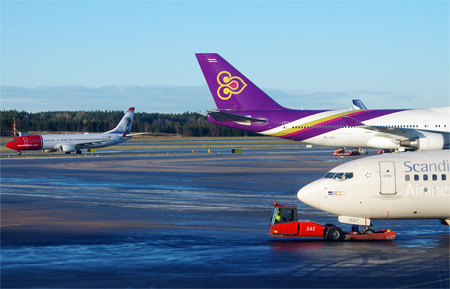
10,000 departures from Arlanda have been delayed during the summer, reports Swedish Radio Echo. ”"Overall, it's a weak number," Norwegian aviation expert Hans Jørgen Elnäs tells the radio.
Arlanda, which is run by the state-owned company Swedavia, has had a tough summer with long queues, staff shortages and not least the SAS strike that broke out on June 29 and affected air traffic with cancelled departures for over two weeks.
Now, new statistics from Eurocontrol, the European organization that controls airspace in Europe, show that four out of ten flights from Arlanda in June and July were either delayed or canceled. In total, this amounts to over 10,000 trips.
”"It's not a good number, but Arlanda should get some support in the form of the airport being affected by other airlines also having delays in Europe. But overall it's a weak number from Arlanda," says Norwegian aviation expert Hans Jørgen Elnäs to Ekot.
The figures also show that 35 percent of flights were delayed by at least 15 minutes in June and that six percent were canceled. In July, the figures were even higher.
According to Hans Jørgen Elnäs, 90 percent punctuality and 10 percent delayed flights are a good figure.
The challenges with delays exist throughout Europe and lead to subsequent delays at Arlanda, points out Swedavia's press manager Robert Pletzin.
”"This year we have an extra impact and increase in delays from many airports having challenges with staff shortages and other disruptions. The most common cause of delays at Arlanda is precisely consequential delays from late incoming flights which in turn lead to delays for departing flights," he writes in a written comment to TT.
The statistics, which in Sweden only concern Arlanda, show approximately the same figures for the two major airports in Norway and Denmark.
In the rest of Europe, average delays in June were just over 24 minutes, according to Eurocontrol. EU sanctions against Russia and Belarus with closed airspace had a negative impact, as did air traffic controllers' strikes in France and weather-related problems such as severe thunderstorms in Germany, according to the organization.
Source: TT-DI.SE