
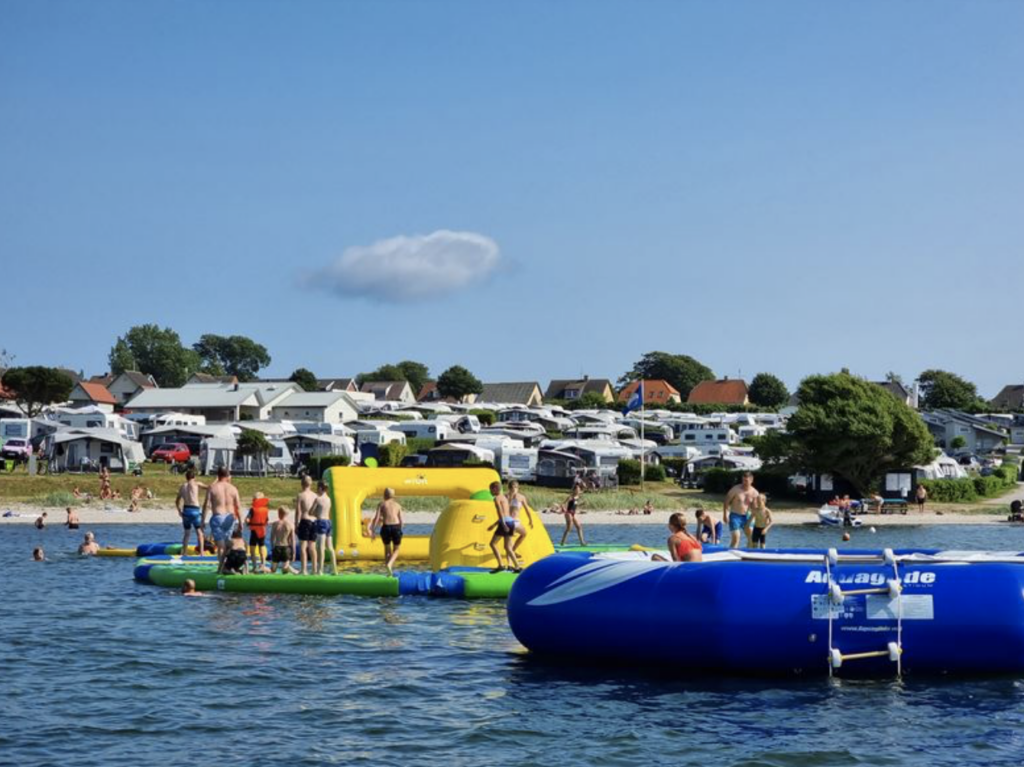
The Swedish camping industry is expecting a record-breaking summer. The weak krona means that both foreign tourists and Swedish holidaymakers are expected to flock to the country's campsites.
”Historically, camping tends to do particularly well in economically difficult times,” says Johan Söör, CEO of First Camp.
2022 was a record year for the camping industry. And ahead of the summer, the booking situation looks even better. In March, demand for camping cabins was 17 percent higher compared to the same period the year before, according to the industry website Turismnytt.
Johan Söör, who in his role as CEO of First Camp runs Scandinavia's largest camping group - with around fifty destinations and just over 3,000 cabins in Sweden alone - says that interest from foreign visitors is at a record high.
”It's mainly Germans, but also Norwegians, Dutch, Belgians and Swiss.”
He points out that the weak krona is the main explanation for the high demand.
”"Since then, we have also seen that foreign tourists who otherwise go to the Mediterranean find it too hot there. Then they come here instead, where it is more 'adequately' warm in the summer."”
Lena Kempe, CEO of Daftö Resort in Bohuslän, says that the situation ahead of the season looks promising.
”"We think it will be a great summer, as the booking situation looks now."”
Her campsite is only 30 kilometers from the Norwegian border, and visitors from our western neighbor play a significant role in the business. In 2019, Daftö Resort had 70 percent foreign guest nights, which the pandemic changed the conditions for.
”"We have been stronger in the Swedish market, but have also now regained the Norwegian one. Last year, 49 percent of our guests were Swedes and 51 percent were Norwegians," says Lena Kempe.
Johan Söör at First Camp believes that the economically strained situation is largely affecting people's choice of holiday destination.
”"Cost factors are very important. But we have also seen for several years a steadily increasing interest in vacationing in Sweden and not going abroad, which is linked to the whole sustainability issue. We saw that trend even before the pandemic, and it has only strengthened since then."”
Lena Kempe agrees that the decline in the krona is affecting guests' actions.
”"This situation can be positive for those of us who run 'homestay' businesses, as it becomes more expensive to travel abroad - and cheaper for our foreign target groups to come here. In that sense, it is beneficial for us," she says.
A major challenge for the hospitality industry is the supply of skills – ensuring that the business has access to employees with the right skills in the short and long term.
”It was a big challenge last summer when the entire industry really picked up speed again after the pandemic,” says Johan Söör, adding:
”It is better this year but, it can still be difficult for us to staff specific destinations for certain professions.”
Lena Kempe fills in:
”"We have 27 year-round employees, and that number increases to 220 during the season. Of course, one challenge is finding seasonal staff and having time to train everyone. So far, we have had many more people apply for this position than last year."”
Source: TT-DI.SE