
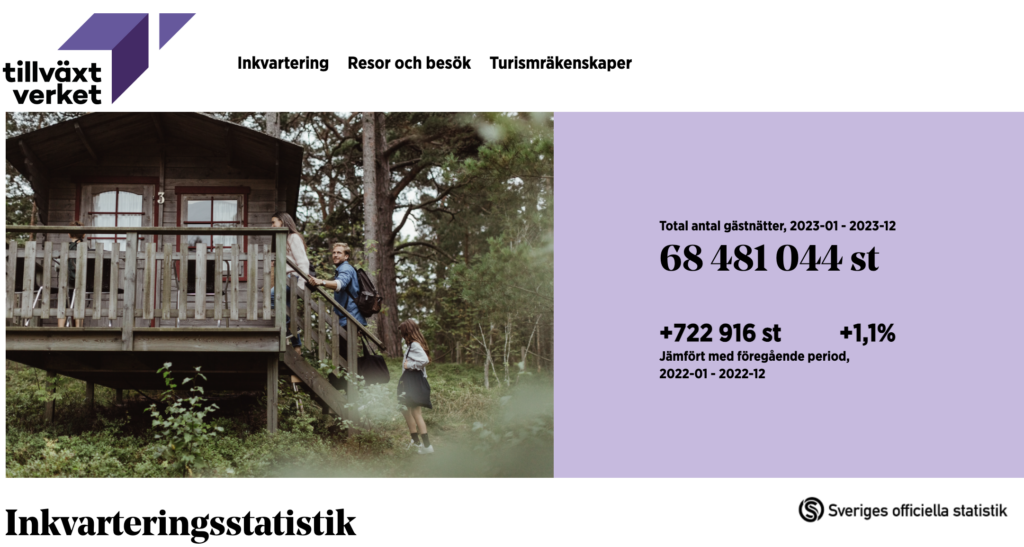
Swedish tourism continues to grow. In 2023, a total of 68.5 million guest nights were recorded, which is an increase of 1.1 percent from 2022. The largest increase is among foreign guest nights, which have increased by 10.9 percent. However, the share of Swedish guest nights has decreased by 1.9 percent during the same period.
– Swedish tourism is affected by the fact that Swedish households have had increased costs and thus less money to spend on travel and entertainment. At the same time, we see that foreign tourism has benefited from the weakening of the Swedish krona, and that visits from countries that have had a favorable exchange rate have increased. For Germans, Danes and Finns, Sweden is now perceived as cheap, and we see the effect of this in regions that are close to these countries, says Patrik Svensson, statistician at the Swedish Agency for Economic and Regional Growth.
Our Nordic neighbors Denmark and Finland account for the largest increase in percentage terms. Danish guest nights increased by 36.5 percent and Finland increased by 24.8 percent. Norway, on the other hand, decreased by 5.2 percent. Germany, which is the largest foreign market for guest nights in Sweden, increased by 8.9 percent and contributed to the increase in foreign guest nights.
The hotel industry was the big winner in 2023, increasing guest nights by 4.5 percent. The remaining facility types such as hostels, holiday villages and campsites have all decreased from the previous year. Among foreign guests, hotel visits have increased by 15 percent and domestic guest nights have increased by 1.3 percent.
Geographical differences
In 2023, guest nights increased in 10 of Sweden's counties. 11 of the 21 counties had a negative development. It is generally the metropolitan counties that have had the highest growth in guest nights. Stockholm County grew the most with 5.5 percent, Skåne County with 4.4 percent and Uppsala County with 4.3 percent.
Among the counties that lost the most, there was a greater geographical variation. Jämtland was hit hard by a decrease in Swedish hotel nights and had the largest percentage decrease in guest nights at -10.2 percent. Gotland decreased by -7.8 percent and Gävleborg lost -5.1 percent.
At the Agency for Economic Growth statistics portal You can follow the development of guest nights, accommodation revenue, occupancy rate distributed by month and county or municipal level.
Regarding the statistics:
Tillväxtverket is responsible for accommodation statistics, which are part of Sweden's official statistics. It reports on overnight stays, capacity, occupancy rates, and guests' countries of origin for commercial accommodation facilities in Sweden (hotels, cottage villages, hostels, commercially rented private cottages and apartments, and campsites).
Guest nights are a measure of the number of nights guests spend at commercial accommodation establishments.
According to the press release.