



Asteroid 2024 YR4 could crash into Earth in a few years – and NASA recently raised the risk of a collision.
Now Nasa is pointing humanity's most powerful telescope at the asteroid to try to clarify how worried we actually should be, writes New York Post.
However, new calculations indicate that it may be another celestial body that is in trouble, writes Independent.
Asteroid 2024 YR4 was discovered last year. The American space agency NASA concluded that the asteroid is between 40 and 90 meters wide – and on a possible collision course with Earth on December 22, 2032.
Initially, NASA calculated that the risk of the asteroid hitting Earth was as low as 1.3 percent, but when new calculations were made, it was raised to 2.3 percent.
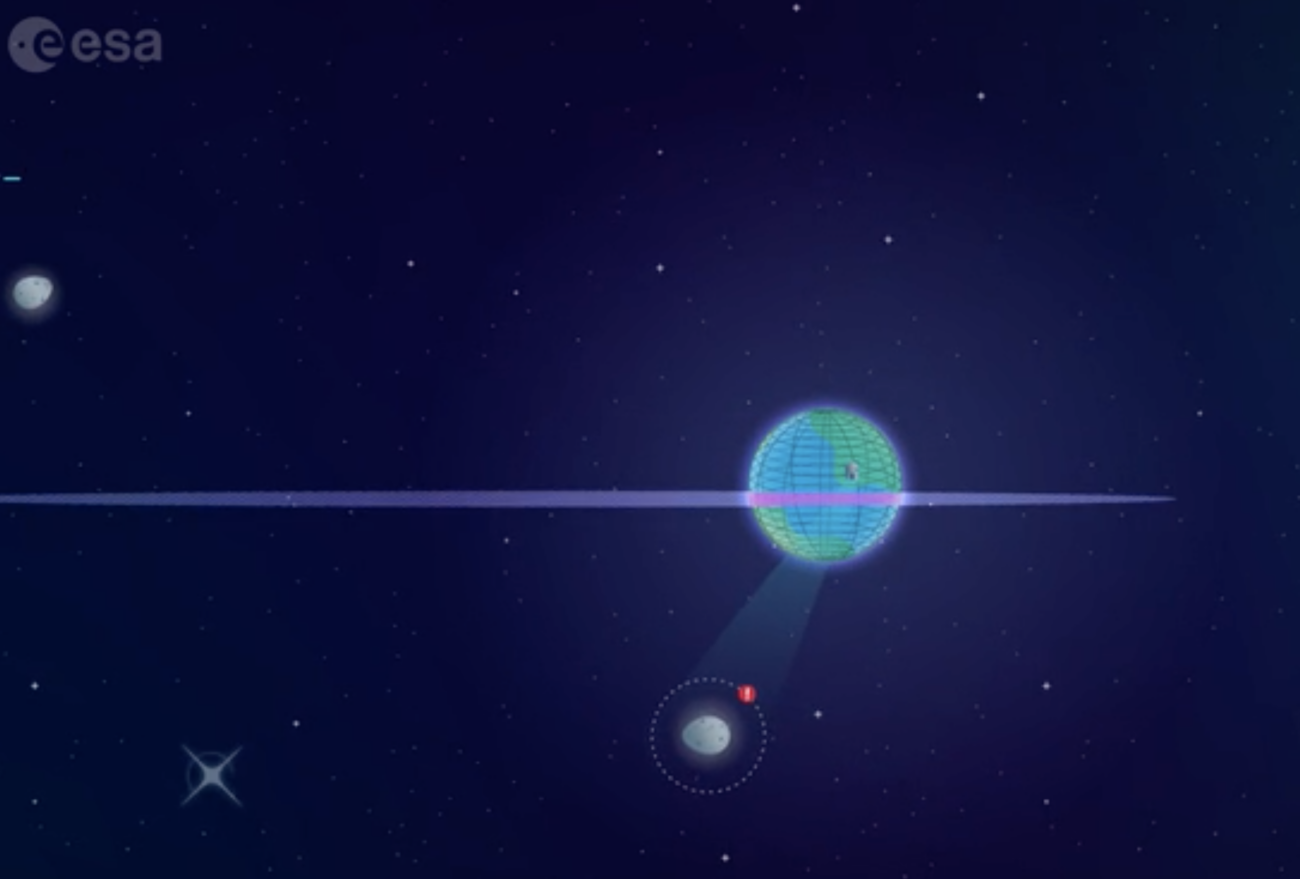
Now Nasa is pointing the James Webb Telescope, the world's most powerful, at 2024 YR4. This is being done to determine how big the asteroid actually is so we know how much devastation it could cause if it hits Earth, the European Space Agency says. ESA.
”"It is very important that we improve our size estimate of 2024 YR4. The threat from a 40-meter asteroid is very different compared to one that is 90 meters,", writes ESA.
Can create a crater several hundred meters wide
With the help of the James Webb Telescope, astronomers hope to be able to ”reduce the uncertainty around the asteroid’s orbit and rule out the risk of a collision,” according to ESA. It emphasizes that the risk is ”very small.”.
New calculations by astronomer David Rankin at the University of Arizona suggest there is a 0.3 percent chance that the asteroid could crash into the moon instead.
Since the Moon, unlike the Earth, lacks an atmosphere that can slow down asteroids, 2024 YR4 could create a crater several hundred meters wide if it hits the celestial body.
“There is a possibility that this could lead to debris from the collision being ejected and hitting Earth, but I highly doubt that it would pose any major threat,” Rankin tells New Scientist.
Source: Expressen.se