Fires, students and spring feelings. Here, Nordic Museum's ethnologist and curator Jonas Engman gives some answers about Walpurgisday celebrations.
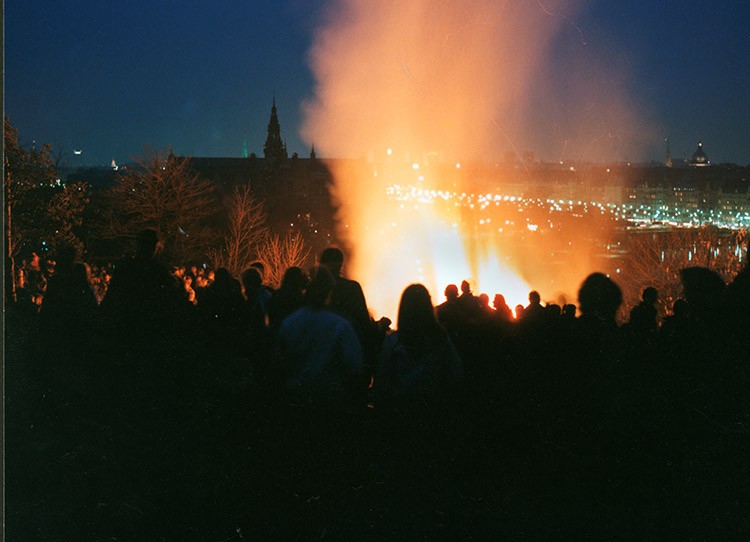
Walpurgis Eve has been celebrated in Sweden and Finland since the Middle Ages and originally comes from the Catholic celebration of Saint Walpurgis in Germany. The fires were probably a way to chase away predators, witches and supernatural beings before the animals were released to graze. Today, the bonfires of Walpurgis Eve are primarily a way to welcome the long-awaited spring.
Who is Walpurgis?
–Valborg, or Walpurgis, was, according to legend, a saint in Germany. When Sweden and the Nordic countries were Christianized, the days of the German Catholic Church followed suit, and that calendar was full of saints' days, and not all of them were celebrated outside the church. One of them was Valborg.
How long have we celebrated Walpurgis Eve?
–Valborg as a holy day has been in the Christian calendar at least since the Middle Ages. In connection with the Reformation in the 16th century, the new church wanted to clear out the holy days, which did not succeed very well. The celebration of Valborg gradually became a popular holiday, one reason being that Valborg Fair is so close to May Day, a holiday in the peasant community. For the urbanized working class at the end of the 19th century, Valborg Fair became a drinking day.
–In parallel with the popular celebration, there was a medieval tradition of deacons – students of the time – organizing merry processions through the diocesan cities. Since the mid-19th century, that tradition has been transformed into the student city festivities that we see today.
Is the holiday about welcoming spring?
–Both yes and no. Today, definitely! Even in the farming community, this time marked a shift in agriculture to what we today call spring farming. But in that community there were several times that marked spring farming.
Why fires and bonfires?
–Fire is one of the most prominent symbolic tools in rituals! In the Nordic countries, we have lit fires at Easter, Walpurgisday and St. Hans' Day, which in Sweden is the same as Midsummer. Walpurgisday bonfires may have something to do with the fact that grazing animals were released at this time and were protected against supernatural beings – and predators – with the help of fire.
–One interpretation has to do with rebellious young people, who according to some sources seem to have lit fires to anger the church, which wanted to ban Walpurgis Mass celebrations. Today, the bonfires of Walpurgis Mass are mostly about welcoming spring.
How is Walpurgis Eve celebrated in the Nordic countries?
-In Finland, Valborg Fair is called Vappen in Finnish-Swedish after the Finnish language May Day. The coat of arms is a parallel to the Swedish student parties. People of all ages gather the night before May Day for a carnival-like street party with bonfires, festivities, student hats, struvor and mead. In Norway and Denmark, Walpurgismäss and bonfires are not as common, I think, says Jonas Engman.