



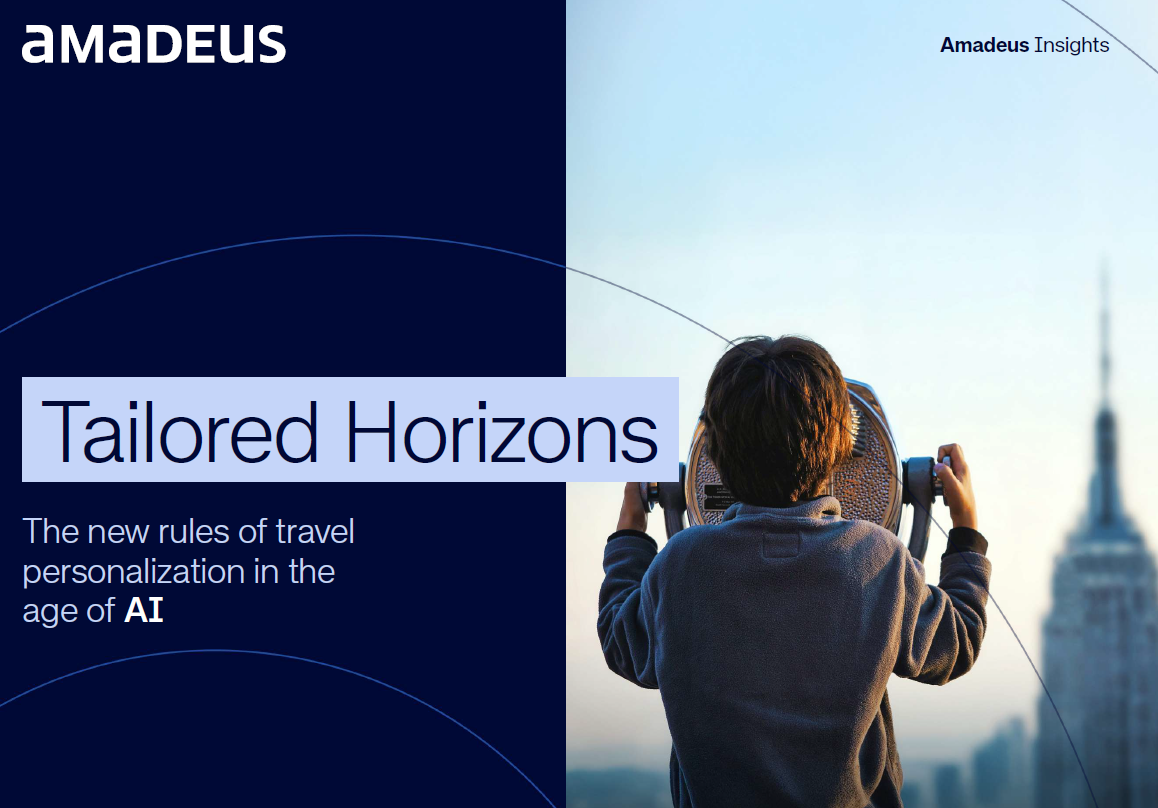
AI has quickly become a part of travel planning, but travelers are significantly more cautious when technology is given the power to make decisions and spend money, according to Amadeus’ new Tailored Horizons report.
According to the survey, 74 percent of American travelers have used AI when planning a trip, such as finding hotels, creating itineraries or researching local transportation options. 53 percent use AI for inspiration and 49 percent use the technology during the trip itself for things like flight information, navigation, weather and local recommendations.
At the same time, 85 percent believe that AI tools can save time and provide more personalized recommendations.
Few want to let AI spend money independently
Trust declines as AI moves from advising to actually implementing decisions. While 65 percent are interested in the ability to book and pay directly through an AI assistant, only 20 percent let AI spend money within a set budget without furtherare-approval.
43 percent could imagine this under certain conditions or restrictions, while 29 percent would not allow it at all.
Travelers also continue to verify the information they receive. Nearly nine in ten verify AI-generated recommendations before booking. 42 percent always do so and 47 percent sometimes, while only 11 percent fully trust AI recommendations.
Personalization drives usage
Among the AI features that travelers value most are local guidance at the destination, cited by 55 percent, followed by budget-friendly suggestions at 52 percent and real-time rebooking in the event of changed travel plans at 49 percent.
At the same time, there is potential for improvement. 64 percent have experienced that AI recommends already well-known destinations or alternatives instead of broadening their choices.
Willingness to share data also varies. 63 percent feel comfortable sharing travel preferences and 58 percent budget preferences. Payment and identity details are significantly more sensitive – only 21 and 19 percent, respectively, feel comfortable sharing such information.
People still matter when problems arise
When something goes wrong on a trip, most people still prefer human contact. Phone support is preferred by 37 percent and in-person assistance by 25 percent, compared to only 7 percent who prefer AI-based assistants.
Furthermore, only 17 percent would rely solely on an AI assistant to plan a trip, with 51 percent preferring a combination of AI and human expertise.
“The opportunity for the travel industry lies in creating AI experiences that combine the convenience of automation with the security that arises when travelers are given real choice and control,” says Gustav Källhager, Country Manager for Sweden and Norway at Amadeus.
According to the press release.