



Passengers' interest in climate-compensating air travel is low.
Now the airlines are baking the cost into the price. The Swedish Society for Nature Conservation welcomes the initiative but warns that it is diverting attention from the inevitable: that we must fly less.
Flying is increasingly being exposed as an environmental villain and is considered one of the human activities that causes the greatest emissions of greenhouse gases.
To meet the increased demands for sustainability, a number of airlines have begun offering climate-compensated travel.
For example, the domestic airline Bra states that since April 1, it has been carbon offsetting its emissions by approximately 110 percent.
Climate compensation is part of the company's sustainability work, says Sustainability Manager Anna Soltorp.
”First, we try to reduce our emissions as much as we can by having good and modern aircraft and flying as efficiently as possible and getting access to biofuel.”
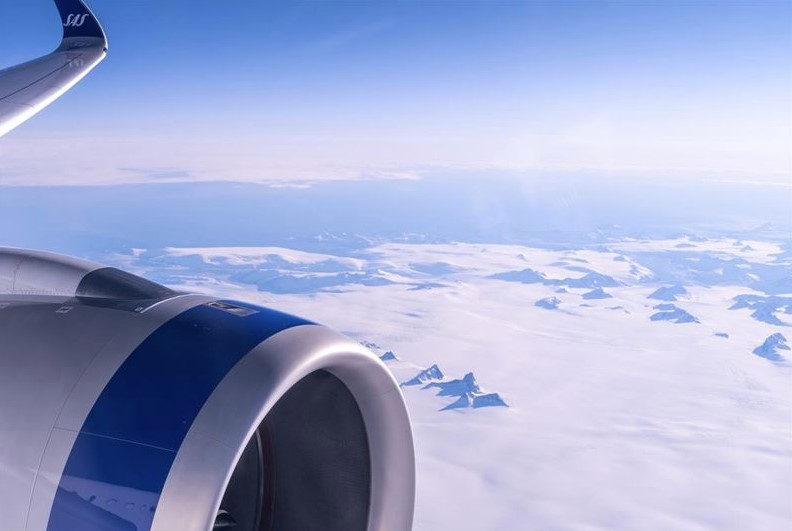
The charter company TUI also climate compensates all trips, while SAS climate compensates youth tickets and euro bonus tickets, which together account for approximately 40 percent of trips. Other travelers can opt for climate compensation through a third party, but in practice a negligible percentage do so.
”"When we launched this, we thought there would be a lot of interest, but it has turned out that very few people choose to offset their own carbon emissions, which prompted us to build it into the tickets," says Lars Andersen Resare, Head of Sustainability at SAS.
According to the airline's sustainability goals, carbon dioxide emissions are to be reduced by 25 percent by 2030 compared to 2005. This is to be achieved, among other things, through more efficient flying, reduced cargo and a completely replaced fleet by 2023.
”Everything we do is aimed at reducing fuel consumption,” says Lars Andersen Resare.
David Kihlberg, the Swedish Society for Nature Conservation's climate director, welcomes the fact that airlines are acknowledging their climate impact and want to take climate responsibility. At the same time, he sees a risk that the focus will be diverted from the fundamental problem, which, according to him, is that we fly too much.
”"Climate compensation does not solve the problem of aviation's climate impact, but we need to fly less to reach climate goals."”
Simply explained Climate compensation works so that the person who causes emissions pays for the corresponding emissions to be reduced somewhere else. The reduction can be done through, for example, the purchase of emission rights, afforestation or investments in renewable energy.
Today, biofuel is in short supply for aviation. In the long term, Bra wants to become self-sufficient in aviation fuel through production from forest waste.
But investing in biofuel is not an obvious solution to the problem of aviation emissions, according to David Kihlberg.
”"In the long term, it will be climate neutral because a new forest grows up and replaces the old one all the time in a cycle. In the short term, there is really no difference because even biofuel emits carbon dioxide," says David Kihlberg.
In addition, it constitutes The cut-down forest is a threat to biodiversity that cannot be compensated for by forest plantations, he believes.
”""If we are to meet our climate goals, we must both reduce our emissions to zero and also sequester the emissions in carbon sinks.
Norwegian does not currently offset climate change, but responds in an email to TT that the company will likely do so in the future.
Source: TT