




Travel Trends, now in its 10th year, highlights how travelers want to experience the world. Looking ahead to 2026, the survey shows that travelers want to show their true selves, with all their quirks. Technology is also helping to enable travelers to experience personal travel with their loved ones.
Based on insights from more than 29,000 travelers across 33 countries and territories, Booking.com presents the ten defining trends for 2026.
Modern Milestones: Journeys That Celebrate YOU
In 2026, travelers will rewrite the rulebook for when and why they travel. No longer reserved for milestones like weddings, honeymoons or anniversaries, trips will become increasingly personal as societal norms change and evolve. A full 62% of travelers say they don’t need a reason to book a trip, while a quarter (25% of travelers) say they would travel to a dream destination without waiting for a ”traditional” milestone to justify it.
Almost two-thirds (64 %) justify their holiday booking by saying they have simply worked hard and deserve it. New reasons for booking a trip are also becoming increasingly popular: celebrating a new job or promotion (21 %), celebrating a surprise tax refund (31 %), marking the end of a relationship (12 %) or wanting to show off a new outfit (9 %). Progress in health and wellbeing is also a strong motivator, with one in five (22 %) travelling to mark milestones such as sobriety or fitness achievements.
This new wave of modern milestone trips shows how travelers are highlighting personal achievements on their own terms and using travel as a way to celebrate their individuality.
Turbulence Test: Love, Friendship and Teamwork Put to the Test
Vacations aren’t just for recharging your batteries. In 2026, they will become the ultimate compatibility test. Many travelers plan to use travel to test the strength of their relationships – romantic, platonic or even professional. More than two-thirds (67 %) of Swedish travelers are open to taking a trip with a potential partner, colleague or new friend to see how well they fit together. The ways travelers want to test relationships are both creative and revealing.
Over half (55 %) would consider traveling to a remote location to see how their partner handles situations outside their comfort zone. Another 44 % are interested in trips with role reversals, where the person who is usually responsible for planning hands over control or the introvert takes the lead. In addition, (50 %) are interested in trips with major constraints, such as traveling on a limited budget, language barriers, or limited connectivity. Many (69 %) would also take a step back themselves to test whether their traveling companion takes the initiative to plan the trip.
These turbulence tests represent a new way of thinking about vacation: not just a way to escape the everyday, but also a unique opportunity to assess compatibility, flexibility and teamwork. Generation Z travelers are the most experimental of all – 74 % are open to tailor-made itineraries designed to simulate real-life dynamics and test conditions in ways that can determine whether they will hold up or break.
Predestined Destinations: Journeys Written in the Stars
In 2026, the stars will not only influence horoscopes and zodiac signs, they will also guide travel plans. From moon phases to astrology, mystical methods will become a new compass to guide travel decisions, transforming vacations into journeys with a spiritual dimension and cosmic approval.
About a third of Swedish travelers (33 %) say they would consider changing or canceling their plans if a spiritual advisor or guide suggested it was not the right time for a trip, while 26% would reconsider traveling after a warning in their horoscope, and 23 % would adjust plans if Mercury was in retrograde.
In addition to these cosmic course corrections, many travelers are actively seeking out experiences that align with mystical or astrological cues. Over a quarter (28 %) say they consider such influences when planning vacations, from timing trips based on moon phases or solstices to visiting energetic locations. Generation Z (51 %) and nearly a third of millennials (32 %) are particularly focused on these spiritual journeys of discovery, a sign that the path to self-discovery may indeed be written in the stars for younger generations.
Vacations that give you a glow: skincare-focused trips, powered by technology
Wellness travel will get a major glow-up in 2026. A full 68% of Swedish travelers are open to booking a ”glow vacation” with various skincare treatments tailored to their personal skincare needs. Simple budget vacations are increasingly being replaced by more advanced and high-tech wellness trips focusing on the body’s largest organ: the skin. More than four in ten travelers (42% of travelers) say they would consider using AI to identify travel destinations that are tailored to their personal skincare needs.
The demand for personalization is greater than ever, with over half (55 %) attracted to personalized hydration treatments that adapt to local climate and activities, while 43 % are interested in smart mirrors that analyze pores and moisture levels to provide real-time skin care advice. Sleep optimization is also in focus, with 68 % interested in suites equipped with circadian lighting and soundscapes to improve sleep, a key factor in skin repair and regeneration.
From ancient thermal rituals to groundbreaking DNA and microbiome testing, the ”glow vacation” heralds a new era of skincare-focused wellness travel, where the goal is not only to recharge your batteries but also to return home with a visibly renewed energy.
Peaceful hobbies: quiet activities to find greater peace
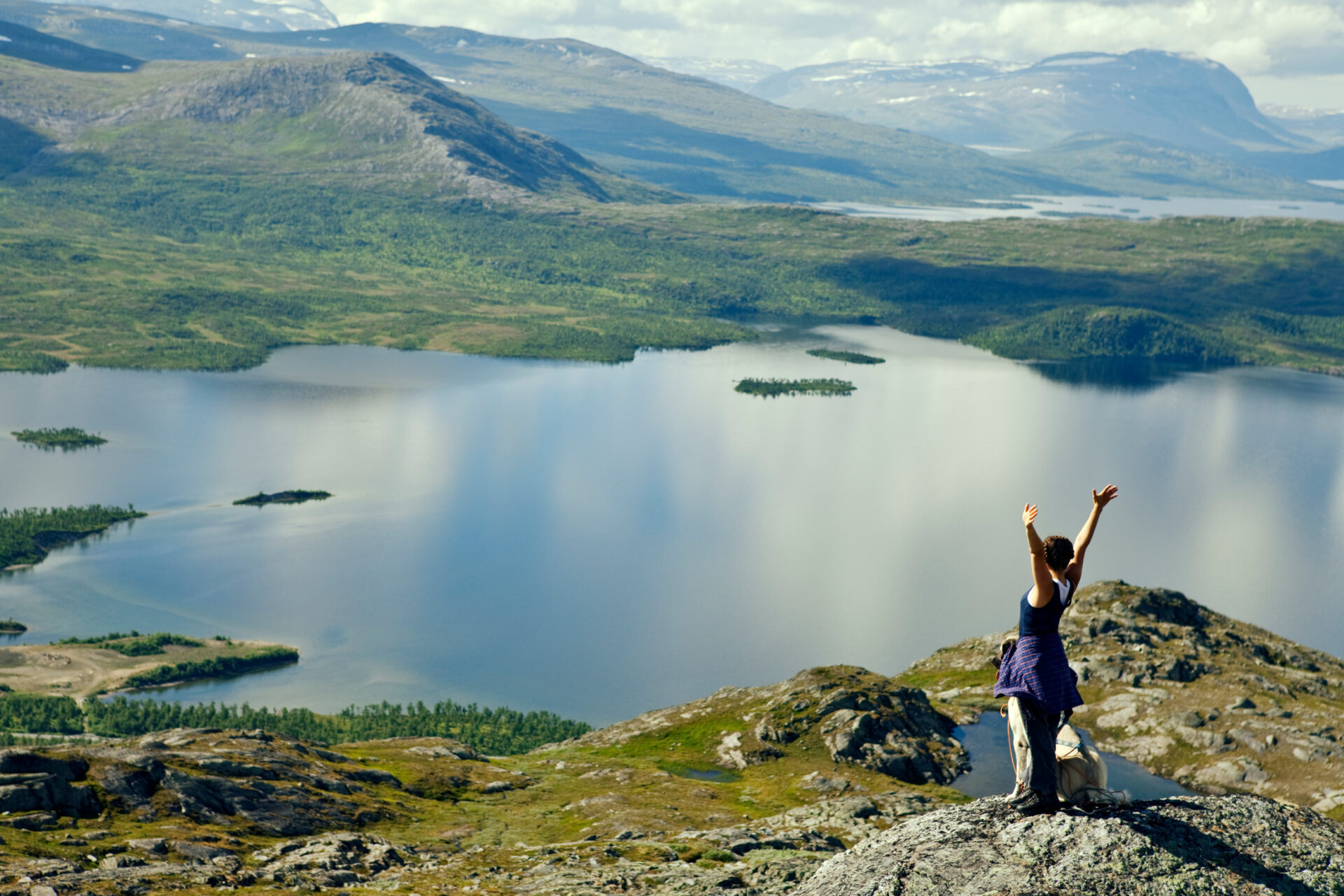
Silence will be worth its weight in gold in 2026, as travelers look to swap the noise and distractions of an overstimulating world for the peaceful stillness of nature to regain their sense of calm. Among Swedish travelers, 30 % say they would vacation specifically to feel closer to nature (among Generation Z, the figure is a whopping 22 %), and 16 % say they prefer quieter hobbies on vacation. Travelers want restorative rituals that prioritize patience, reflection, and stress relief.
From birdwatching and fishing to bug hunting and picking berries, mushrooms and wild plants, travelers are increasingly interested in leisure activities that allow for a deeper connection with nature. Over a third (39 %) say they would consider looking for moths, butterflies or insects, 61 % would consider fishing or bird watching, and 46 % would be open to staying at a hotel where they can participate in picking berries, mushrooms and wild plants in the local nature and wilderness to gather their own food. These activities attract travelers who are looking for a way to connect more deeply with their surroundings. Technology can also play a role in this search for tranquility, thanks to everything from apps that identify butterflies and birds in real time to AI tools that suggest trails, habitats or seasonal migration patterns.
Souvenirs in the pantry: from kitchen shelves to cultural storefronts
By 2026, the humble kitchen cupboard is set to become a veritable cultural showcase, filled with travel souvenirs that reflect personal taste, design sensibilities and a story of place. These souvenirs are now moving from being simple fridge magnets to taking up space on the pantry shelf as travelers increasingly seek out delicacies and design treasures that transform everyday kitchens into showcases of world culture.
More than half of Swedish travelers (58 %) say they would consider buying design-focused housewares or dry goods for their pantry on vacation. Everything from hand-painted spice jars to artisanal olive oil also works just as well as interior design details. A full 40 % say they would even consider traveling to a destination that is particularly known for its pantry products or housewares.
This shift isn’t just about aesthetics, these souvenirs also have meaning. Almost a quarter (24 %) say edible souvenirs help them relive a destination every time they cook, while 21 % value how these items showcase local craftsmanship, sustainability and traditional methods. For others, exclusivity and style play a role, and 15 % choose destinations based on rare souvenirs, limited edition kitchenware or packaging that looks as good on the kitchen shelf as it does on social media.
New routes: shared adventures on the roads
The classic road trip will change gears in 2026, moving from a road trip with family and friends to a spontaneous and adventurous journey with new companions along the way. The journey itself is no longer just about the drive, but rather about finding shared and memorable moments with other adventurers. A full 84% of Swedish travelers are open to carpooling on vacation and 41% are willing to use an app to find travelers on a similar route.
It’s easy to understand the appeal. Travelers are drawn to road trips that make travel more spontaneous and flexible (75 %), allow them to meet new people (77 %), and allow them to share the driving (75 %). Especially for people who don’t drive, ride-sharing and self-driving vehicles are turning previously inaccessible roads into shared adventures that increase the feeling of freedom.
Younger generations are leading the way, with 65% of Gen Z respondents saying they would consider using self-driving vehicles or AI to plan their routes, compared to just 23% of Baby Boomers. Technology continues to create new opportunities in other ways on the road, with 50% of global travelers saying they would use AI or generative AI to plan scenic off-road routes tailored to their own travel preferences.
Romantic travel: an escape into enchanting worlds
For centuries, books have been travel companions packed into suitcases to be read on trains, planes, beaches and new places. Genres like romance have exploded in popularity, and in 2026, the relationship between stories and travel enters a new chapter as travelers step into not only novels but also fantasy worlds with dragons, fairies and other mythical creatures.
Expect to see holidays turn into captivating stories in the coming year, as enchanted castles, mysterious forests, medieval banquets and masquerade balls become magical settings for romantic travel. Almost half (48 %) of Swedish travelers say they would be interested in visiting a destination inspired by romance. For many, this can be about much more than just sightseeing. Almost a third (31%) are open to participating in a role-playing experience based on a favorite game, book or movie from the fantasy genre, 11 % say they are definitely interested in making this a part of their future travel plans.
Technology is writing a new chapter for this new form of escapism. More than six in ten travelers (63 %) are open to AI-powered suggestions that match the fantasy aesthetic, recommend hidden stays in storybook settings or point out real-life locations used in film shoots. Fantasy will no longer be limited to fictional worlds, but will become a travel model for enchanting escapes from reality where imagination and adventure play the leading roles.
Robot homes: the future of vacation rentals
Travelers have long appreciated the space and privacy that vacation rentals offer, but in 2026 we’ll see something much more futuristic: homes enhanced with robotic helpers. Imagine checking into a vacation home where a cleaning robot takes care of the mess, a robot chef cooks dinner (and does the dishes), and smart systems optimize water, energy, and waste in the background.
Swedish travelers are ready to discover this new world where convenience meets curiosity, and 59 % would consider booking a property equipped with robotic technology. The most popular are the practical benefits, and over half of those interested (54 %) say that cleaning robots would influence their booking choices. Meanwhile, 41 % are most looking forward to a robot chef, and over a fifth (22 %) want robots to take care of sustainability behind the scenes.
But it’s not all about convenience. For many, it’s the novelty (18 %) or even the bragging rights (11 %) of having lived in a house that looks like it’s straight out of science fiction. These ”robot homes” blur the line between practical and playful, redefining the vacation rental experience and paving the way for stays that are both comfortable and truly unforgettable.
Time travel: memories become destinations
In 2026, nostalgia will no longer be something we leave behind, but something we can step back into with the help of technology. With AI-powered photo mapping and platforms to trace their roots, memories can be turned into maps and old snapshots into future travel plans. Now travelers can find the exact place where a moment once happened and relive it.
For many, these trips are deeply emotional. They are rooted in a desire to relive meaningful moments and share them with others. Over half of Swedish travelers (52 %) say they would consider recreating a memory or photo by using technology to identify the exact location where it was taken and then traveling there. An equal share (52 %) say their main motivation would be to revisit a memory with family or close friends, while 40 % are drawn to destinations that make them feel young, reconnected or at home. 29 % even see these trips as milestones, whether it’s to reflect on personal development, reconnect with people from the past or even find closure by returning to places associated with difficult memories.
What makes this movement new is how technology facilitates humanity’s eternal need to remember. Beyond nostalgia, travelers are using innovation to trace their ancestors, connect across generations through storytelling, or even recreate photos to feel connected in ways that are both timeless and new.
James Waters, Chief Business Officer at Booking.com, says: ”In 2026, travel will be a reflection of who you truly are, with journeys built on interests that may have previously felt too niche or bold to explore. Travelers are stress-testing relationships, stepping into fantasy worlds, transforming their kitchens into reflections of their travels, and looking for new ways to experience road trips and vacation rentals with new tech features. At Booking.com, we’re constantly evolving to make it easier for everyone to experience the world and embark on their dream trips by offering more choice, more flexibility, and greater convenience than ever before.”