



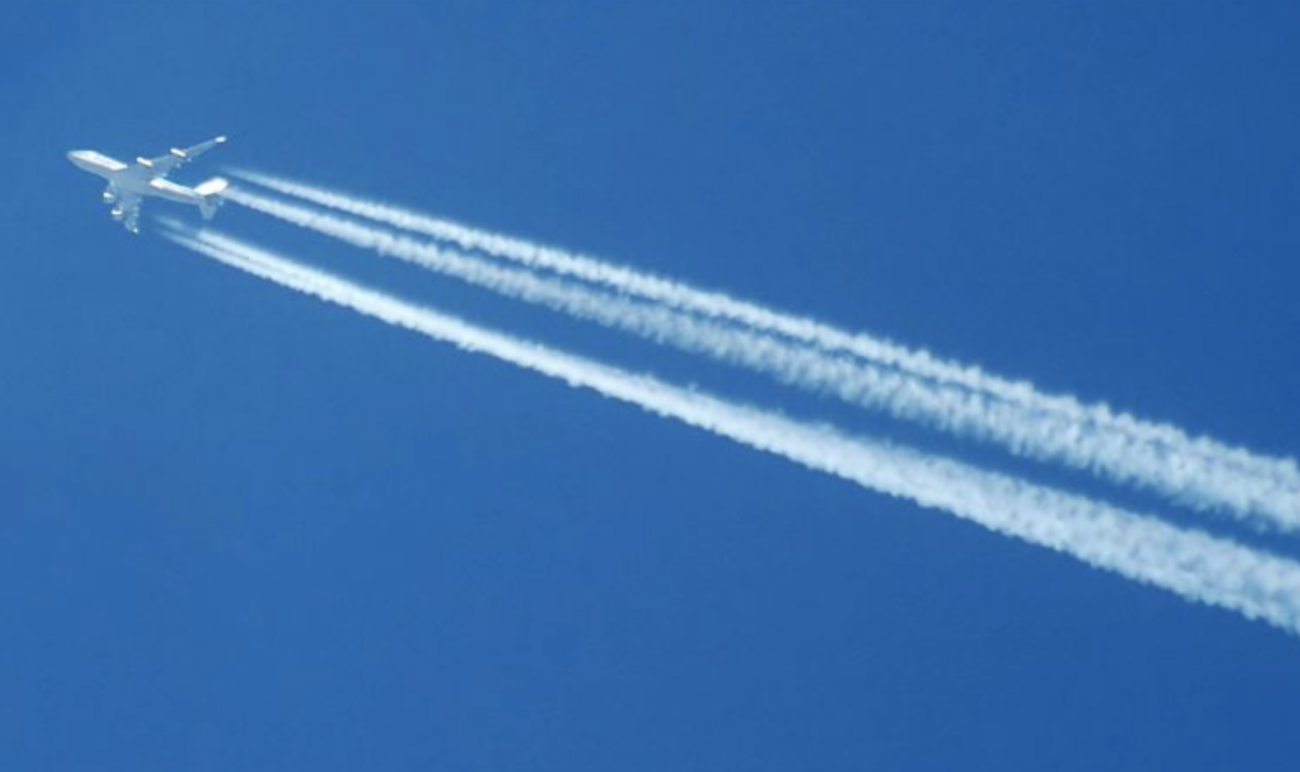
The climate impact of aviation is about more than carbon dioxide emissions. A new study from Chalmers, the University of Gothenburg and Imperial College shows that aircraft contrails can account for a significant part of the total climate cost of aviation. The study also shows that it is possible to reduce climate impact by optimizing flight routes.
In a new paper in Nature Communications, The social costs of aviation CO2 and contrail cirrus, The Swedish and British researchers show how aviation's carbon dioxide emissions and the formation of contrails affect the climate – and that the costs to society for these vary greatly depending on flight weather and route. They find that on a global level, contrails account for approximately 15 percent of aviation's climate impact measured in economic terms.
After also analyzing almost half a million flights across the North Atlantic, the researchers have developed new knowledge that can help both industry and decision-makers steer aviation in a more climate-optimized direction.
– Our research provides the basis for strategies to reduce the impact of contrails on the climate. Our calculations can be used to optimize flight routes, where the climate damage of flight is weighed in addition to, for example, fuel costs and time consumption. The results give flight operators and air traffic control new tools for climate optimization. This can provide significant climate and societal benefits, says Susanne Pettersson, postdoctoral researcher at the Department of Space, Geo and Environmental Sciences at Chalmers.
The study shows that 38 percent of flights cause contrails, which have a warming effect. It also shows that it would be climate-beneficial to reroute most of these flights to avoid contrail formation, even if it results in slightly higher carbon dioxide emissions.
– The new knowledge also provides a basis for designing new regulations and instruments to reduce the climate impact of aviation. The EU Commission is currently working on developing proposals on how to steer aviation towards a lower climate impact and our new study can hopefully provide support for this process, says Daniel Johansson, associate professor at the Department of Space, Geo and Environmental Sciences at Chalmers and one of the lead authors of the IPCC's next climate report.
According to the press release.