
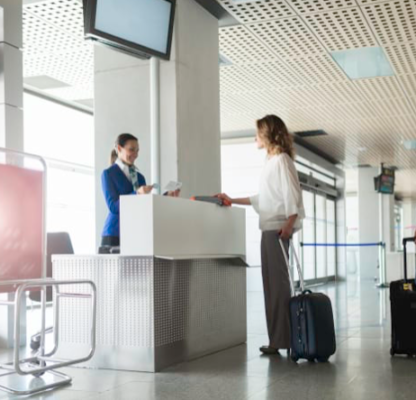
The trend among business travelers to book flights and accommodations directly with suppliers now appears to be moving in a different direction, according to recent statistics from SAP Concur and GBTA.
The number of European business travelers booking flights directly with the airline fell from 79 percent in 2017 to 68 percent in 2018. During the same period, direct hotel bookings decreased from 83 percent in 2017 to 70 percent in 2018.
– Statistics show that 62 percent of business travelers trust their employer's booking system. This may partly explain why direct bookings have decreased in favor of increased use of various corporate systems for online booking in 2018. There is still much to be done to increase the use of companies' own booking systems, which provides benefits for both the employee who is going to travel and the employer, says Magnus Khysing, Nordic Head of SAP Concur, a world-leading provider of systems for expense, travel and invoice management.
Personalized services are highly valued
When asked what features they would like to see in their own booking system, 43 percent of European travelers ranked personalized services among the top three requests. 42 percent ranked approval processes and personalized information as the most important features.
So it's not just technology that influences business travelers' behavior. A stricter travel policy can lead to a small increase in the use of the company's own travel portal. A typical example shows that 74 percent of travelers with a relatively flexible travel policy still booked their flight directly with the airline. That figure fell to 64 percent among travelers with a stricter travel policy.
There is plenty of room for improvement in travel policies: 43 percent of business travelers said their travel policies have become more flexible in the past five years, and only 15 percent said they have become more restrictive.
New requirements for travel policy after GDPR
Delivering a more personalized booking process requires new ways of thinking about travel policy, especially in these GDPR times. Here are some examples to illustrate:
45 percent of travelers say they would share personal data for a ”clear purpose”
42 percent would share if they could change their mind at any time
34 percent believe that “clear purpose” includes easier travel booking
47 percent are willing to share travel preferences and favorites on the company's own travel portal
45 percent would consider sharing their contact information
43 percent would provide the company's address
Business travelers reluctant to share personal information
Despite the positive attitude above, business travelers are significantly more reluctant to share personal information such as home address, special diets or body measurements.
– Travelers have very high expectations of their employers when it comes to their own safety. A majority (73 percent) expect their employer to proactively contact them within two hours of an emergency alert. This is despite the fact that most would not contact their own employer if they needed help, leaving the responsibility entirely to the company, says Jessica Collison, Director of Research at GBTA, the Global Business Travel Association.
– This expectation also applies to the so-called “bleisure” travel as more than a third expect the employer to be responsible for travel safety even during free time in connection with the business trip. Travelers really appreciate that the company manages personal safety in connection with travel. It is therefore no surprise that they want additional safety-related features such as support in urgent emergency situations and that various safety notifications are integrated into the company's solutions in the future, continues Jessica Collison.
– Business travel continues to change, and travelers demand more from both suppliers and employers. On the one hand, the pressure on the company to control the costs of business travel while simultaneously taking its employer responsibility for employee safety is increasing. On the other hand, it gives the company increased opportunities to develop its brand as an employer by combining a more permissive travel policy with a user-friendly system solution, concludes Magnus Khysing.
About the survey
This is an online survey of 1,252 European business travelers in Germany (152), France (151), the UK (152), the Nordics (513), Belgium (155) and the Netherlands (129). The survey was conducted between September 21 and October 16, 2018, and respondents were qualified by being employed full-time or part-time and having traveled for work more than once in the past year.