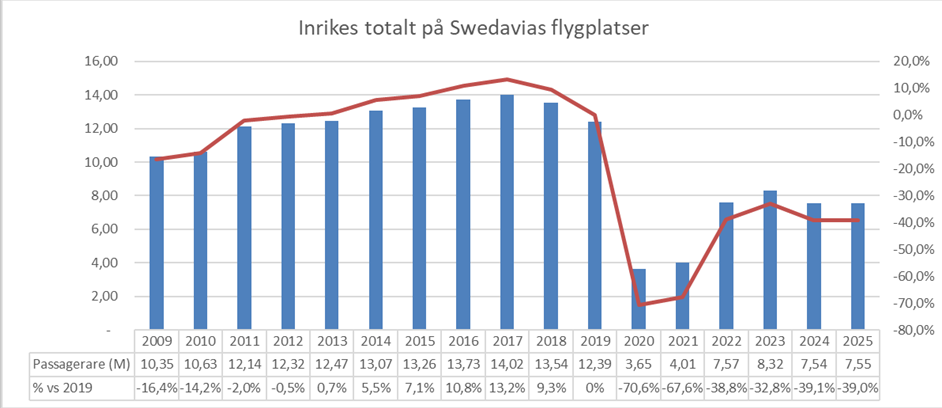




Swedavia's latest full-year statistics for 2025 show increases in air traffic, both domestic and international, compared to 2024. However, domestic flights are still well below pre-pandemic levels, and the measured growth is largely based on comparisons with a very weak starting point.
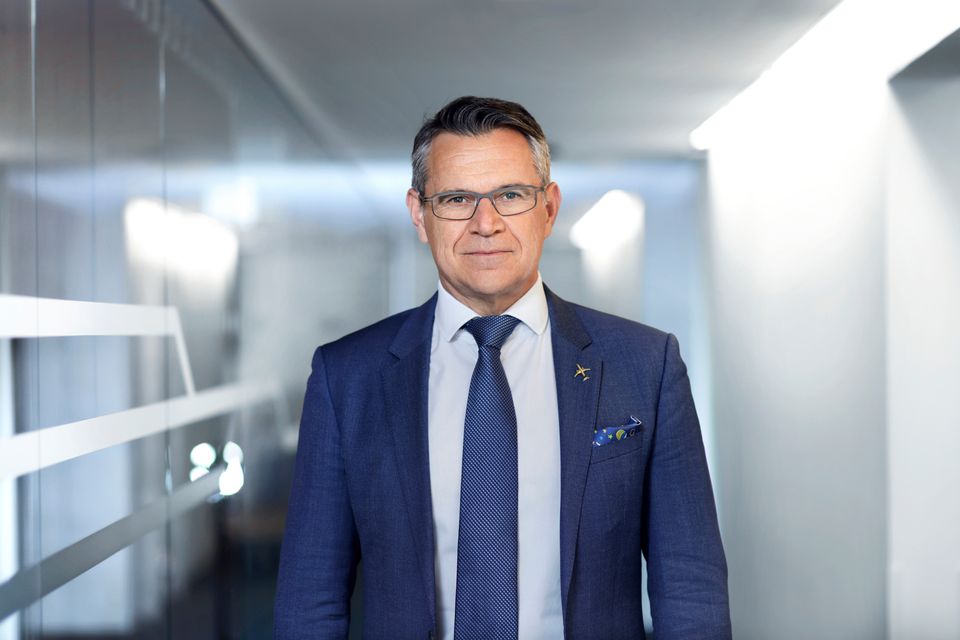
– It is important that we interpret the statistics correctly. There is a very big difference between recovering from a bottom level and being back at a functioning, socially supportive level. Today we are far from such a situation, says Fredrik Kämpfe, industry manager for Transportföretagen Flyg.
An analysis of Swedavia's own figures shows that domestic travel overall is still well below pre-pandemic levels. The statistical growth now reported can largely be explained by comparisons with a very weak starting point. A clear example is Arlanda, where domestic traffic has grown in percentage terms, but from a historically very low level and also in light of the fact that scheduled traffic at Bromma has decreased significantly. The decrease at Bromma also contributes to increases at other airports appearing larger than they actually are from a system perspective.
– Saying that domestic aviation is ”doing well” due to a marginal year-on-year increase gives a simplified and misleading picture. We must be honest about where we stand, not least so that the right political decisions can be made, says Fredrik Kämpfe.
Great socio-economic importance
The socio-economic importance of aviation is confirmed, among other things, in the report A nation with its wings clipped? which the Swedish Transport Companies presented in December 2024, and which shows that the weak development of Swedish aviation has led to up to 300 billion in lost production revenue for Sweden.
– We must ask ourselves some crucial questions: How much domestic accessibility by air does Sweden need in the long term to be competitive and cohesive? How can we create long-term sustainable conditions for a functioning domestic flight network? How should the aviation infrastructure be financed in a situation where aviation is structurally smaller but remains critical to society? And how do we implement the climate transition without eroding accessibility? That is where the focus must be now, concludes Fredrik Kämpfe.