



Choosing the wrong airline can turn even the most anticipated trip into a nightmare. For millions of travellers each year, delays, cancellations, uncomfortable cabins and poor customer service mean significantly more than just minor inconveniences. To help travellers make more informed decisions, AirAdvisor, a leading platform for passenger rights in flight disruptions and baggage issues, has published its ranking of the worst European airlines in 2026. The ranking is based on one of the most
comprehensive analyses of airlines' performance to date.
This is how the ranking was created
The ranking evaluates major European airlines based on nine criteria: punctuality and reliability, onboard comfort, safety statistics, ticket prices and value for money, customer reviews, quality of airport lounges, professional industry recognition, family-friendly travel conditions, and pet travel policies.
The 10 worst airlines in Europe 2026
Placement Airline Weighted score Key insights
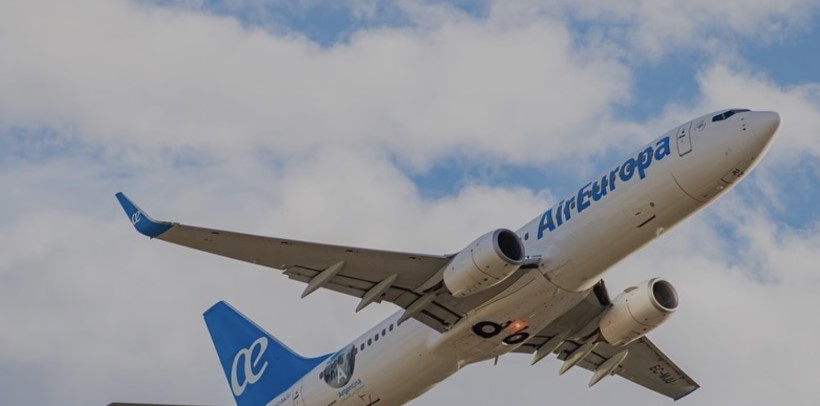
1 Air Europa: 5.33 Weak customer perception, low perceived value for money, subpar lounge experience
2 LOT Polish Airlines 6.22 Low punctuality, worse punctuality than average
3 Wizz Air 6.33 Worst customer reviews, weak family and pet policies, low comfort
4 Ryanair 6.44 Lowest comfort rating, restrictive family and pet rules, poor customer experience
5 Vueling 6.50 Frequent delays, limited onboard comfort, poor family services
6 Volotea 6,78 Weak customer reputation, limited professional recognition, and a less strong airport experience
7 TAP Air Portugal 7.22 Frequent delays on key routes, high prices and below-average lounges
8 Air France, expensive ticket prices, inconsistent service quality, variable operational performance
9 Norwegian Air Shuttle 8.11 Weak customer relations, limited lounge access, low perceived value for money
10 SAS 8.78 High prices, lounges without specific qualities and no clearly outstanding strengths
View the full point breakdown on the official rankings page, as well as how surplus airline
Rankades https://airadvisor.com/sv/de-samsta-europeiska-flygbolagen
Key insights: The five clearest trends
● Reliability remains the biggest challenge: Airlines that end up
at the bottom of the rankings often have problems with punctuality and more disruptions, which
showing that delays and cancellations are still the main reasons for
Dissatisfaction among passengers.
Low prices have clear disadvantages: Ultra-low-cost carriers get good ratings for price, but
often prioritises comfort poorly, customer reviews and rules for families or
domestic animals. It confirms that cheaper tickets often mean a less comfortable journey.
Customer reviews play a bigger role than ever: Airlines with weak ratings
consistently receives low ratings from customers, reflecting frustration with service quality,
Communication and disturbance management.
● Traditional airlines are not immune: several full-service carriers are in the bottom 10
due to uneven service, high prices or a less satisfactory
lounge experience.
● Safety no longer differentiates between airlines: As most European
airline companies have a high level of safety, the ranking is increasingly determined by factors such as
affects the passenger experience, such as punctuality, comfort, and value for money.
Management comment
Anton Radchenko, CEO of AirAdvisor, says that today's passengers are often prepared to
manage without all the extra onboard services. He does, however, want to point out that delays, cancellations
Flights and poor communication are significantly harder to accept.
– Our data clearly shows that punctuality issues affect customer satisfaction much more than
the ticket price itself, he says.
He also wants to point out that many travellers have incorrect expectations regarding more expensive tickets.
– Many believe that a higher price automatically means a smoother journey, but that's not true.
Even though the low-cost carriers are at the bottom of the list, several full-service airlines are also performing well.
poorly, as their punctuality and service have not kept pace with price increases,
continues Radchenko.
Radchenko further emphasizes that security in Europe is largely stable, meaning that
The passenger experience is becoming increasingly important.
– When safety is at the same high level, airlines are instead judged by how well they
manages disruptions. Clear information, quick rebooking, and helpful customer service become
crucial for travellers, he concludes.
What does it mean for passengers to fly with a ”worst-rated”
Airline
Passengers flying with airlines at the bottom of the rankings are at greater risk of experiencing:
● Further delays and cancelled flights, with an increased risk of missed connections
● Lower service quality, including poorer onboard comfort and limited customer support
● Inadequate communication during disruptions, which hinders rebooking and assistance
● A greater need to know one's rights under EU261, as compensation
and nursing depends on how disturbances are managed
● Stronger reasons to check airline performance before booking, rather than
just choose the cheapest option
Methodology
AirAdvisor's ranking of the worst European airlines is based on a structured
evaluation of nine separate criteria, designed to reflect both operational performance and
passenger experience. The analysis covered 15 Europe-based airlines and over 7.6
millions of flights completed during 2023 and 2024, where punctuality and proportion of delays
and cancelled flights were analysed. Passenger experiences were measured through 831,513
customer reviews from multiple different online platforms.
The nine criteria were: reliability, onboard comfort, safety, ticket price and value for money
(yield or revenue per available seat kilometre), customer reputation, quality of airport lounges,
Professional recognition, family-friendly travel conditions and pet travel policies.
Safety was evaluated using accident data from 2024, while the airlines' policies
and services were reviewed via publicly available material and verified third-party sources.
Each criterion was scored and weighted to give a weighted average, focusing on
airlines that performed weakly in several areas rather than those that were affected by
single problem.