Forest fires and floods left their mark on the summer of 2021 – the warmest ever experienced in Europe.
Extreme weather events underscore the need to quickly limit warming, warns an EU representative.
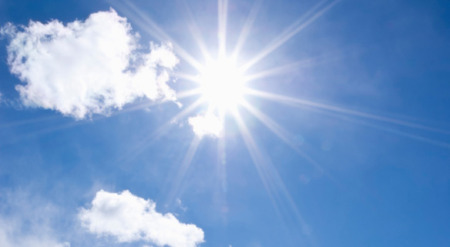
Lemons rotted on the trees, forests were on fire and snails were burned to death in their shells. During last year’s relentless summer sun, several record highs were recorded on thermometers in southern Europe – including a provisional national temperature record for Spain of 47 degrees and a provisional European record of 48.8 degrees in Italy.
It was the warmest summer ever experienced in Europe, 1 degree above the 1991–2020 average, according to a new report from the EU's Copernicus climate change service on last year's climate conditions, with a focus on Europe and the Arctic.
”"We don't look too far ahead, but focus mainly on things that have already happened. But of course these won't be the last temperature records we'll see in Europe," says lead author Freja Vamborg at a press briefing.
However, the annual surface air temperature in Europe was only around 0.2 degrees above the 1991-2020 average and was not among the ten warmest years.
But 2021 was a year of climate contrasts for Europe. The spring was cooler than average, while the summer in many places was characterized by persistent heat waves and drought.
This contributed to severe fires, with a total of 800,000 hectares of forest and land around the Mediterranean being ravaged in July and August. At the same time, the sea surface was unusually warm in June and July, for example, temperatures were measured more than 5 degrees above average in the Baltic Sea.
”That's quite a lot,” notes Vamborg.
While the heat was setting in Like a red-hot pot lid over the southern tip of the continent, record-breaking rainfall combined with already waterlogged soils caused the most devastation and exceptional flooding in Western Europe. Divers recovered bodies in Germany, cars were piled up in Belgium and bridges collapsed as water rushed through towns and villages.
”We know that we are likely to have more of these types of events in a warmer world,” says Vamborg.
”But it is important to remember that it was not just rainfall that led to the floods, but other climate factors also played a role. This makes it difficult to determine whether the floods themselves were a result of climate change.”
Despite short-term variations from year to year, the results for 2021 point to long-term changes in the climate, according to Copernicus. Although it was not a record warm year in Europe or the world, the European continent is around 2 degrees warmer than in pre-industrial times and globally the temperature increase is between 1.1 and 1.2 degrees.
The UN's Intergovernmental Panel on Climate Change (IPCC) recently warned that time is running out if the world is to limit global warming to 1.5 degrees Celsius and prevent the most devastating consequences of climate change. The fact that climate-related extreme events are already occurring in Europe underlines the urgency, says Mauro Facchini of the European Commission's Directorate-General for Defence Industry and Space.
”We face a number of challenges, such as limiting global warming to 1.5 degrees, the European Green Deal and net-zero greenhouse gas emissions by 2050,” he says.
”The Copernicus report emphasizes the urgent need to act and to do so, it is important to monitor and understand what is happening.”
Source: TT