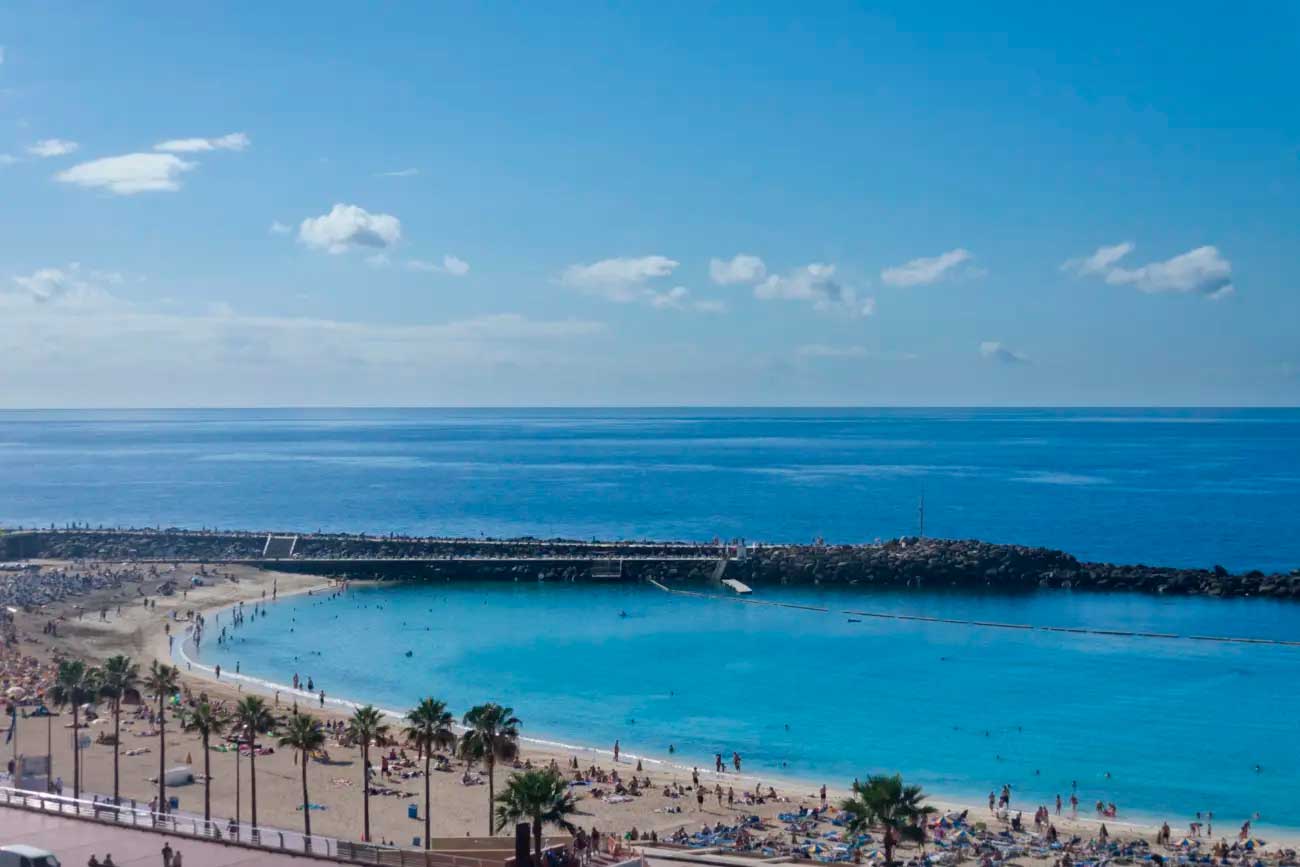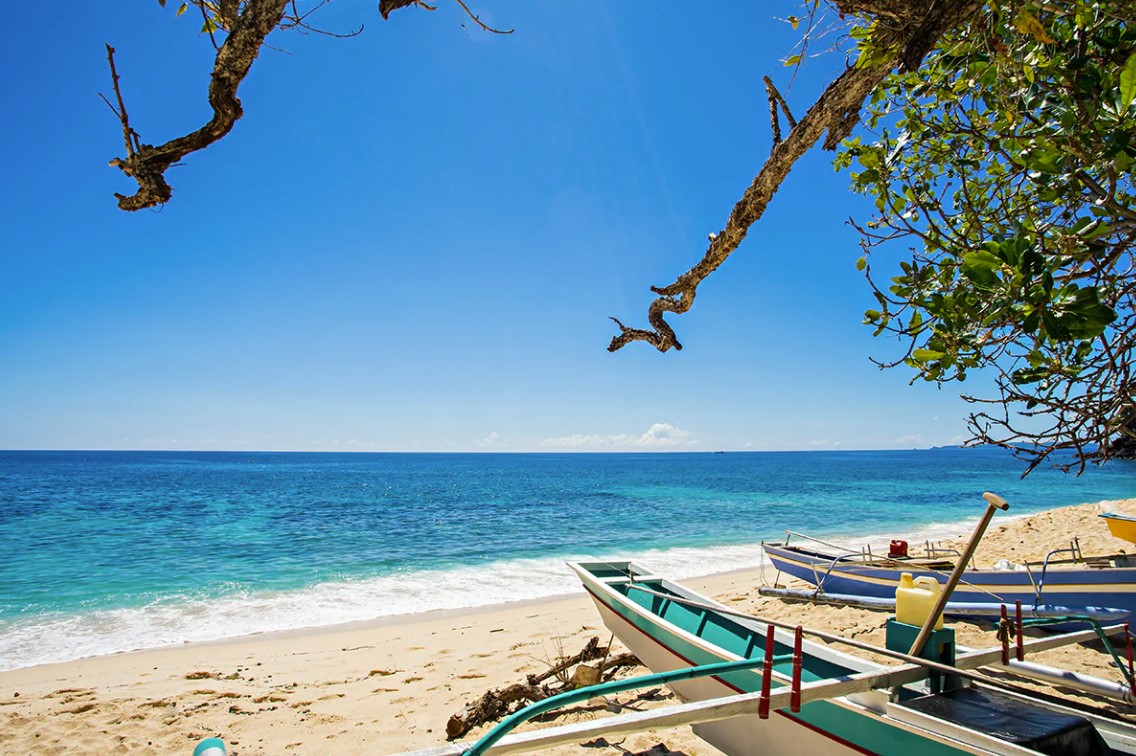




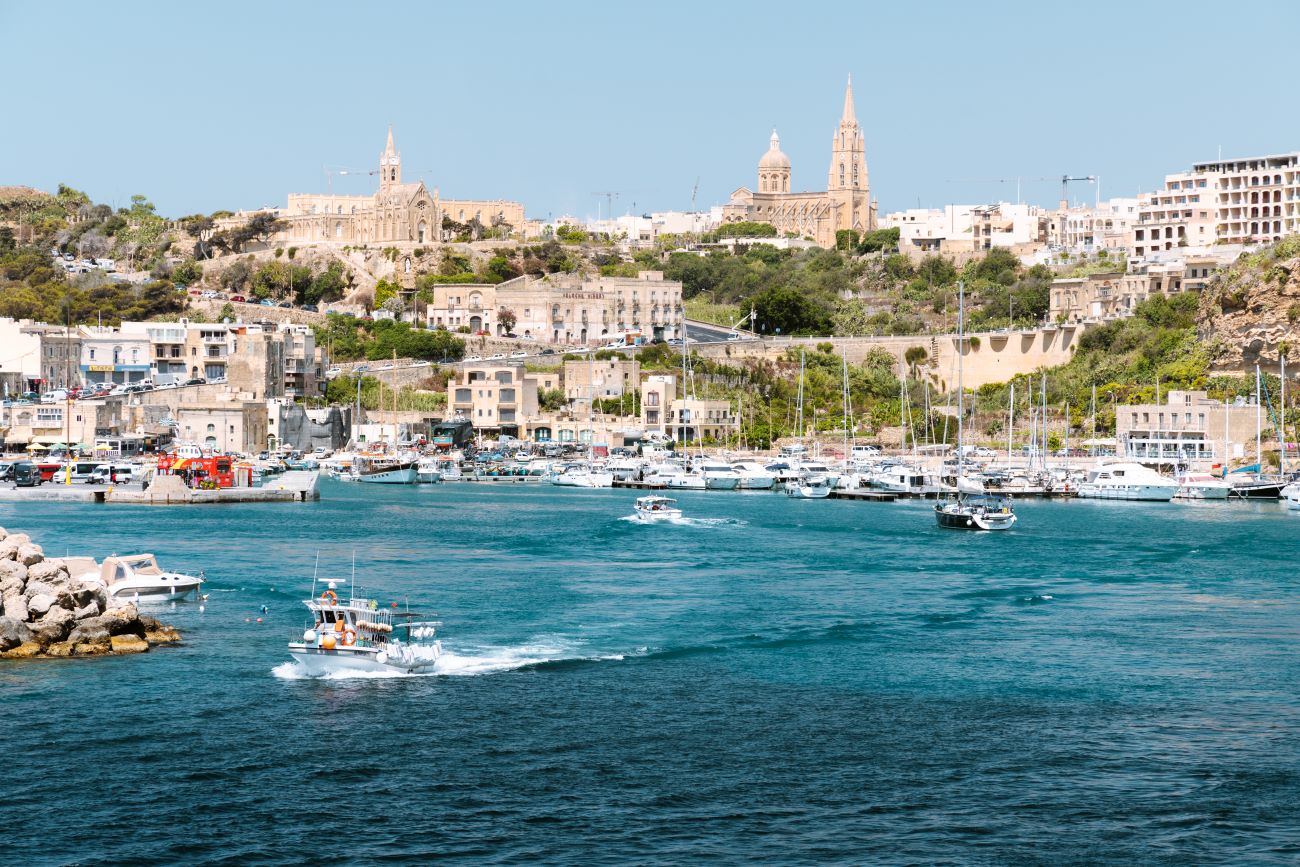
For many, the image of Malta is of azure seas, sun-drenched cliffs and a pleasant Mediterranean climate that attracts visitors year-round. But beyond the golden beaches lies a history that is both dramatic and enigmatic – a world where, as early as 5,000 years ago, people erected some of the world’s oldest freestanding stone monuments: Malta’s enigmatic megalithic temples.
The enormous stone blocks of the Maltese megalithic temples testify to a civilization that was far ahead of its time in architecture, art and astronomy. Built between 3600 and 2500 BC, the temples are older than both the pyramids of Egypt and Stonehenge in England. Since 1980, seven of the temples have been included on the UNESCO World Heritage List, including Ġgantija, Haġar Qim, Mnajdra, Tarxien, Ta' Haġrat and Skorba.
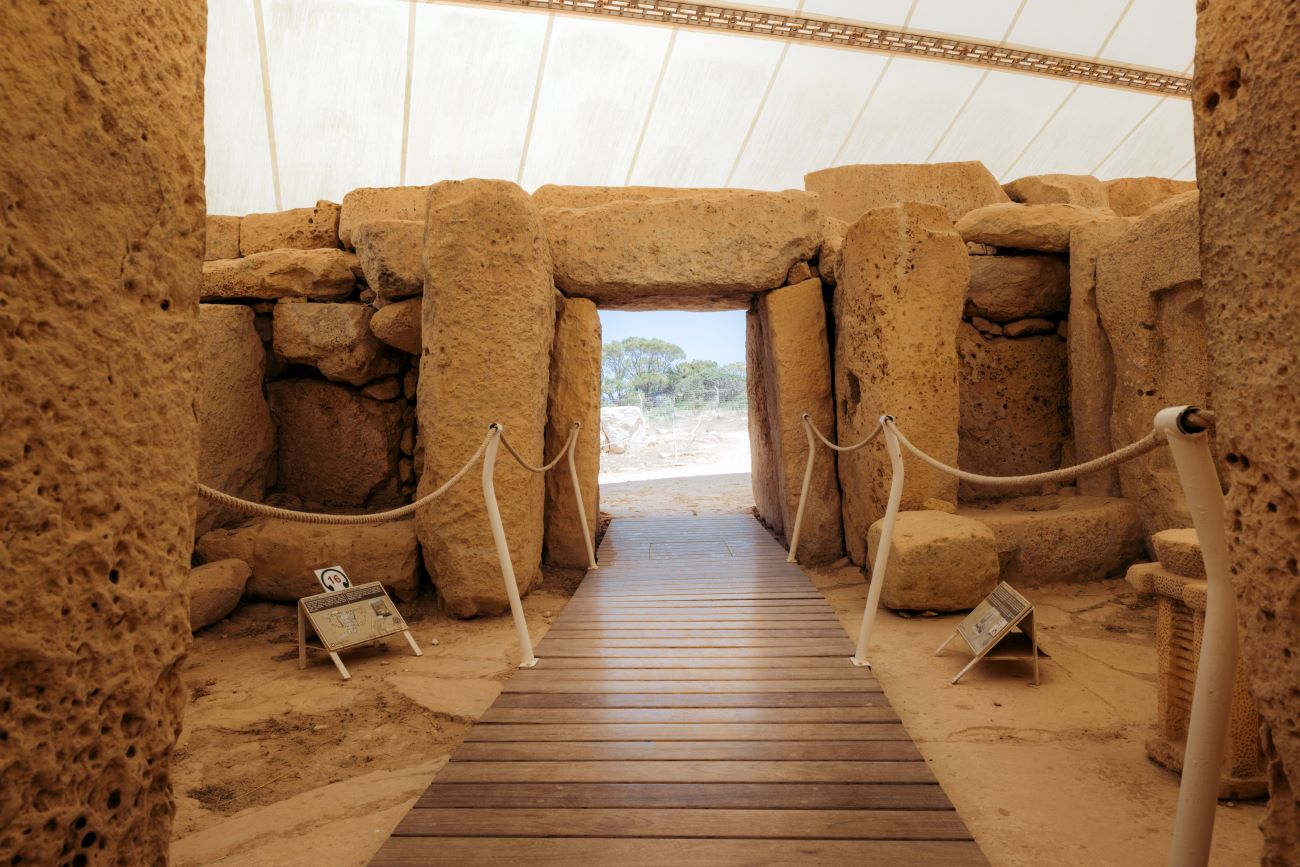
Each temple has its own character, but what they have in common are the massive stone blocks that form semicircular chambers – places believed to have been the center of rituals and ceremonies. The excavations reveal a peaceful and highly developed culture, but exactly why the temples were built remains a mystery. Were they sacred buildings, astronomical observatories – or something else entirely? The unanswered questions make the visit even more interesting.
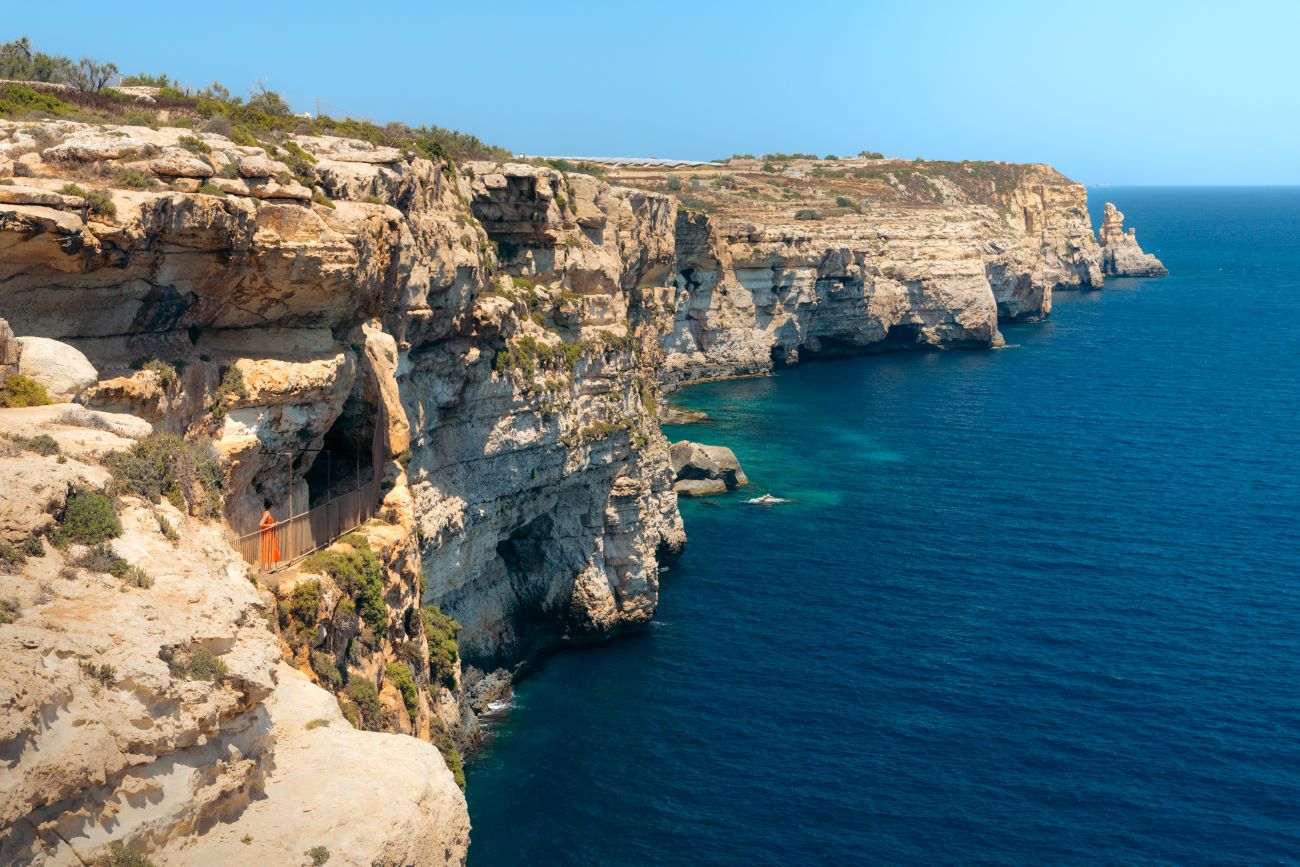
The most fascinating times of the year to visit the temples are at the spring and autumn equinoxes. The temples functioned as advanced sundials and helped ancient people to almost accurately determine when it was time for sowing and harvesting. Meeting the sunrise on site at the equinox is a unique experience that shows how people in Malta already 5,000 years ago had an extraordinary knowledge of time and the movements of the stars.
Four temples that will take you back in time
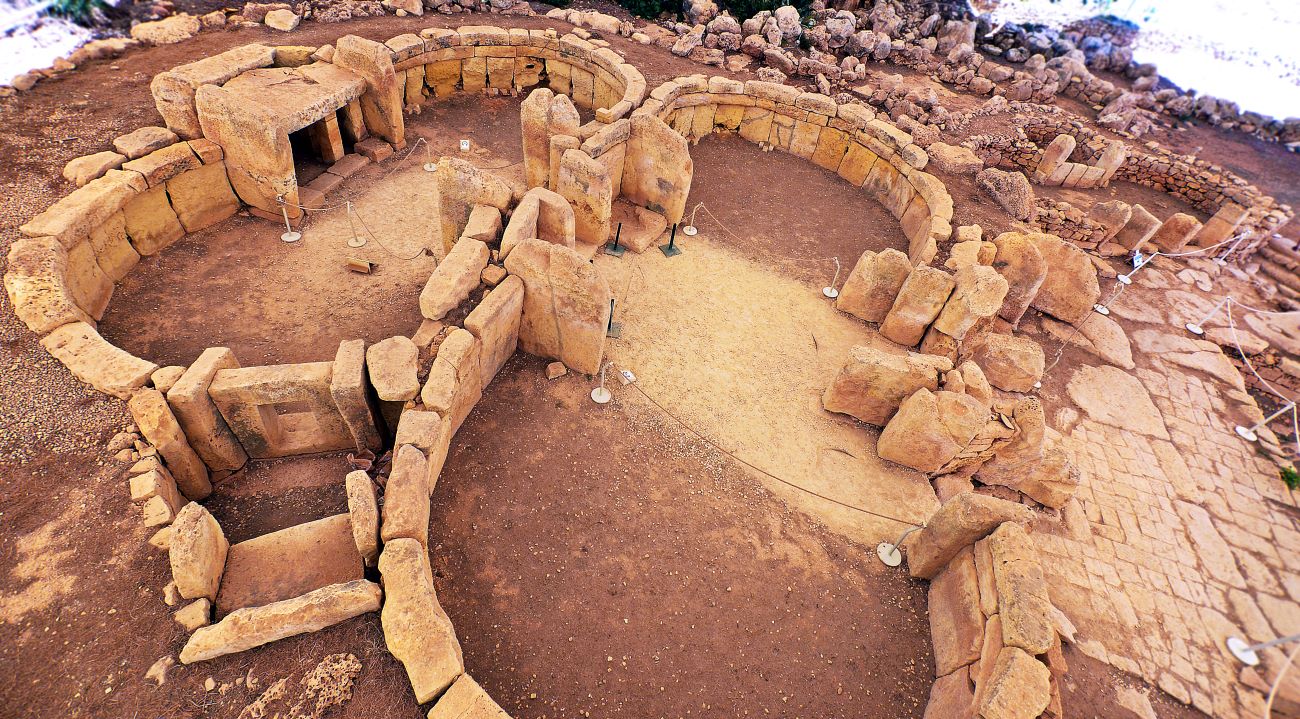
Hagar Qim (Malta)
On a cliff overlooking the Mediterranean Sea rises Ħaġar Qim, one of Malta's most magnificent temples. Here, archaeologists have found beautifully decorated altars and bas-reliefs, as well as several statuettes of mother goddesses. In one of the chambers, at the summer solstice, you can experience a special phenomenon, where a ray of light hits the wall and creates a crescent-shaped light image. A masterpiece of both architecture and astronomical precision.
Mnajdra (Malta)
Just a stone’s throw from Haġar Qim lies Mnajdra – best known for its southern building, where the stones are positioned with impressive astronomical precision. At the spring and autumn equinoxes, the first rays of the sun strike the temple’s central entrance with millimeter precision, while special stones mark the position of the sun at the summer and winter solstices.
Ggantija (Gozo)
On the island of Gozo lies Ġgantija, Malta’s two oldest megalithic temples. The name means “giant,” a reminder of the folk belief that only giants could have erected the massive blocks, weighing up to 50 tons. The temple walls show traces of altars and fireplaces, and animal bone remains have also been found here, a sign that the site may have been used for important rituals and celebrations.
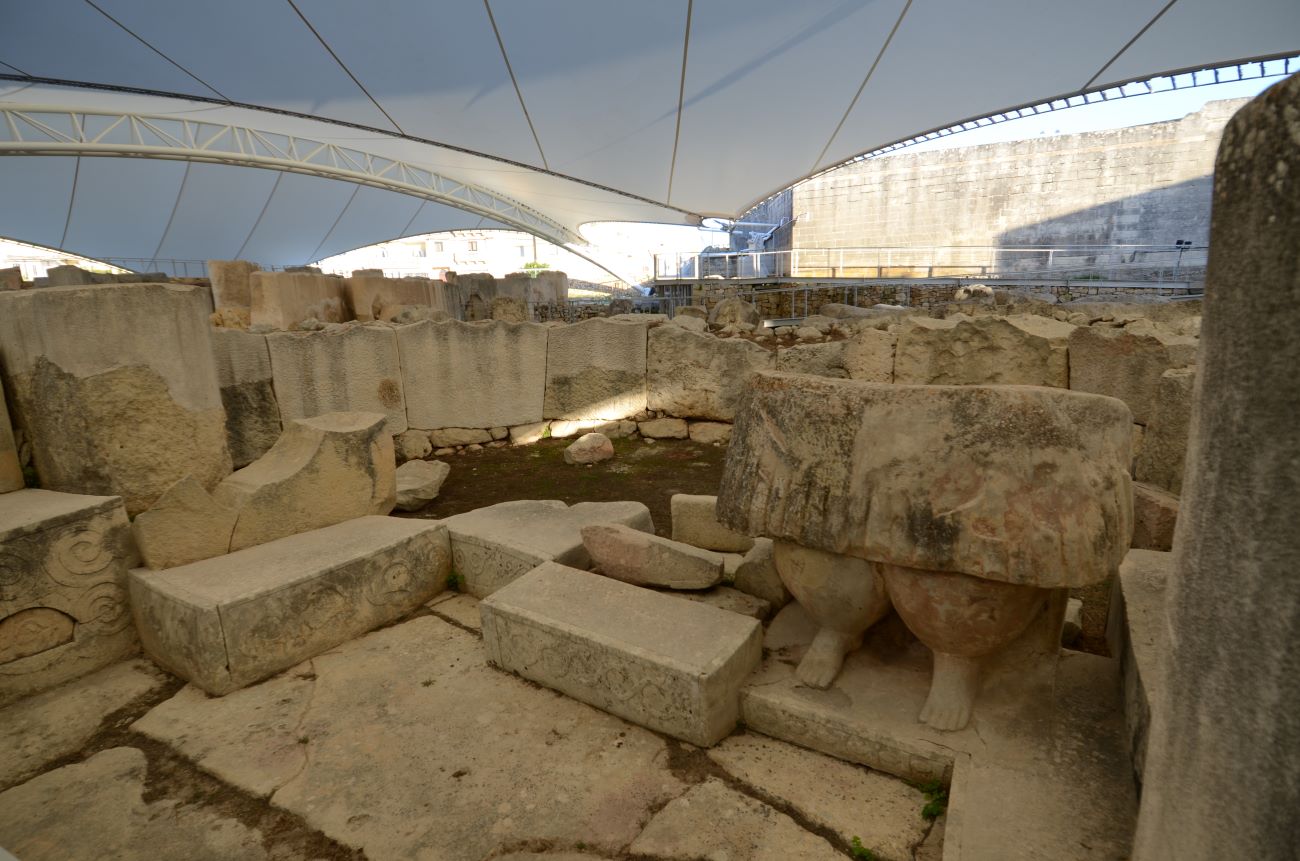
Tarxien (Malta)
Among the temples of Malta, Tarxien is the most ornate. It consists of four interconnected buildings, decorated with elaborate patterns of spirals and animal motifs. In the temple, archaeologists have found bones of bulls, pigs and goats, which are believed to have played a central role in ceremonies. The remains of one of the largest statues from Malta's temple period were also found here – a massive fertility figure, the lower part of which, with skirt and feet, can still be seen in situ.
A historic journey
Malta's megalithic temples are not just massive historical remains – they are also a reminder of how advanced human astronomical knowledge already was thousands of years ago, long before today's technology.
For travelers who want to combine sun and water with culture and history, Malta's megalithic temples offer a unique journey through millennia. During the equinoxes, a visit is also something very special - it is an encounter with a lost civilization that still impresses today.
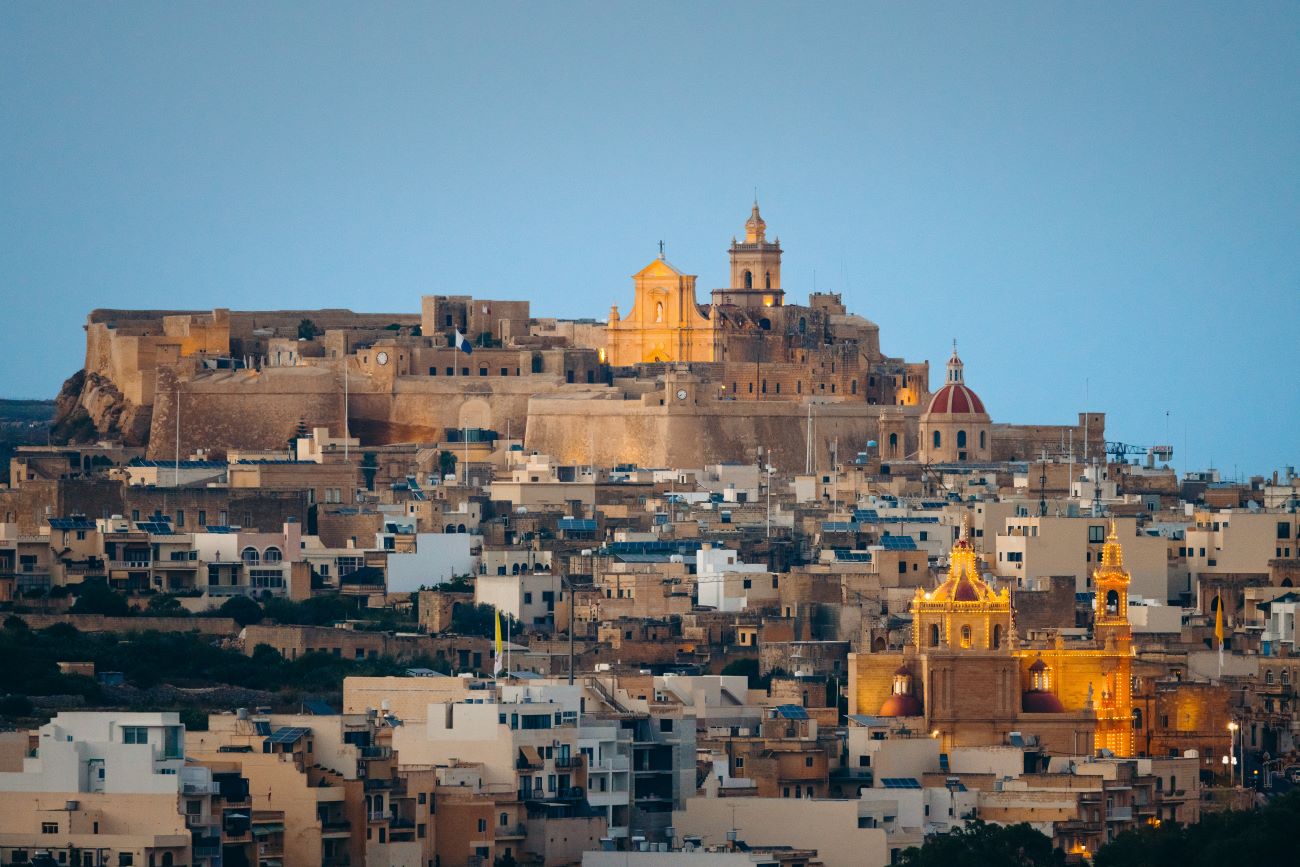
MALTA IN BRIEF
Malta consists of several islands, the three largest being Malta, Gozo and Comino.
Currency: Euro.
Visa för svenska resenärer: Nej.
No time difference.
Languages: Maltese and English (almost everyone speaks English).
Electricity: The sockets are British type with three pins, so an adapter is needed.
Best time to go: You can travel to Malta all year round and the high season is long, with summer temperatures typically lasting from April to November.
Number of selling days per year: 300.
TIP!
• The buses to the beaches are cheap. There are ferries to Gozo and Comino.
There are plenty of diving schools in Malta.
In Valletta's harbour, you can hire a sailing boat.
• No permit is required to fish from the shore.