



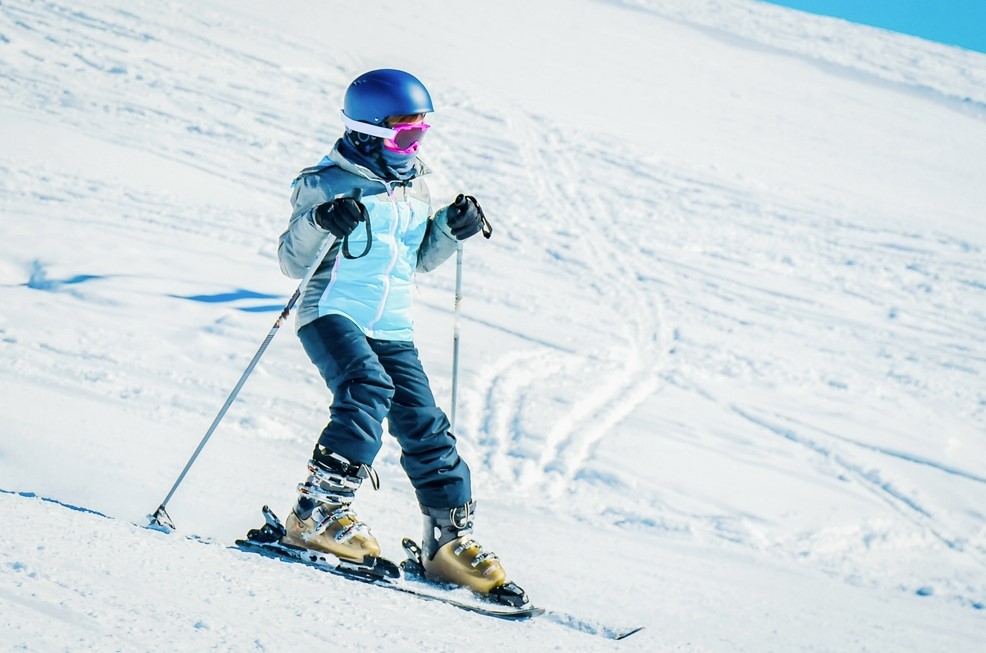
When Folksam examined personal injuries that occurred in connection with skiing, it was found that the majority (74 percent) of personal injuries occur in downhill runs on piste. The most common injury is that skiers injure their legs, followed by arms and head. The absolute most common injury is knee injuries, which account for more than half of all leg injuries. The most common arm injury is that skiers injure their shoulder, followed by injuries to the forearm/wrist.
Skiing is one of the most popular winter activities, with over 2 million Swedes skiing down the slopes every year. For the vast majority, the skiing trip is painless, but just like in all sports, there is a certain risk of injury. Folksam has recently received statistics from the Swedish Ski Resorts Organisation (SLAO) from the 2023/2024 ski season and now provides simple tips on how to ski safely and securely.
– Using a helmet and adjusting your speed are good ways to prevent injuries in connection with downhill skiing. Today, there is protection that prevents certain injuries, for example to the head, wrists and back. However, it is difficult to protect yourself against knee injuries, which are by far the most common injury, says Helena Stigson, research manager at Folksam.
Even though bindings have a release mechanism, there is still a risk of being subjected to twisting force on the knee, which can lead to ligament damage, an injury that often results in permanent problems. To reduce the risk of knee injuries, one thing to do is to optimize the settings on the bindings.
– Binding settings are a perishable commodity and something that needs to be reviewed before each season, so that you don't ski with last year's settings if, for example, you have changed your body weight or forget to review the settings for children who may have grown since last season, concludes Helena Stigson.
Folksam's tips for reducing the risk of injuries when skiing downhill:
1. Use a ski helmet with rotation protection
2. Use other protective equipment such as back protection and wrist guards (especially when snowboarding)
3. Correctly adjusted ski bindings
4. Adapt speed and choice of difficulty on the slope to your ability
5. Start training leg and core strength well in advance of your ski holiday
Folksam and the Swedish Ski Resorts Organisation have had a long-standing collaboration on ski safety issues. In the 1980s, they jointly developed downhill skier insurance, and have also mattress-secured slopes and provided training in avalanche knowledge. During the 2023/2024 ski season, a total of 10.4 million ski days were recorded, which is approximately 100 million ski runs in the Swedish ski resorts - clear proof that skiing continues to be a popular activity.
| Injured body part | SHARE |
| Face/Head | 15% |
| Neck/Throat | 2% |
| Arm | 30% |
| SHOULDER | 42% |
| Upper arm | 8% |
| Elbow joint | 6% |
| Forearm/Wrist | 25% |
| Thumb | 9% |
| Hand/Other Fingers | 11% |
| Breast | 2% |
| Abdomen | 1% |
| Back | 4% |
| Bone | 46% |
| HIP | 9% |
| Thigh | 6% |
| Knee | 56% |
| Lower leg | 22% |
| Foot/Ankle | 8% |
According to the press release.