



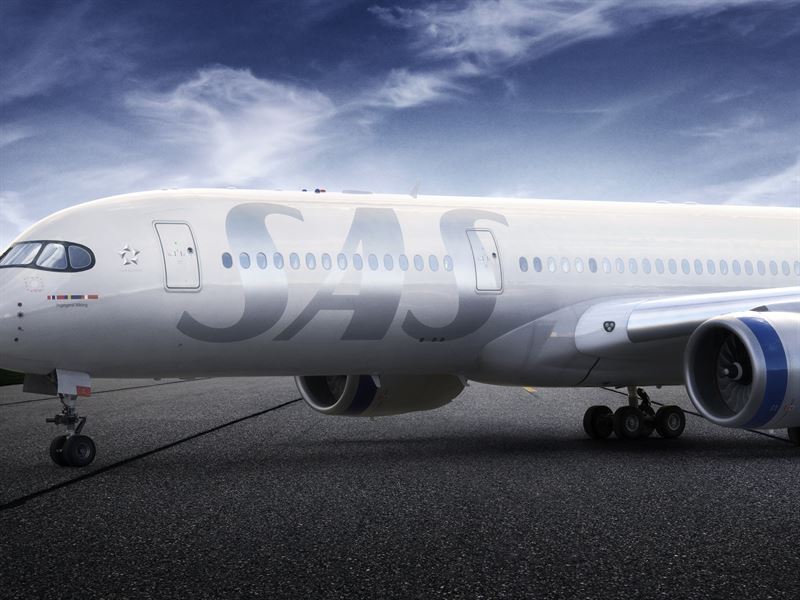
It's time for the loss-making and debt-laden airline SAS to put its cards on the table again. Analysts are speculating that another billion-dollar hit will come in Tuesday's quarterly report, which will be released at 8:00 AM.
”"Sell" is the unequivocal advice from the four analysts who have issued recommendations for SAS shares.
And several hedge funds have recently chosen to short the stock, that is, to use share loans to bet on new price declines, according to the news agency Bloomberg. This is despite the fact that the stock has already fallen 31 percent this year and now costs 88 öre – giving a market capitalization of just over six billion.
Jacob Pederson, head of research at Sydbank, expects a loss of 1.6–1.7 billion Swedish kronor from the second quarter. But he does not see an immediate liquidity crisis right now. The coffers are being replenished by all the airline tickets paid in advance.
”It gives SAS an airbag, with a stable cash flow even if the result is devastating,” he says.
The effects of the pandemic have subsided and air travel is increasing again, even though COVID-19 is still spreading and is causing major lockdowns in China, among other things.
SAS – which has the Wallenberg family and the Danish and Swedish governments as major owners – is also struggling with inflationary effects such as a significantly more expensive dollar and skyrocketing prices for aviation kerosene in the shadow of the Ukraine war.
Staff shortages and delayed deliveries – two pandemic effects – have simultaneously led to a mountain of rebookings with thousands of canceled flights this summer.
By the winter season, the situation could become serious for SAS from a liquidity perspective, according to Pedersen.
”"Then the market will be more difficult, because we will probably enter some kind of economic crisis. It will not be easy to get this to work around winter time, so within a year I think we could have big problems for SAS," he says.
The debts, just like the rebookings, can be described as a mountain, more precisely at 16.1 billion kronor, according to Bloomberg. Negotiations with the pilot union about reduced personnel costs and with lenders about converting loans into shares are ongoing – which is crucial to getting the company's finances in order in the long term, according to Pedersen.
SAS has in its plan SAS Forward has set a goal of reducing annual costs by SEK 7.5 billion by 2026 and consulting firm FTI Consulting has recently been hired to speed up the process, Bloomberg reports, citing sources.
”"SAS needs more money. They need to deliver on their plan, reduce wages, increase productivity and have some of their debt converted into shares. They need all of that," says Pedersen.
He does not believe in any merger as an option in the current situation.
”"Right now I don't think anyone can afford to buy SAS. All other airlines already have large debts after the pandemic. Consolidation is not a solution right now," he says.
”In addition, SAS must look forward now, and transform the company into something that is even worth buying,” he adds.
Source: TT-DI.SE