


A new volcanic eruption has occurred in Iceland, the seventh so far this year. The town of Grindavik and the Blue Lagoon tourist attraction have been evacuated, but the eruption is smaller than the one that occurred in August.
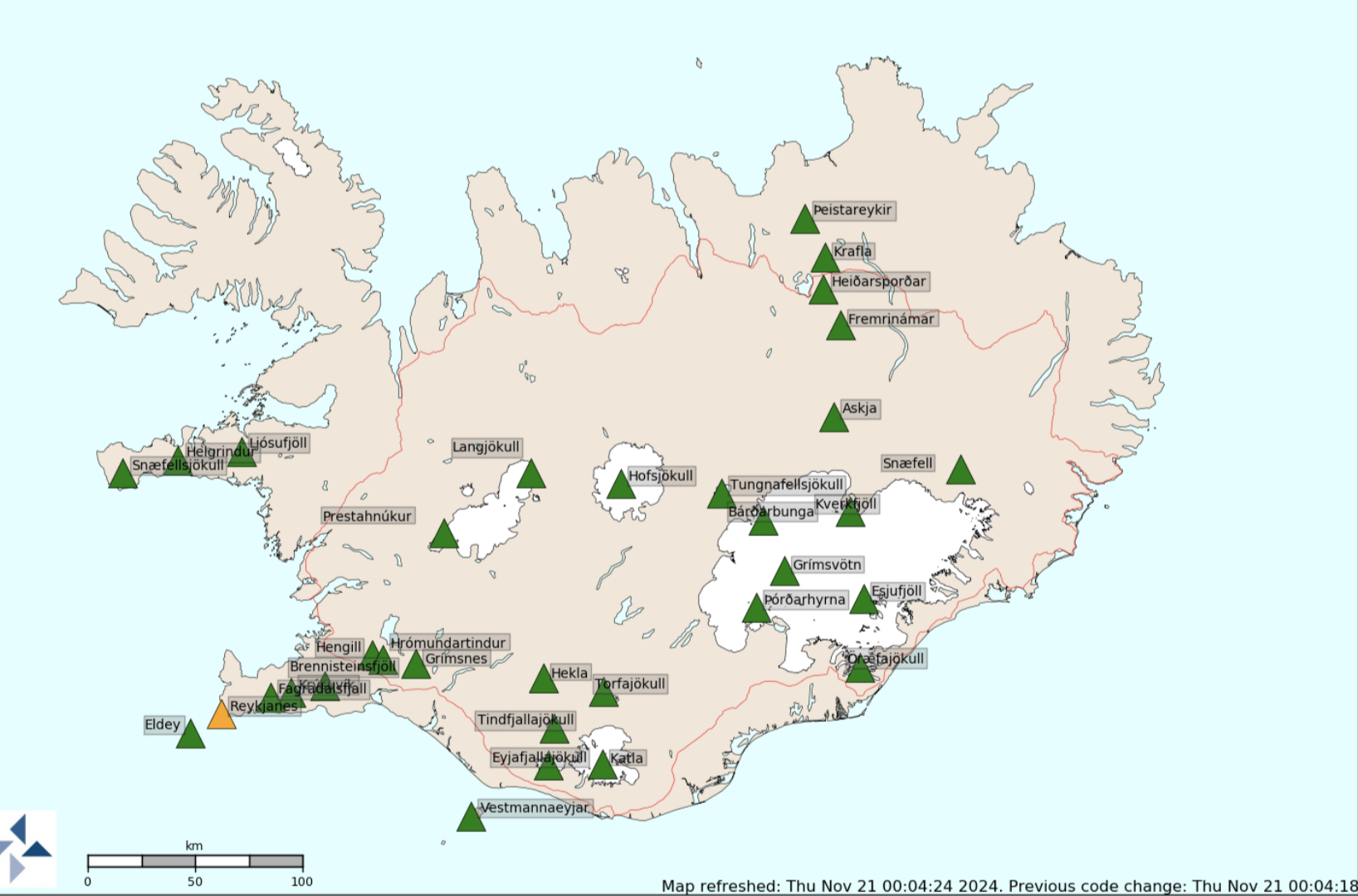
The eruption occurred shortly after 11 p.m. on Wednesday evening between the mountains Stóra-Skógfell and Sýlingarfell on the Reykjanes Peninsula, the public service broadcaster reports. Rúv.
According to the Icelandic weather institute Vedurstofa, the eruption reached its peak just before 2 a.m. By then, lava had flowed both east and west from the approximately three-kilometer-long fissure that had formed.
”"The eruption is significantly smaller than the last one which occurred on August 22," Vedurstofa writes on its website.
”"It is interesting that seismic activity did not increase in the weeks before the eruption, as it had done previously," the weather institute writes, adding that it may be a sign that the patterns of how eruptions occur may have changed.
The coastal town of Grindavik, where between 50 and 60 people are currently believed to live, has been evacuated. However, no lava is flowing towards the town, according to Vedurstofa.
”"Grindavik is not in danger as it looks now and it is unlikely that this crack will get bigger, although nothing can be ruled out," says Magnús Tumi Gudmundsson, professor of geophysics, to Rúv.
The popular tourist destination Blue Lagoon was also evacuated, which according to the emergency services went smoothly.
Flights to and from Keflavík Airport are not affected.
This is the seventh time this year that a volcanic eruption has occurred on the island nation of Iceland, which is located right where the North American and Eurasian continental plates meet – and therefore has an extremely high level of geological activity.
Source: TT-DI.SE