



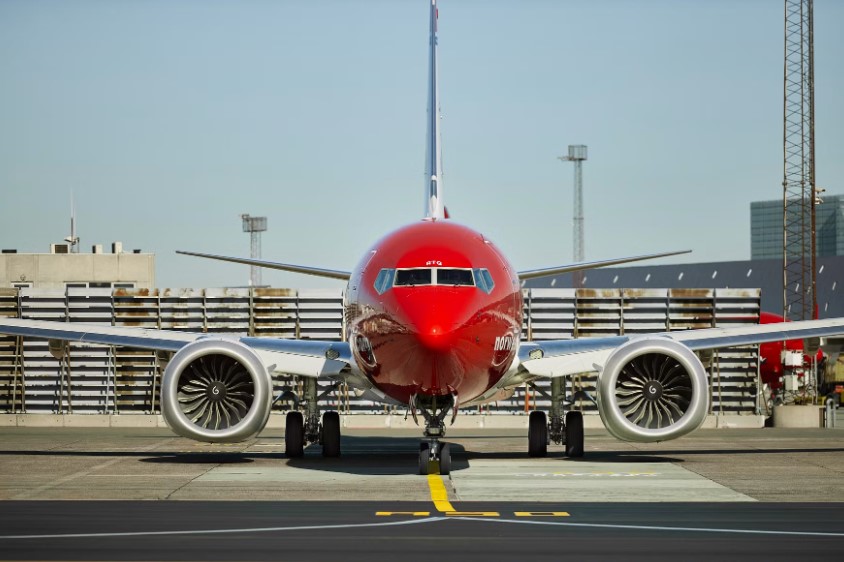
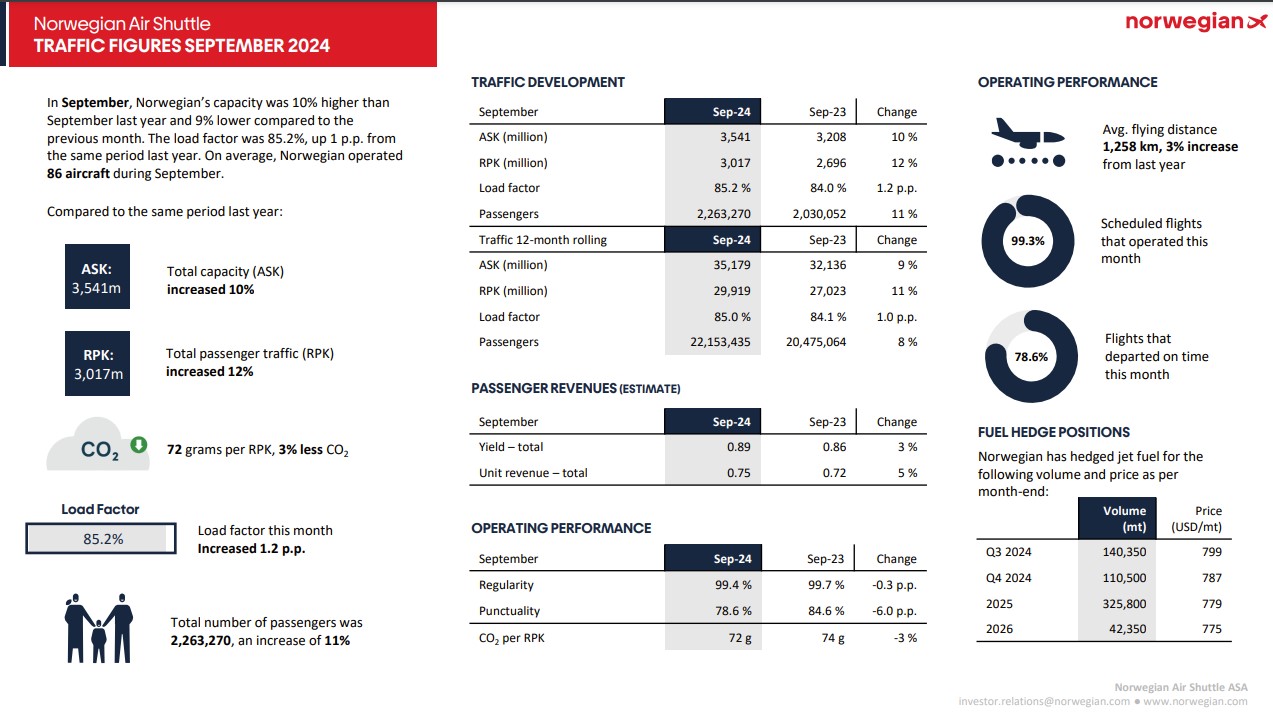
In September, Norwegian had 2,263,270 passengers while Widerøe had 356,259 passengers. In total, the group had 2,619,529 passengers. Capacity increased by 10 percent while the number of passengers increased by 11 percent compared to September last year. Despite good figures for September, the company is focusing on increased cost control.
– I am pleased that the cabin factor has increased throughout the summer and into the autumn season at the same time as capacity has increased. Flight tickets for the autumn holidays have been booked well and we are looking forward to an intensive travel month in October. We are also looking forward to the winter season where we offer many new exciting destinations. While we are pleased with the traffic figures, we are taking cost measures to be prepared for challenges, says Norwegian's CEO Geir Karlsen.
Capacity (ASK) was 3,541 million seat kilometers, an increase of 10 percent compared to the same period last year. Actual passenger traffic (RPK) was 3,017 million seat kilometers, an increase of 12 percent from September 2023. The load factor increased by 1.2 percentage points from September 2023 to 85.2 percent. In September, 99.4 percent of scheduled flights were operated. Punctuality, which measures the proportion of departures within 15 minutes of the regular schedule, was 78.6 percent, down 6 percentage points from September last year. The change is largely due to weather conditions and restrictions in European airspace. Norwegian had an average of 86 aircraft in operation in September.
Boeing strike causes concern
Boeing has faced several challenges in recent years, including the ongoing strike, now in its fourth week. Over 30,000 technicians and mechanics are on strike, affecting the company's production rate.
– The ongoing strike at Boeing is resulting in further delays in deliveries of new aircraft. The delays mean that we will not receive the number of aircraft we have expected for next year's summer program, which increases costs in the short term. We are therefore looking at various measures, including extending aircraft leases, continues Geir Karlsen.
In September, Widerøe had a capacity (ASK) of 182 million seat kilometers. Actual passenger traffic (RPK) was 134 million seat kilometers while the load factor was 73.5 percent, an increase of 7.7 percentage points compared to September last year.
According to the press release.