


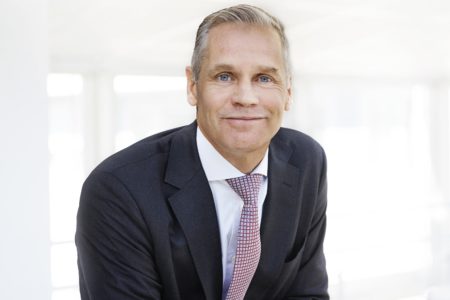
After several crises and painful trials, SAS CEO Rickard Gustafson sees a turnaround.
Despite the important summer season being marked by more cancellations than normal, he sums up 2018 as proof that the company is on the right track.
The price war in the airline industry is pressuring Scandinavian airline SAS, and the crises have succeeded each other. The ongoing savings package aims to improve results by three billion kronor by 2020. But the change efforts have already begun to yield results, according to CEO Rickard Gustafson.
”"We have fought for our survival and in 2018 we achieved one of our best results ever. It shows that we have adjusted and adapted to what the industry looks like today," says Rickard Gustafson, who also notes that it has often been a painful journey, not least for the staff.
During the broken financial year that ended in October, 30 million passengers flew with SAS – a record number.
From its inception in 1946 until 2012, SAS had a more or less static timetable but relatively little business during the summer when business travellers were on holiday. Back then, July was a loss-making month. Now it is one of the best months of the year, with more loss-making periods during the winter months.
”"Seasonal destinations, that we go in and out of destinations, it has radically changed the profitability for SAS," says Rickard Gustafson.
Other factors that will improve the company's financial position in the long term are that in 2018 it got rid of an expensive loan that the now redeemed preference share program entailed.
Despite the results, SAS was forced to cancel two percent of its flights during the summer, one percentage point more than normal. Congested airspace, staff shortages and ordered aircraft that were delayed by the manufacturer were the reasons.
”"We deeply regret the cancellations of flights this summer. It has taught us that we need to become even more skilled at ensuring that we have robust production," says Rickard Gustafson.
The company has recently opened new bases in Ireland and Spain, partly to reduce personnel costs. But Rickard Gustafson emphasizes that SAS's Scandinavian soul is very important to him.
”"Scandinavian is a culture and has little to do with what language you speak. Our business does not mean that everyone has to be Scandinavian for it to work. Look at Ikea, for example," says Rickard Gustafson.
When asked if SAS is moving towards becoming a low-cost airline, Rickard Gustafson doesn't really want to take the word for it.
”"The term low-cost carrier will disappear. In the future, there will be airlines that compete. Customers decide what they are willing to pay. If we can't offer it, they will choose someone else," says Rickard Gustafson.
SAS is facing multi-billion-sek investments in the coming years. The fleet is being replaced and from 2022 SAS will fly with around 100 new aircraft for a total cost of almost SEK 50 billion.
”Most of it is about replacing old aircraft to get aircraft that are more fuel efficient,” says Rickard Gustafson.
SAS CEO sees some clouds of concern ahead of 2019. A higher oil price and a weaker krona against the dollar are the main challenges. At the same time, competition in the Scandinavian market is expected to increase. According to Rickard Gustafson, the focus for the business is on increased digitalization and sustainability issues.
”"Flight has a negative environmental impact and we must take that very seriously. We must find a way to switch to sustainable travel. It is something we give high priority to," he says.
Source: TT