



Skansen is ranked as Sweden's most sustainable brand in the travel and tourism industry according to Swedish consumers. This is shown by the annual brand study Sustainable Brand Index 2023.
The Sustainable Brand Index is Europe's largest brand study on sustainability and measures Swedish consumers' perceptions of how sustainable brands are. This year's study shows that Skansen ranks first in the industry category "Travel & Tourism".
– We are happy and proud of the statement from Swedish consumers. The placement is a pleasing confirmation that what we have done so far to be a sustainable destination is being noticed. That said, sustainability work is not something that is finished. Skansen and our assets, such as historic houses, green areas and the zoo, have been managed since 1891 and will be passed on to future generations. This requires a long-term approach and continuity, says Yvonne Nordlind, Marketing and Communications Manager at Skansen.
The Skansen Foundation has high ambitions for its sustainability work. In addition to an increased focus on species conservation and biodiversity, and preserving and making cultural heritage accessible, emphasis in recent years has been on strengthening educational work, reducing water and energy consumption, switching to fossil-free green electricity, reducing waste and increasing the recycling rate.
– Our city-center location, in the middle of Stockholm, provides unique opportunities for us to reach lots of people with sustainable experiences of Sweden's nature and culture. By setting goals and making wise decisions today, we hope to inspire more people to make sustainable choices, says Karin Ringholm, who is park manager and also coordinates sustainability issues for Skansen.
Skansen's sustainability work
Skansen's sustainability work is based on an action plan with twelve focus areas that have a direct connection to the UN's global sustainability goals, Agenda 2030. Each focus area has sub-goals that affect all parts of the operation and are followed up every year. Here are some examples of what we have done in recent years:
- Within the framework of Skansen's work with species conservation and biodiversity, we keep endangered species in the zoo, work with landraces, biologically favorable green areas and cultural heritage plants. Efforts in recent years also include the opening of the Baltic Sea Science Center (2019) and an exhibition that visualizes biodiversity together with Visualization Center C in Norrköping, Stockholm Resilience Center and the Swedish University of Agricultural Sciences (2022).
- As a zoo, Skansen also has a responsibility that extends beyond our own physical location. For a number of years, Skansen has worked to collaborate more closely with research and thereby actively contribute to species conservation and biodiversity. Here, our urban location provides a unique opportunity to reach out to and engage a large number of guests, schools and companies.
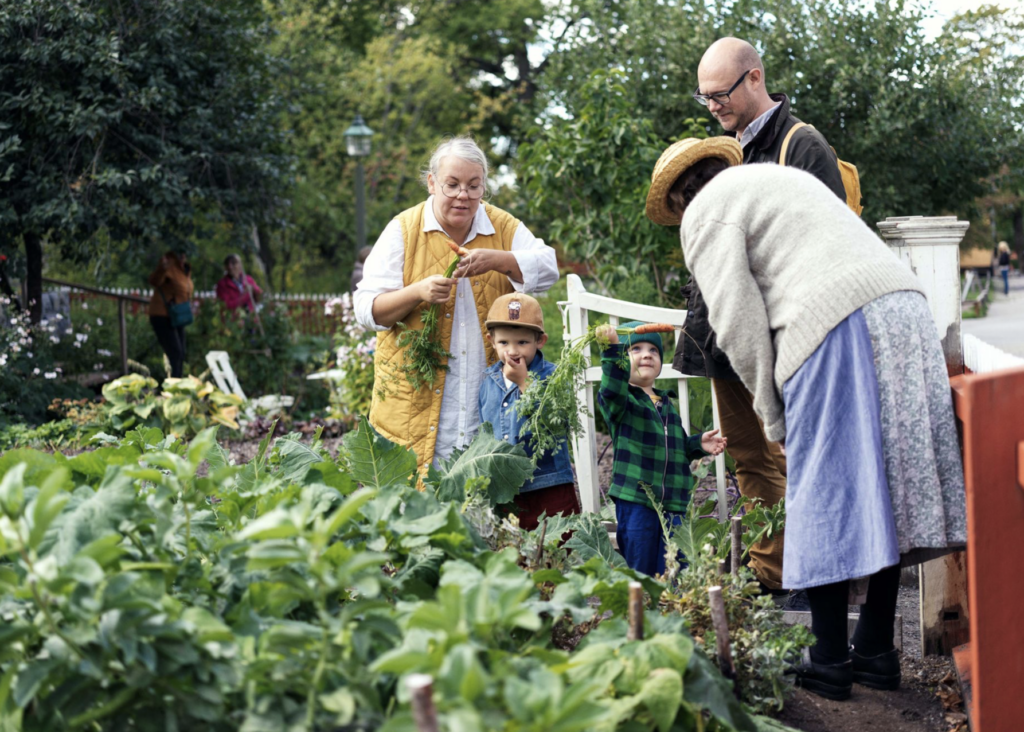
- By preserving and making cultural heritage accessible, Skansen shows how history can contribute to solutions for a sustainable society. A visit to Skansen not only provides an insight into history but also provides a perspective on our own lives here and now. By putting current social issues in a historical perspective, we want to engage people to understand and be active in their own time.
- Every year, a very large number of school students are welcomed to Skansen, in 2022 we welcomed 55,565 school students. All school tours and lessons have a goal and connection to Agenda 2030.
- We have reduced the amount of household waste by 28% from 2018 to 2022 thanks to increased sorting. During 2022-2023, new waste sorting stations for guests have also been developed in a collaborative project with the Stockholm Consumer Association.
- All Skansen vehicles run on electricity or EcoPar Bio.
- We continue to reduce and streamline energy consumption. The use of Skansen's last oil boiler fired with EcoPar Bio will cease in 2023. We only use electricity with the good environmental choice label.
- We have replaced most of our small machines, such as chainsaws and lawnmowers, with battery-powered ones, and the few that remain run on environmentally friendly fuel.
- We have implemented new sustainability goals together with our restaurateurs. This means, among other things, that vegetarian options must be at the top of the menu, fish must come from sustainable fisheries, meat products must be Swedish (alternatively EU organic) and no non-certified palm oil may be used.
- Kungliga Djurgårdens Intressenter (KDI) is an association that brings together entrepreneurs on Djurgården for joint work with sustainable place development and where Skansen is included. Together we were awarded the Green Destinations Platinum Award for structured work within all UN sustainability goals (2022) and the Green Destinations Story Award for a joint and strategic approach and sustainable leadership (2023).
- According to the press release.