



Half of all European ski resorts could lack sufficient snow in the future. The grim reality awaits if the average temperature rises by 2 degrees, according to French climate scientists.
The researchers have examined over 2,000 ski resorts around Europe and made estimates of how they will be affected by a 2 or 4 degree increase in average temperature. And it's not a cheerful picture that emerges.
According to the analysis, even at 2 degrees of warming, 27 percent of the resorts will be snow-poor. This is despite the fact that the production of artificial snow has been taken into account. Without artificial snow, half of the resorts will be severely affected.
”"It is no surprise that skiing will be affected by global warming, but it becomes very concrete in this study," says Gustav Strandberg, research leader and climate scientist at SMHI.
Artificial snow is already widely used today, allowing skiers to enjoy the slopes for longer. However, the production of artificial snow requires a lot of energy and water, which contributes to increased emissions, which in turn accelerates warming. In addition, scientists believe that it will be too warm to even produce artificial snow in places like southern Europe.
”The consequence will be that more people will have a longer distance to the nearest ski slope,” says Gustav Strandberg.
Currently, we appear to be heading towards at least 2.7 degrees of warming by the year 2100 according to the Climate Action Tracker. If the average temperature instead increases by 4 degrees compared to pre-industrial times, 75 percent of all ski resorts will have too little snow to be able to operate as they do today.
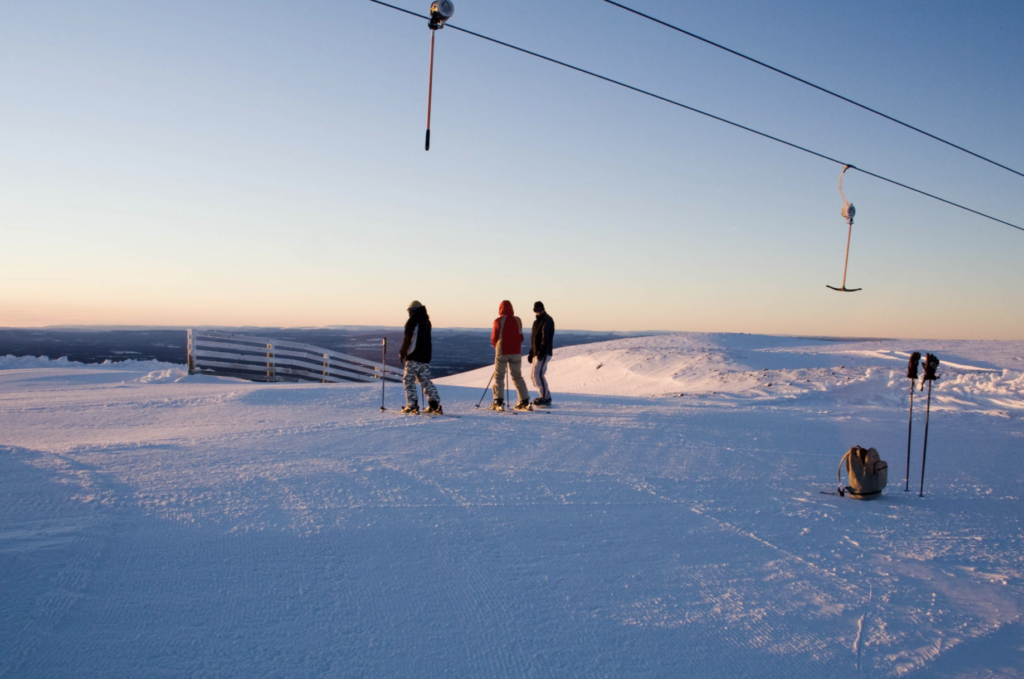
In Sweden, this has been evident in ski systems postponing their premieres. Last year, for example, the Branäs Group had to postpone the opening of lifts and slopes in Kungsberget.
”"At SMHI, a shortening of the snow season is observed and we see the biggest change in northern Svealand and southern Norrland," says Gustav Strandberg.
According to the researchers behind the article, which was published in the scientific journal Nature Climate Change, this is the first analysis that has included the energy consumption and emissions involved in the production of artificial snow in the calculation.
”"When we make adjustments to better cope with torrential rain or heat waves, it perhaps feels more obvious than using energy and machines to allow people to ski more days per year. In a way, it becomes an artificial world," says Gustav Strandberg.
Source: TT-DI.SE