



A proper snow cannon has moved in from the Baltic Sea, resulting in tracked vehicles in Stockholm and stationary traffic at Bromma Airport, among other things.
Motorists are also advised not to travel into snow-affected areas along the east coast.
”The road conditions are really troublesome in many parts of the country,” says Lennart Hellsing at the Swedish Transport Administration.
Easterly and northeasterly winds will bring snow showers to southeastern Norrland down to Götaland.
From Stockholm County down to Kalmar County, SMHI has issued class 1 warnings for snowfall. In Södermanland and Stockholm Counties, the snow showers could be heavy, bringing five to ten centimetres, with locally more, and there is a risk of drifting snow.
”A snow cannon has been set up over the Baltic Sea. It can occasionally produce quite heavy snow showers, says Alexandra Ohlsson,” a meteorologist at SMHI.
SMHI has extended its Class 1 warning for snowfall to the entire county of Skåne and Österlen, as well as to the counties of Västra Götaland, Bohuslän and Gothenburg. Between five and fifteen centimetres of snow may fall there, with locally more.
Snow showers will also move in over Gävleborg and Gotland, among other places.
Those planning to travel by train or car should keep an eye on the weather forecasts and follow information from the train companies. Furthermore, the Swedish Transport Administration is moving six of its all-terrain vehicles to Stockholm so that they can be used for essential transport if regular vehicles are unable to get through.
”It's to be able to get out with ambulance transport, food deliveries and the like to primarily elderly people or the sick who live a bit outside the central parts of the metropolitan area,” says Trafikverket's press officer Bengt Olsson.
Trafikverket advises private individuals not to travel by car in the affected areas unless absolutely necessary. The cold means that gritting is not working very well and the wind makes conditions even more difficult.
”If you really need to drive, particularly along the coasts east of Stockholm and down towards Nynäshamn, you should consider whether you truly need to take the car,” says Olsson.
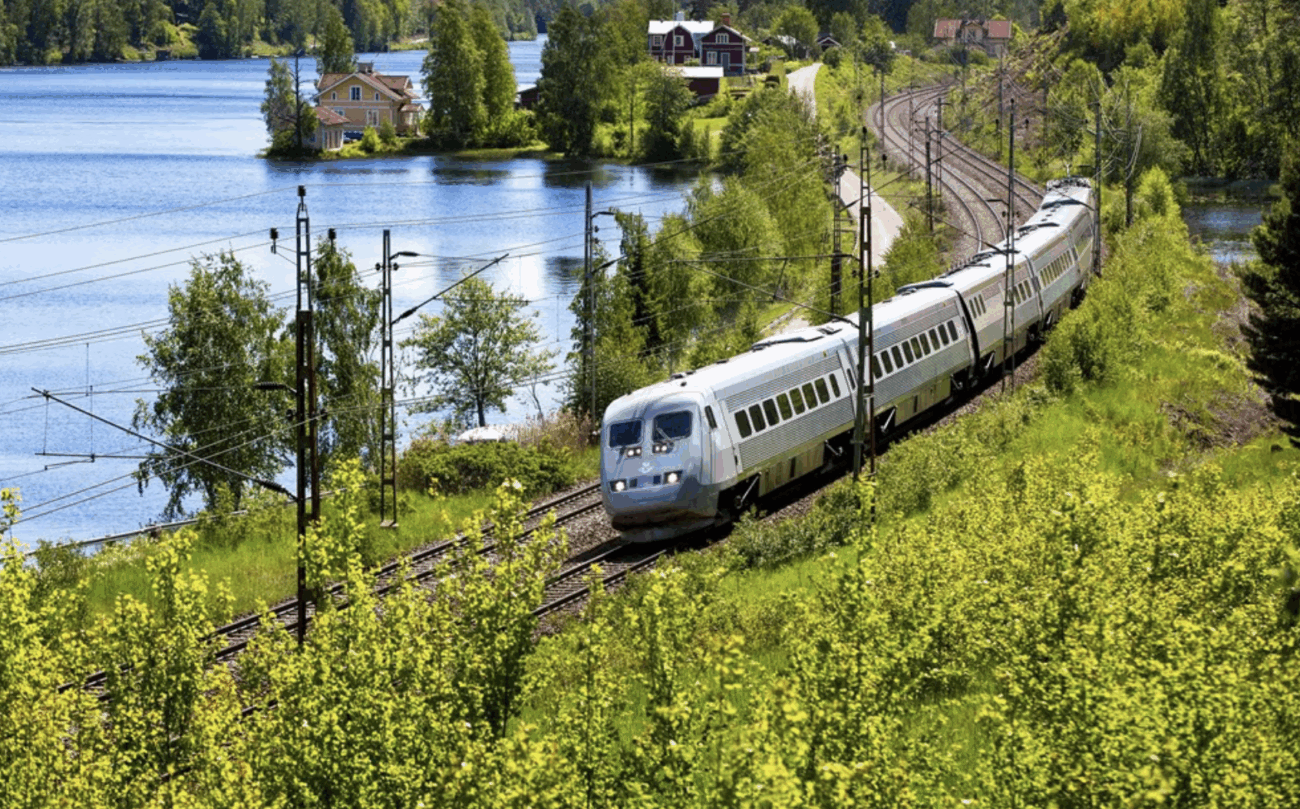
In Kalmar and Kronoberg counties, weather warnings have led the Swedish Transport Administration to cancel trains on several routes, including the one between Kalmar and Linköping. More routes may be closed at short notice. In Stockholm, parts of the commuter train traffic have been affected.
At around 9am, reports started coming in about traffic accidents around the country. On the E6 outside Malmö, one lane was closed following an accident near Lomma. On the E18 north of Stockholm, near Danderyd Hospital, several lanes have been blocked by an accident. Accidents have also occurred on, among others, the E4 just south of central Stockholm, and on the E22 south of Oskarshamn.
Shortly after 12 o'clock, three cars collided on the E22 between Malmö and Lund. The southbound lane has been closed, and traffic is restricted in the northbound lane. Just over half an hour later, a multi-vehicle accident occurred on the E6 near Munkedal. Several vehicles drove off the road.
”The common denominator in this type of accident is that the distances between vehicles are far too short,” says Lennart Hellsing, from the Swedish Transport Administration, adding that the winter road conditions are truly difficult in some places.
The winds on the Öresund Bridge are so strong that wind-sensitive vehicles are advised against crossing the bridge.
Temperatures are low across the country; an all-time seasonal record of minus 40.4 degrees was measured in Gielas on Monday. In the Jämtland mountain region, SMHI is warning of fresh winds that could cause a significant chill factor. Even in the southern parts of the country, people should dress warmly because of the wind.
”In Svealand and Götaland, it will be quite windy and combined with the cold, it will feel considerably colder than the thermometer shows. We will experience it as a very cold day,” says Alexandra Ohlsson.
On Tuesday morning, traffic at Bromma Airport was at a standstill for an hour.
”This is because the wind was so strong it polished the track surface, making it slippery,” says Åsa Öhman, press officer at Swedavia.
Elsewhere, traffic is flowing more or less as usual at the country's airports, but the problems caused by the snowfall on Monday are leading to ongoing knock-on effects.
For those celebrating the ski holiday, there is also reason to ski carefully on the slopes. Warnings have been issued for significant avalanche danger in the western Vindelfjällen, southern Jämtlandsfjällen, and western Härjedalsfjällen. In all three areas, the avalanche scale is at a three, where five means extreme avalanche danger. Therefore, it is likely that smaller avalanches will occur in these areas.
Source: TT