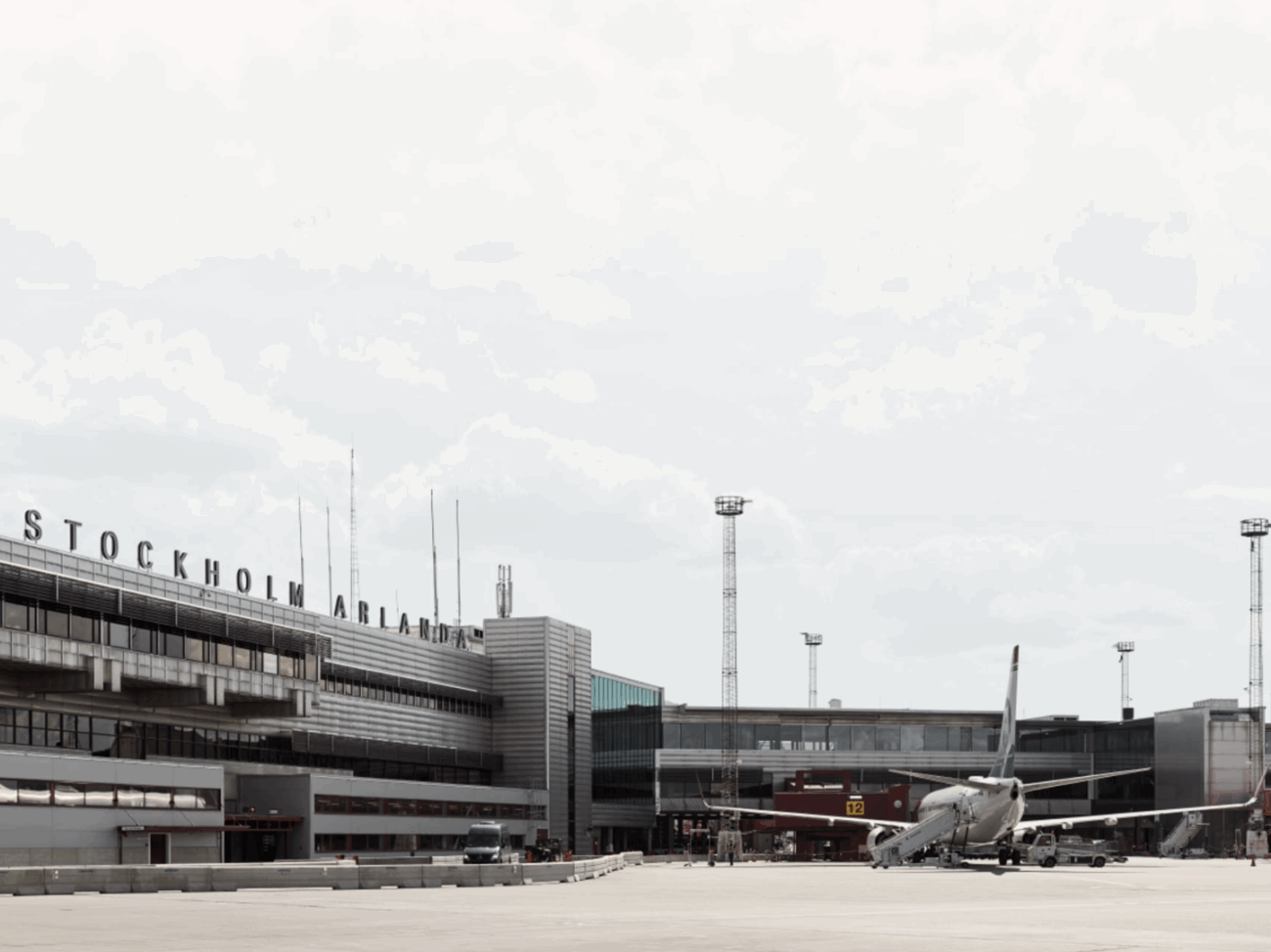




Swedavia, together with Airbus, Avinor, SAS and Vattenfall, has signed a letter of intent to work together to develop infrastructure for hydrogen flights at airports in Sweden and Norway.
The goal of the collaboration is to develop a framework and review the conditions for a possible rollout of hydrogen-powered aircraft in both countries through a feasibility study on hydrogen. The framework will include the entire chain from production, transport, storage and refueling of hydrogen at commercial airports. Trials with hydrogen-powered aircraft are already underway today and the goal is the commercialization of larger hydrogen aircraft from 2035.
The use of hydrogen for future aviation is expected, together with biofuels and battery-electric planes, to contribute significantly to reducing aviation's total carbon dioxide emissions and the feasibility study on hydrogen infrastructure for aviation is the first of its kind to cover two countries and over 50 airports. The feasibility study will run for one year with the possibility of extension and will, among other things, examine how quickly the development of hydrogen aviation can take place, look at scenarios for the number of movements with hydrogen-powered aircraft and volumes of hydrogen that must be stored at airports.
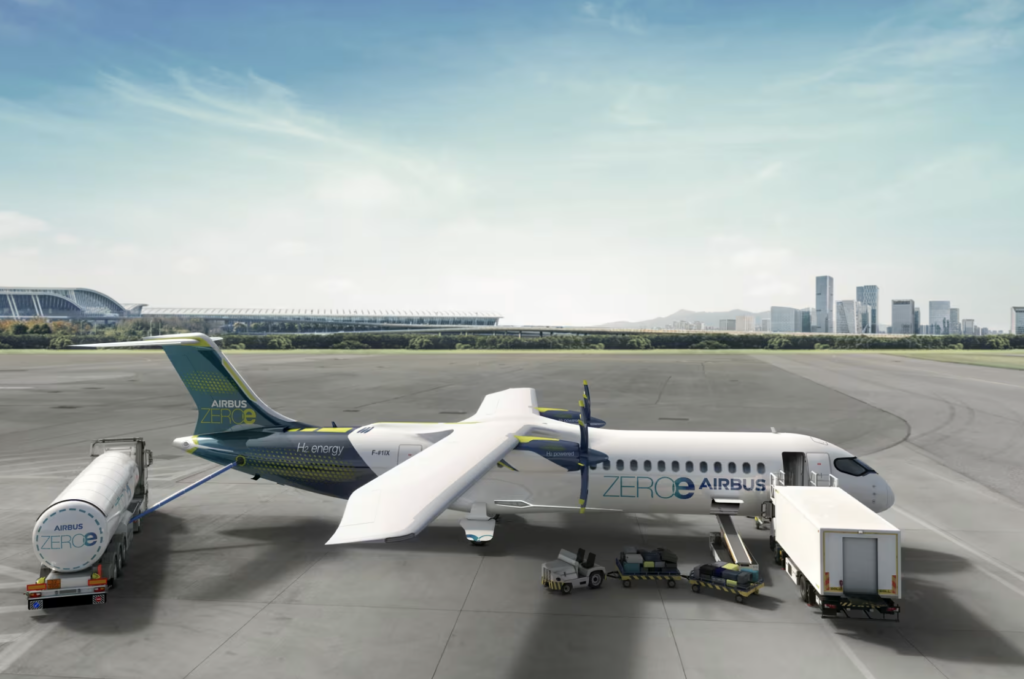
– We at Swedavia are very pleased to be part of a larger partnership on the role of hydrogen in aviation together with Airbus, Avinor, SAS and Vattenfall. Swedavia, Avinor and SAS have previously established and successful collaborations in fossil-free aviation and it is therefore gratifying that Airbus, with its deep knowledge of hydrogen-powered aircraft through its ZeroE initiative, and Vattenfall, with its knowledge in electricity and energy production, now want to deepen their collaboration with us. Hydrogen is expected to gradually constitute an increasingly large part of the aviation industry's fuel source in the future and will thus increasingly influence the infrastructure and planning of our airports. This partnership is a major and important step towards fossil-free aviation in the Nordics and will further strengthen Swedavia's role as a "front-runner" in fossil-free aviation at the same time as we take another important step in the transition of aviation, says Jonas Abrahamsson, Swedavia's President and CEO.
The collaboration is based on the expertise, knowledge and common aspiration of all five actors for more fossil-free flying and will lead to an improved ecosystem for hydrogen aviation at Swedish and Norwegian airports with a focus on understanding what is required in terms of operation, infrastructure, maintenance and refueling needs in a northern region with large distances where aviation is an essential part of enabling work, commuting, travel and an accessible infrastructure. By involving actors from the entire value chain and with competencies that cover all aspects, a holistic picture of the needs that exist to enable the transition to hydrogen aviation can be created.
The transition to hydrogen-powered aviation is complex and requires airports to consider new procedures related to refueling, safety and fire protection, and handling of liquid hydrogen. Infrastructure also needs to be adapted, with hydrogen storage and, in the future, possible production at or near airports.
As an airport operator, Swedavia is continuously working to adapt our airports for fossil-free aviation through new infrastructure in the form of, among other things, charging stations for electric aviation. Hydrogen is a crucial part of aviation's necessary climate transition, which produces zero carbon dioxide emissions if it is produced from renewable electricity and where the residual product also becomes water vapor. Flights powered by hydrogen also have the potential to replace fossil-based flights even on longer distances. Therefore, hydrogen is a natural part of Swedavia's strategy and projects for sustainable aviation with the aim of achieving climate neutrality.
Hydrogen-powered aircraft
Liquid hydrogen can be produced through the electrolysis of water, where electrical energy is converted into chemical energy and stored in the energy carrier hydrogen. In addition, liquid hydrogen can also be produced using renewable energy sources.
Hydrogen has almost three times higher energy content per kg than Jet-A1 but is less energy-dense per liter in terms of volume, which will change the conditions for storing the fuel in the aircraft.
According to the press release.