



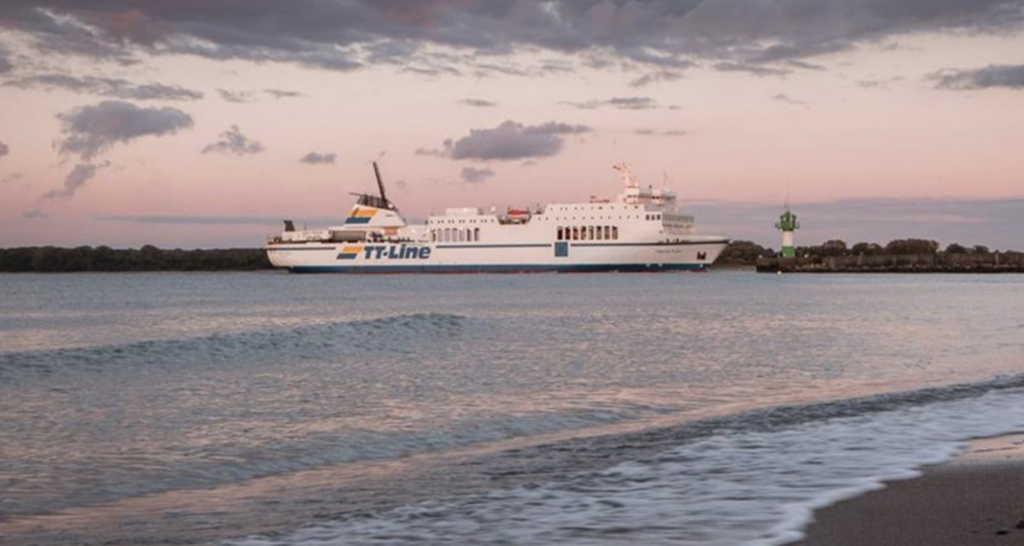
The cleanup of oil spilled from the ferry Marco Polo is likely to take a year and cost 100 million kronor.
”It's thick, sticky, and toxic,” says an expert.
But the shipping company TT-Line will likely not have to pay more than a fraction of the cost.
165,000 litres of heating oil have leaked into the sea off Blekinge from the damaged ferry Marco Polo. Around 30,000 litres have still not been located, the Swedish Coast Guard told TT on Thursday.
The marine biologist Jonas Henriksson, head of the oil response team at the IVL Swedish Environmental Research Institute, says that the fuel oil leaked from Marco Polo is a residual product from the production of petrol and diesel, and that it is used in shipping because of its low price.
”The oil that has leaked out is the worst possible for the environment. It is thick, sticky, and toxic,” says Henriksson.
He compares the emission from Marco Polo with the extensive oil spill that affected Tjörn in September 2011.
”The cleanup after that spill lasted almost two years and cost about 100 million kronor. In this case, I believe the cost will be around 100 million kronor, perhaps 150 million kronor,” says Henriksson.
The oil emergency has a advisory function to the rescue services and the municipalities responsible for the clean-up of oil from Marco Polo. Jonas Henriksson has been on site in Sölvesborg after the accident to assess the situation.
”We've concluded that the cleanup will take approximately one year, plus or minus six months. The advantage, if there is any advantage to an oil spill, is that it occurred in the autumn and we are now heading into winter. Nature will then be less sensitive to stress and we will have time to work on the spill before spring when animals and other organisms reproduce,” says Henriksson.
TT-Line will probably have to pay a water pollution fee of around SEK 100,000–500,000, according to Henriksson.
The cost of the cleanup will fall to the municipalities, who will be fully reimbursed by the state, which in turn will be compensated by the shipping company TT-Line's insurance company. The shipping company will have to pay an excess, which Henriksson estimates as ”very small” in this context.
”The excess is affected by whether it was a technical defect on the vessel, as appears to have been the case, whether it is due to negligence on the part of the captain or someone else on the bridge when it happened, or whether it is a criminal offence,” he says.
If the insurance company cannot pay the full amount, there is an international fund that covers the difference.
”We won't incur any significant costs for society beyond it taxing our regular work,” says Henriksson.
Source: TT-DI.SE