




The opportunity for leisure, entertainment and social activities is significantly worse for blue-collar workers compared to white-collar workers. This is an effect of both working conditions and economic conditions.
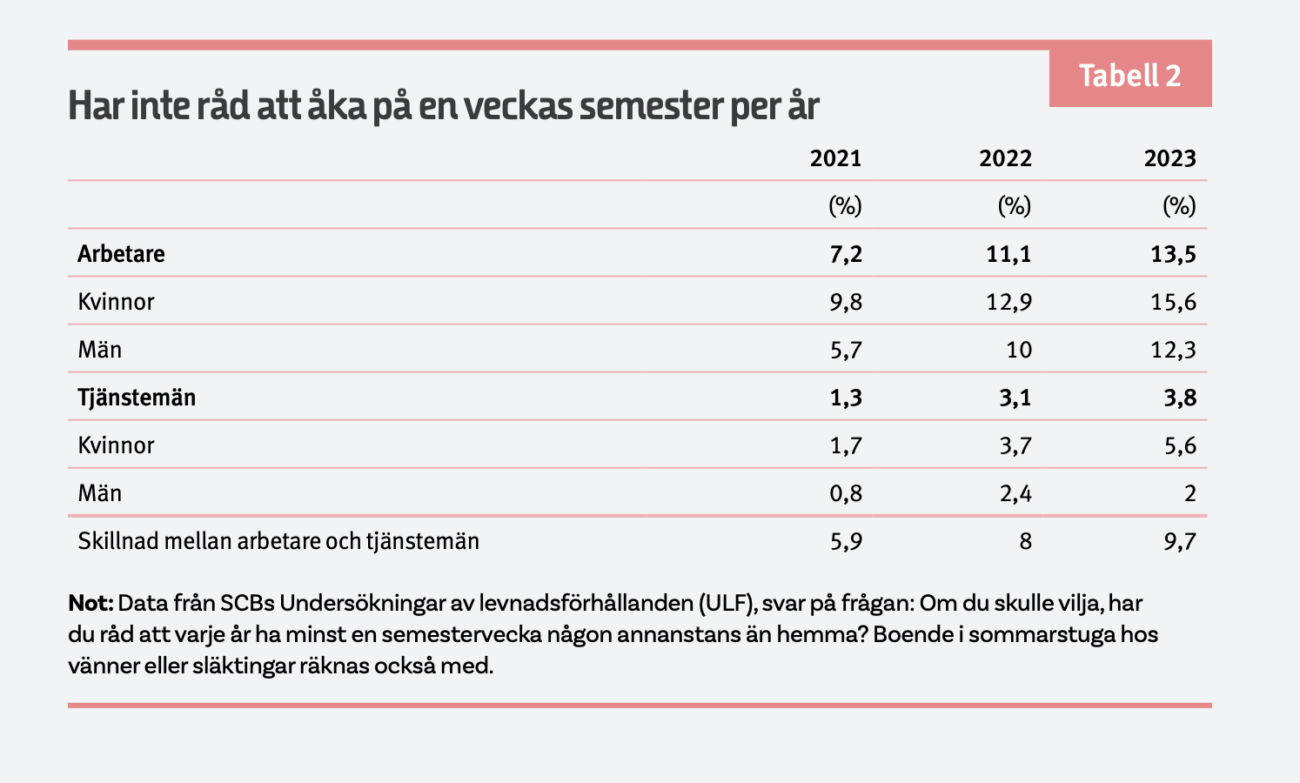
Holiday travelers and leisure habits by class and gender
- In 2022, only about half of workers reported taking at least a week of vacation, compared to 70 percent of white-collar workers. This gap has remained relatively constant over the past fourteen years.
- 13.5 percent of workers say they cannot afford a week of vacation annually, while the corresponding figure for white-collar workers is 3.8 percent. This gap has increased significantly over time.
- Vacation inequality is partly rooted in material differences. Workers have smaller economic margins and lower wages, which means they are less likely to be able to afford to go on a week's vacation.
Source:LO