



A old train cuts straight through a street in Hanoi, a morning swim among the mountains in Ninh Binh, a lantern on the river in Hoi An and a maximalist design hotel in a nature reserve in Da Nang. Join us on a trip to Vietnam in the opposite direction – Hello!
THERE ARE DOUBLE LOCKS ON THE PATIO DOOR, NOT TO KEEP PEOPLE OUT, BUT TO KEEP THE MONKEYS AWAY FROM OUR GENEROUS FRUIT PLATTER
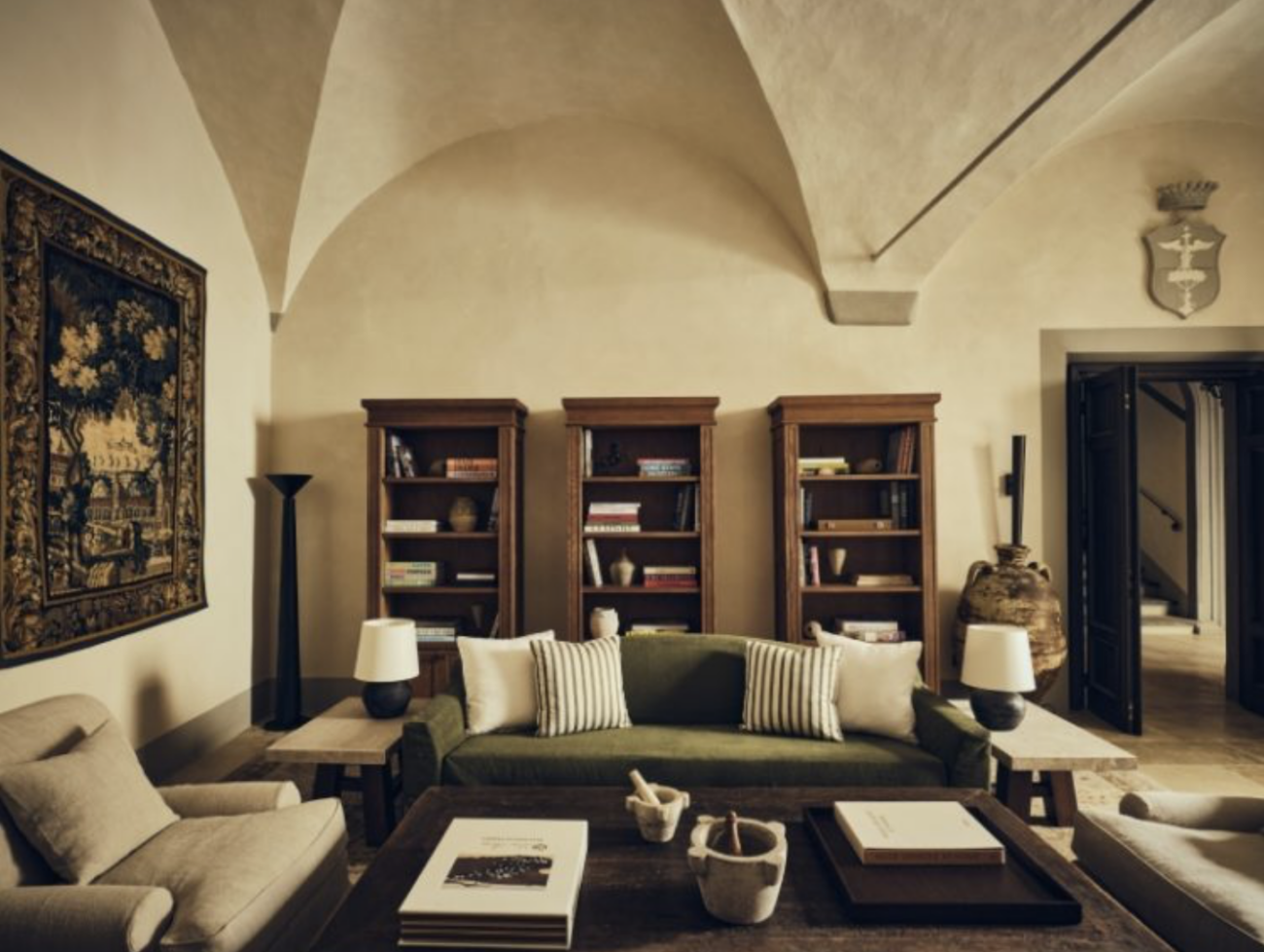
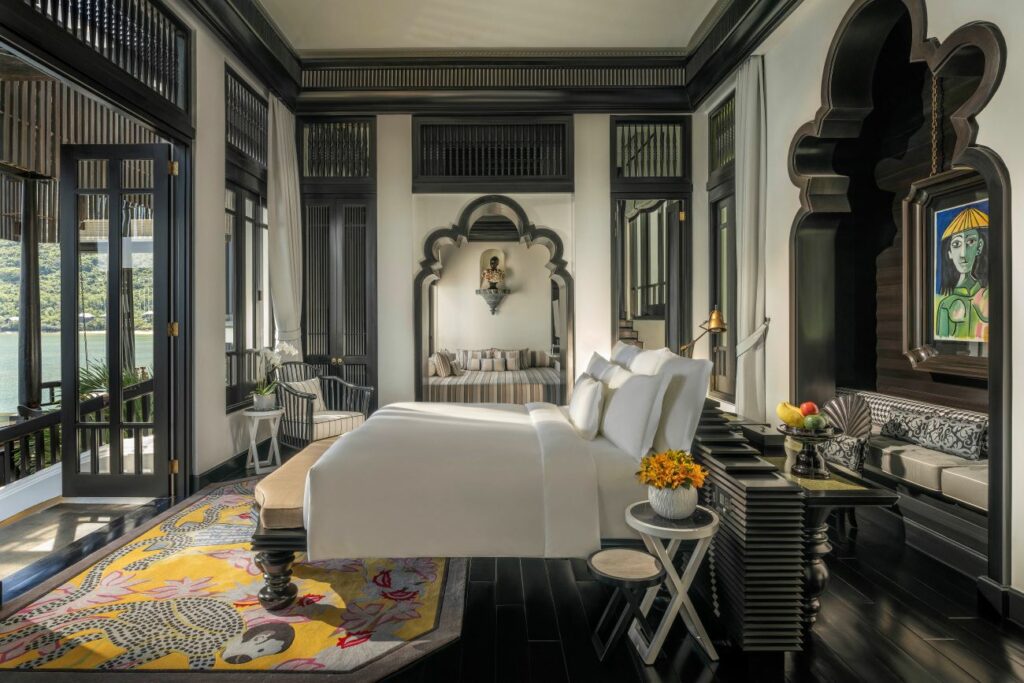
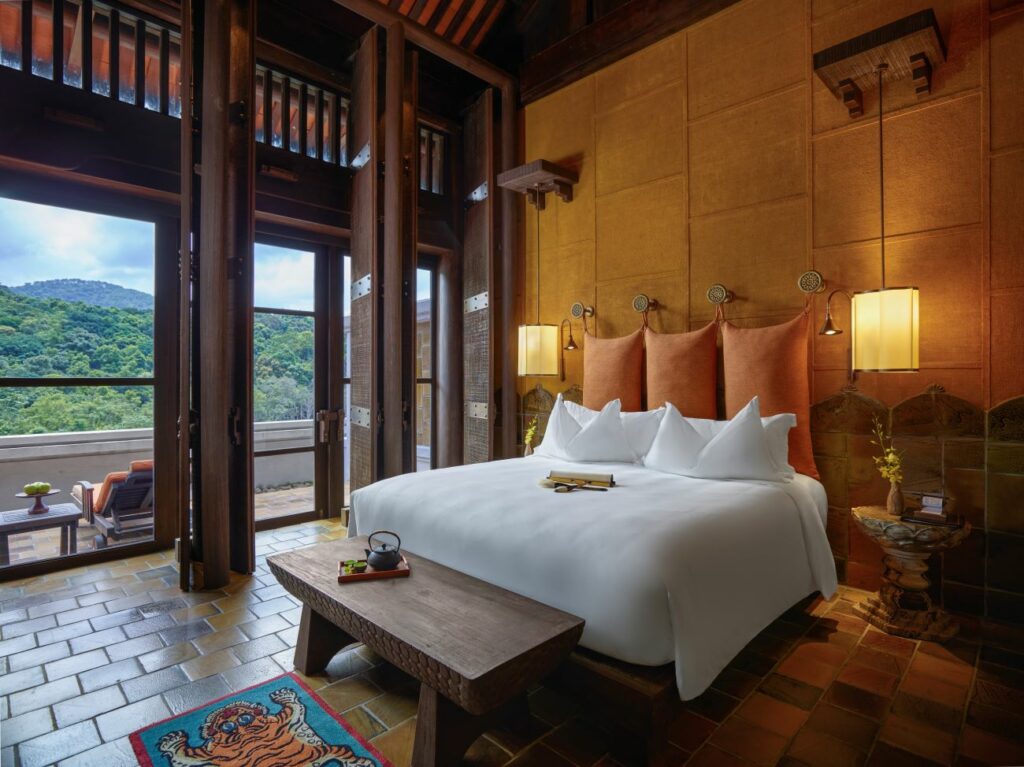
IT STANDS HEAVEN 508 on my key card. We get in the golf cart and roll in through the dense greenery. A few minutes later the door to our suite opens. Maximalism reigns here. Black and white as a base, layers upon layers of textiles, art, and ornaments that almost overlap each other. The patio door has double locks, not to keep people out, but to keep the monkeys away from our generous fruit platter.
It's a place that makes you want to stay. But what makes it interesting lies outside the walls.
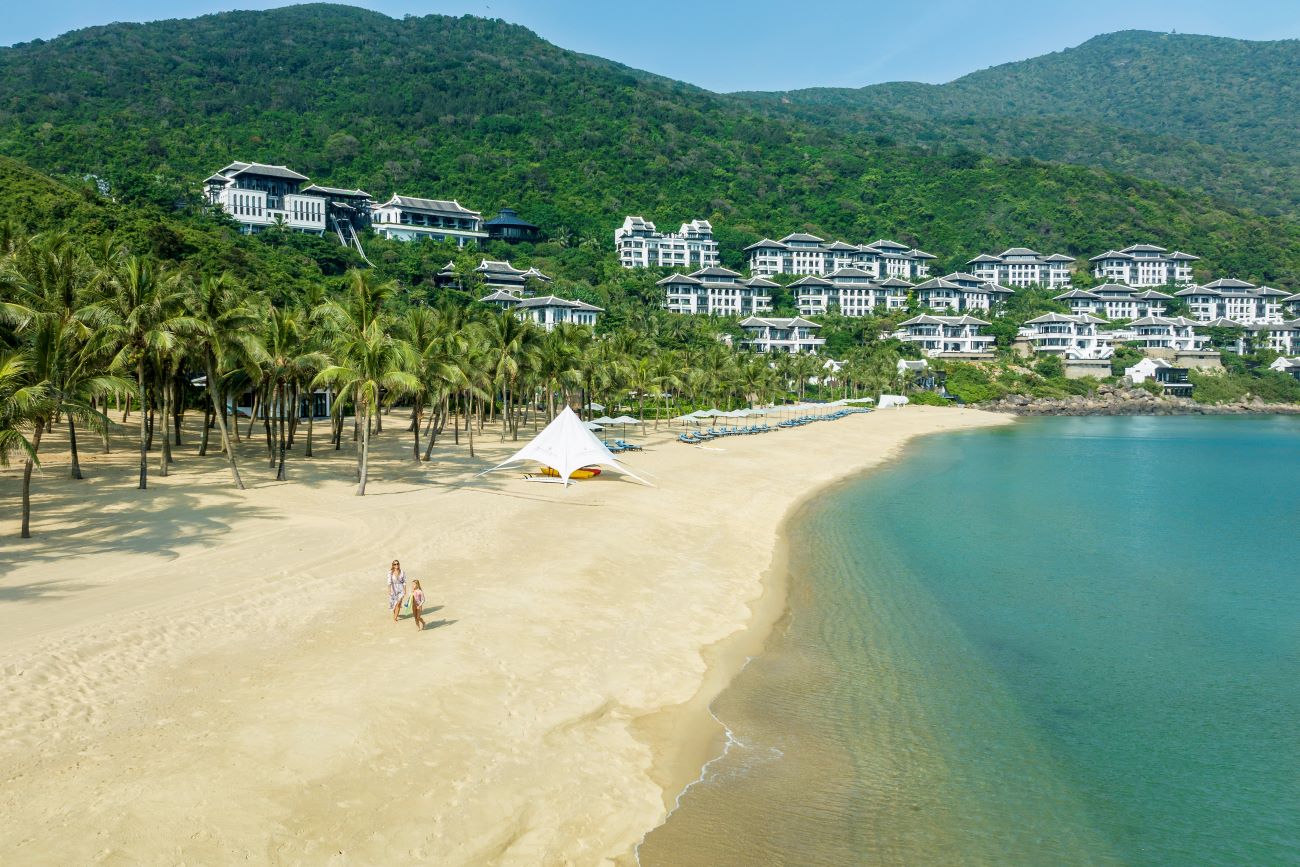
The entire hotel was created by architect and designer Bill Bensley and his design studio BENSLEY. During his career, he has designed over 200 hotels worldwide, each hotel being built as a narrative rather than a building. The InterContinental Danang Sun Peninsula Resort is located on Son Tra Peninsula, about 30 minutes from Da Nang airport, and is one of his most famous projects.
The construction sparked debate. Here, in a nature reserve with no previous settlements, a resort was to be built. to emerge from the jungle. His idea was not to take up space in the jungle, but to disappear into it. By preserving as much of the vegetation as possible between the buildings and replanting where interventions were made. He drew inspiration from Vietnamese temples, pagodas and traditional architecture.
– Hello, we say to each other.
We take the funicular, here called Nam Tram. The small funicular carriage is shaped like a traditional Vietnamese boat. It takes me down to the beach and the Terra Mare restaurant. The sun is setting over the South China Sea. Grilled lobsters are placed on the table along with a coconut with the hotel logo burned into the shell – like a signature in wood.
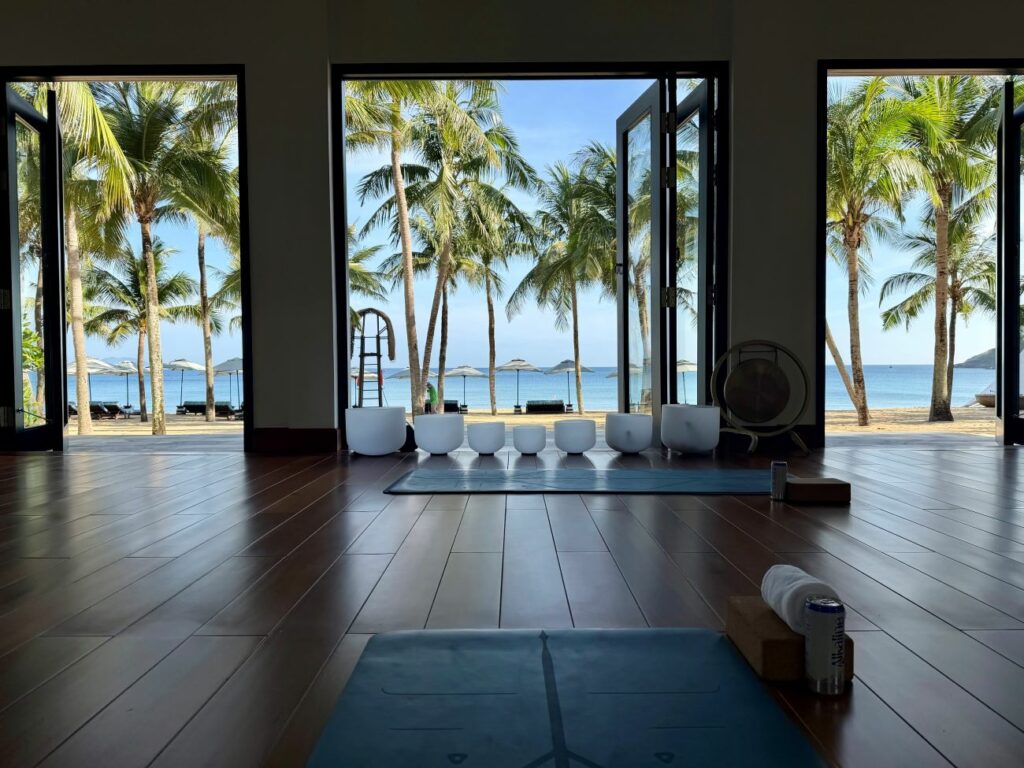
The next morning starts with yoga in the Yoga Pavilion down by the beach. For me, it's the most stripped-down form of luxury: getting your body moving before the day has even begun.
– Six, seven, eight. The yoga teacher, Miss Moon, counting down while we hold our positions. The air is already warm and a dip in the salty sea beckons.
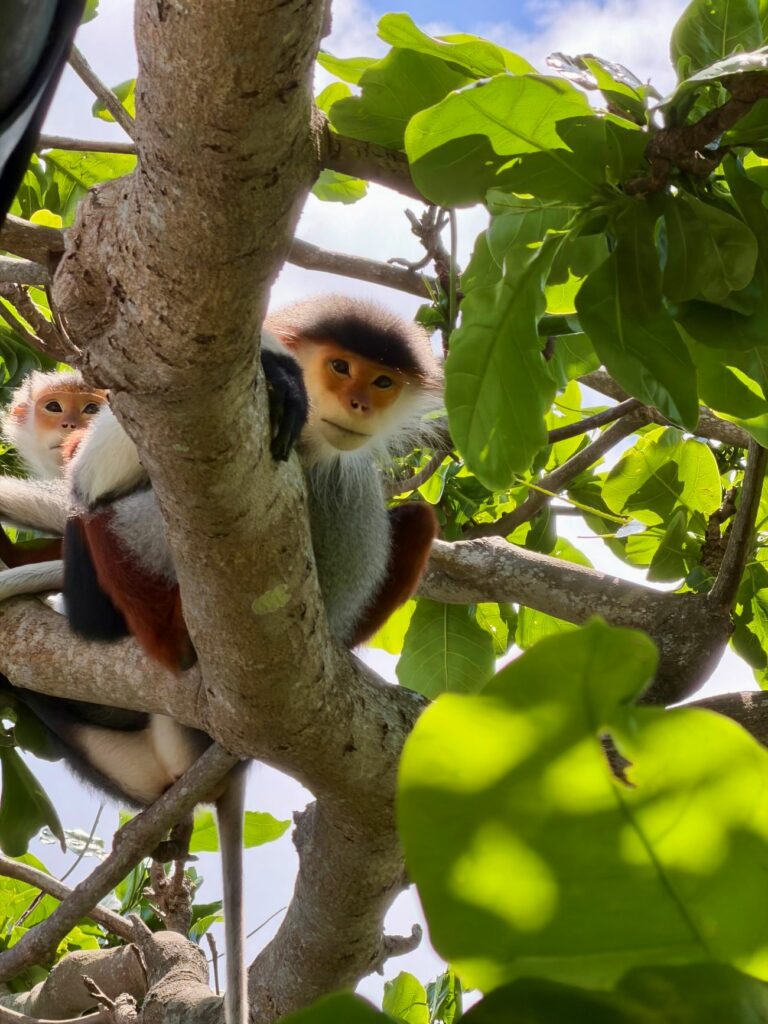
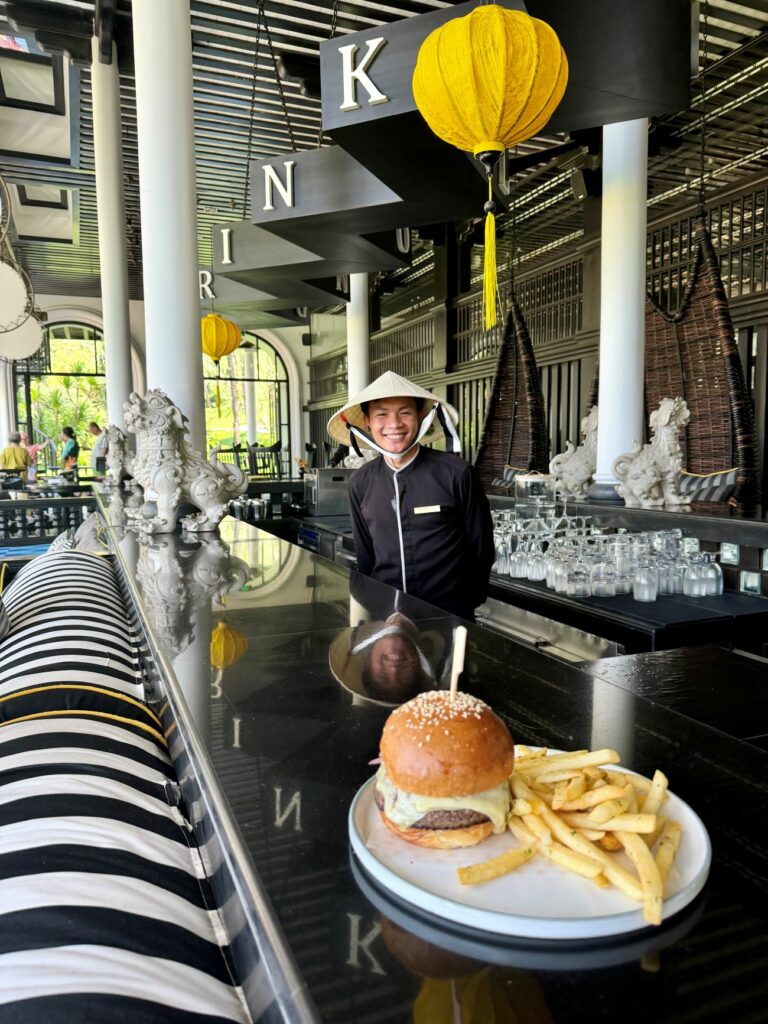
Later, a tour of the resort awaits you with Mr. Quan. We ride in a golf cart while he tells us about the wildlife on the Son Tra Peninsula. Two types of monkeys live here: the curious macaques and the shy douc langurs, one of the world's most endangered primate species. They live on leaves, almonds and other fruits that grow in the reserve. The area is large, and thanks to conservation efforts, the population of the endangered langurs has increased in recent years. The day at the resort continues. Lunch in Long Bar, 50 meters long and the longest bar in Vietnam. Clearly inspired by Raffles in Singapore.
It's time for a treatment at Mi Sol Spa, which offers a wellness concept that includes tuning fork therapy in the spa treatment. So in addition to a fantastic massage, I am invited into two frequencies: Mi 528 Hz and Sol 741 Hz which are said to create balance and clarity. Afterwards I feel both calm and happy. I take the road past BENSLEY Outside Gallery and enjoying his colorful art. With a slightly bigger wallet, I would have happily let a monkey or two come home with me.
We are invited to a glass of champagne and canapés in the Buffalo Bar at La Maison1888 – the restaurant that has a star in the Michelin guide and where the head chef is Christian Le Squer. In hand-blown Riedel glasses on a high stem, Amedeo, the restaurant's head sommelier, brought champagne from Delamotte.
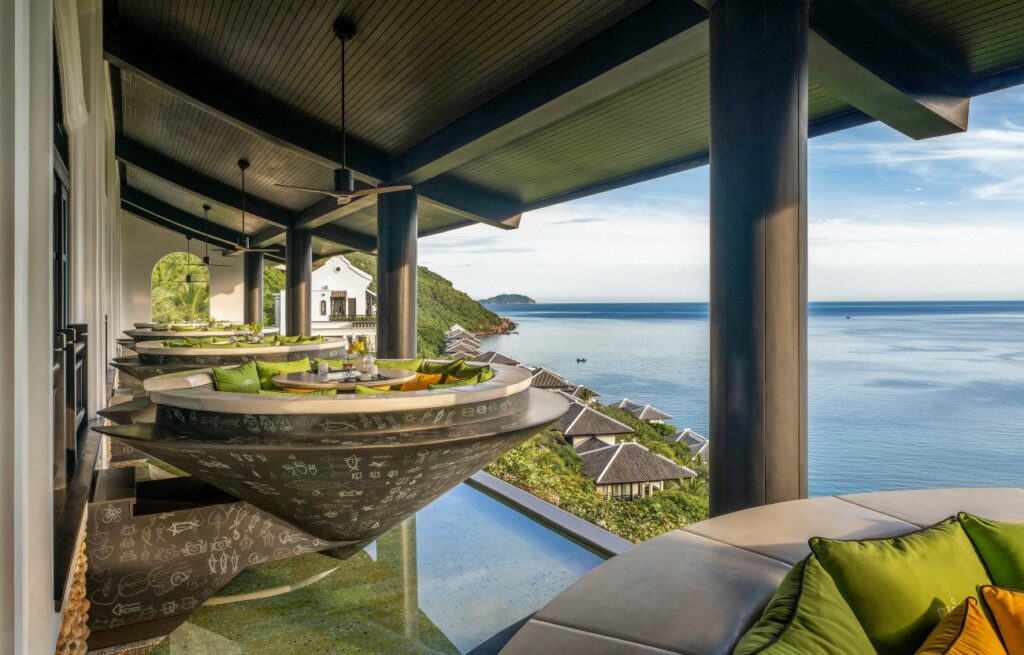
We leave the French elegance behind us and end the evening with a Vietnamese dinner at Citron Restaurant. Tonight's dinner is eaten outside at one of the iconic Non La Tables – floating seats hanging outside the restaurant and inspired by the classic Vietnamese conical hat, nón lá, here turned upside down like sculptures over the mountainside. Almost surreal.
FROM RESORT TO WORLD HERITAGE
It's time to explore Hoi An, the city that has been listed as a UNESCO World Heritage Site since 1999. For centuries, traders from China, Japan and Europe met here.
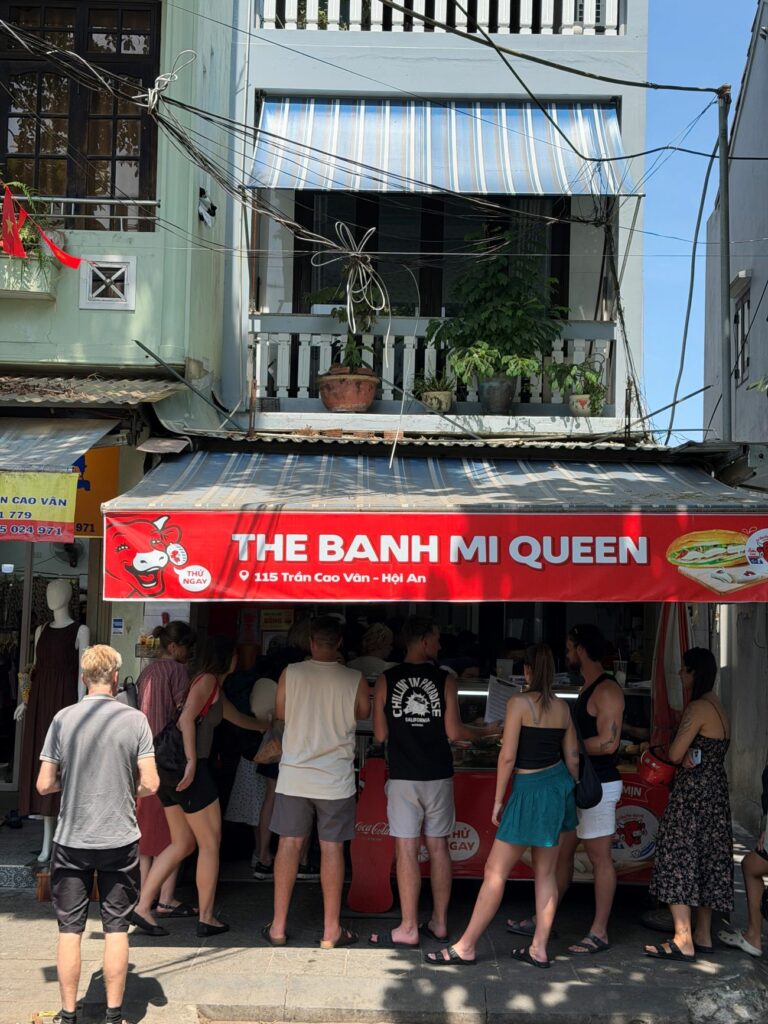
We start with a banh mi, Vietnam's own interpretation of the French baguette. The queue is long outside The Banh Mi Queen and the heat is heavy on the upper floor where we eat. Step by step we approach the old part of the city. The city is surrounded by rice fields.
Hoi An is quickly filling up with visitors. The city is moving between the stage and reality. The architecture is a well-polished backdrop where the facades look freshly painted, the streets are lively. At the Japanese Bridge we slow down the pace. People have passed through here for centuries, long before Hoi An became a World Heritage Site.
Tuh Dar is the name of the acrobatic performance we will see the Hoi An Lune Center. There is a photography ban, which makes it easier to follow along. We experience intense dance and music, rhythms, half-naked bodies and a story about myths from Vietnam's central interior. Bamboo poles are used extensively – bamboo is also used as a symbol of the character of the Vietnamese: it bends, but rarely breaks. It stands for resilience and recovery after hard trials. There is talk of bamboo diplomacy.
After the sun goes down, boat trips out on the river to light lanterns begin to run in shuttle service. Traditionally, the lantern festival took place twice a month. Nowadays, it happens every evening. It's overtly touristy, but atmospheric. I light a yellow lantern and let it float away with my wish.
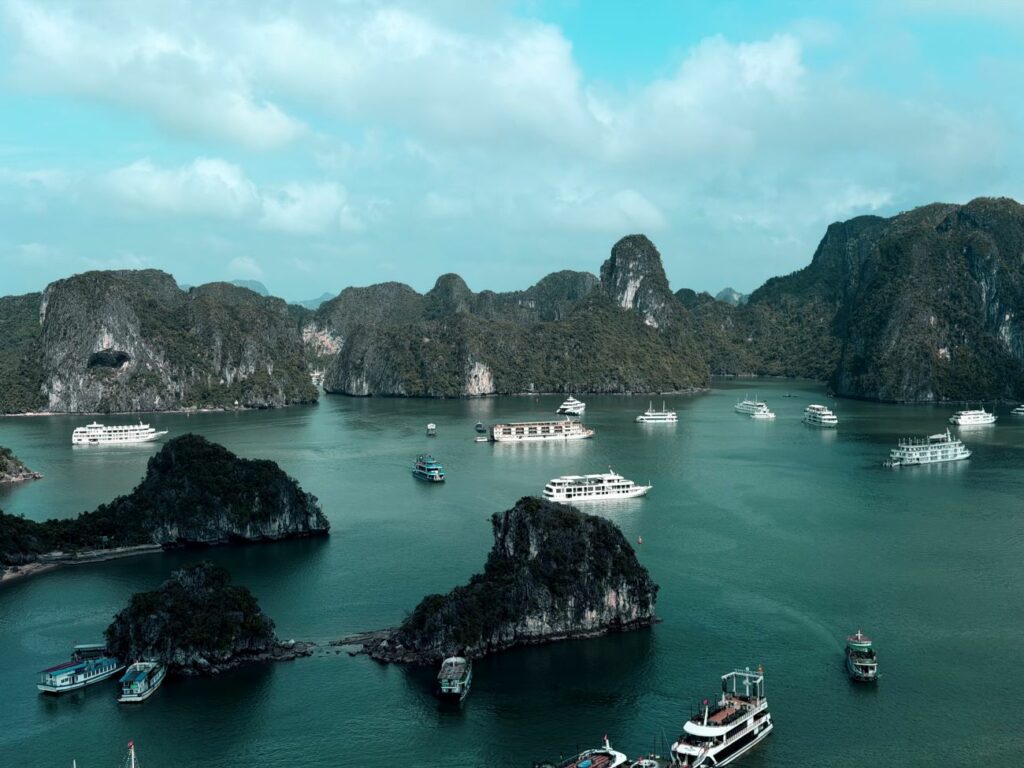
The next World Heritage Site awaits out at sea. Ha Long Bay limestone islands rises from the mist as the sky slowly clears. We wander through the cathedral-like halls of the Sung Sot Cave and continue up to the viewpoint on Ti Top Island. Once there, the postcard-perfect bay spreads out in all directions. Sweaty, tourist-filled – and utterly magnificent. Down by the beach we celebrate with a coconut each.
MONASTERIES OF OUR TIME
Bill Bensley joins us on the journey and now it’s time to check in at Legacy Yên Tu M Gallery. Our room, or should I say cell, as the hotel is inspired by a monastery, is located in a long corridor. The thick wooden shutters are closed and when they are opened the next morning the place comes to life.
Yên Tử has been the cradle of Vietnamese Zen Buddhism since the Trần dynasty in the 13th century. It is also the sacred mountain that gave its name to the place and inspired Bill Bensley in the creation of Legacy Yen Tu M Gallery. What meets us feels old, but is in fact completely newly built using local materials, where wood, stone and patina have been used to create the illusion of something that has always been here.
The tiger recurs everywhere in the environment. In Vietnamese tradition, it is the king of the forest and a protector of sacred places. A guardian between the human and the spiritual.
We set off towards the mountain. From the hotel the transfer takes golf cart down to the cable car which takes us up through the forest. The goal is Dong Pagoda, Vietnam's highest temple at 1,068 meters above sea level. For many Vietnamese this is a pilgrimage in the true sense of the word, although today it can be shortened by two cable car systems. The hike remains, however, and the final stage is on foot, up uneven stone steps where the air becomes thinner and the scent of pine becomes denser.
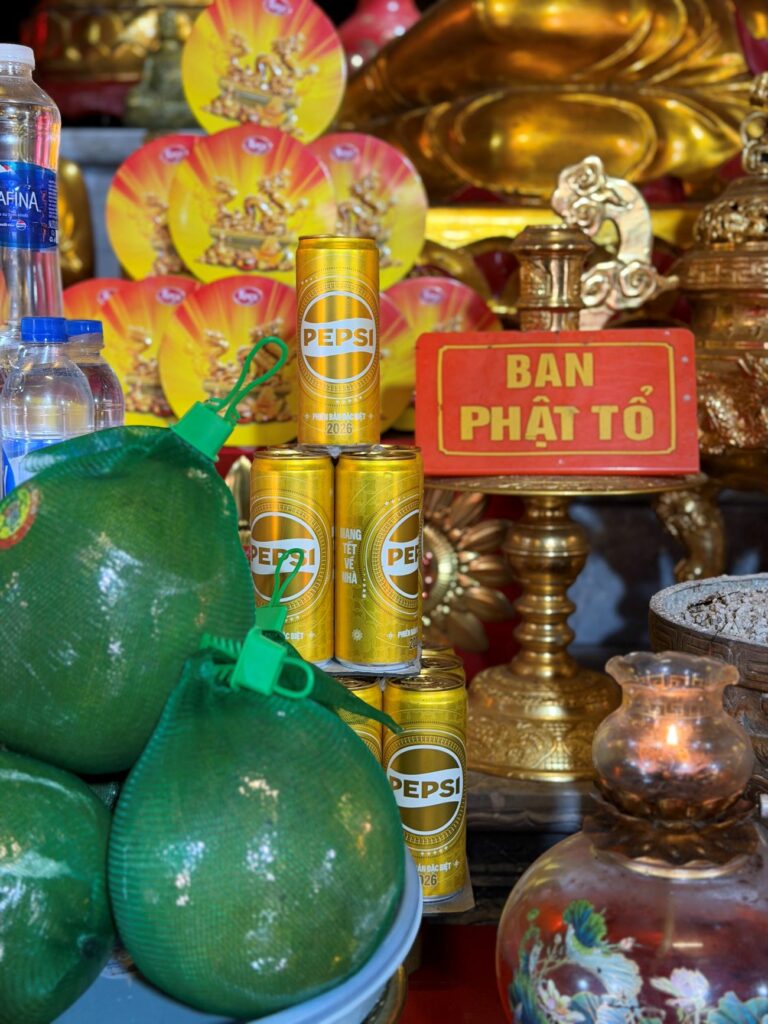
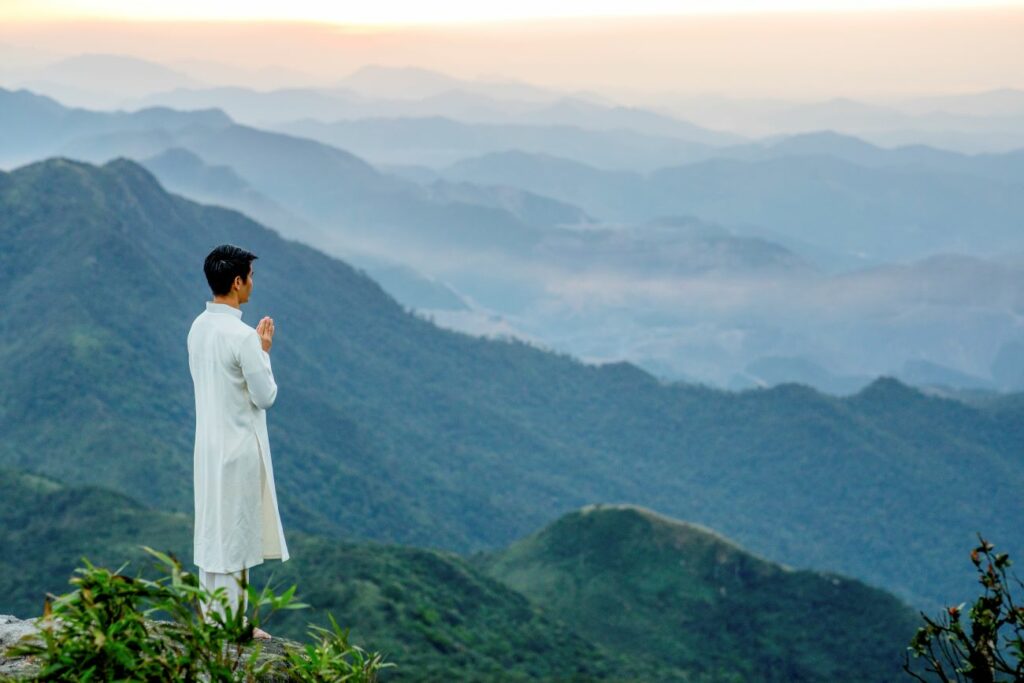
When we reach the top, I have a big sweat stain on my stomach. The bronze pagoda is smaller than I thought. The offerings are many and the gold-colored The Pepsi cans given makes me shiver. A couple sits on the edge of the mountain and looks out over the landscape, I take a picture of them.
Back at the hotel, a group of monks check in. They are going to hold a meeting here. After lunch we go to the spa area, where nature has also found its way in. We bathe in a hot spring and lie on a bed of stones in a sauna before a treatment. After hiking, a foot massage feels like pure luxury. It is late when we get back. Through the wall we hear a party from the neighboring room. I knock, get no answer, call the reception. They knock, resolve the situation and suggest that the party continue somewhere else. Then it becomes quiet. And we fall asleep soundly, with the feeling that the hotel functions like the landscape around it: controlled, but never completely still.
IN THE LOTUS FLOWER KINGDOM
Ninh Binh is our next destination. Rice fields, lotus ponds and
dramatic limestone mountains follow one another along the way. The last
the route is all the more lively, with mopeds, backpackers and small
rowing boats on the river. In the middle of the UNESCO-protected Tràng An landscape
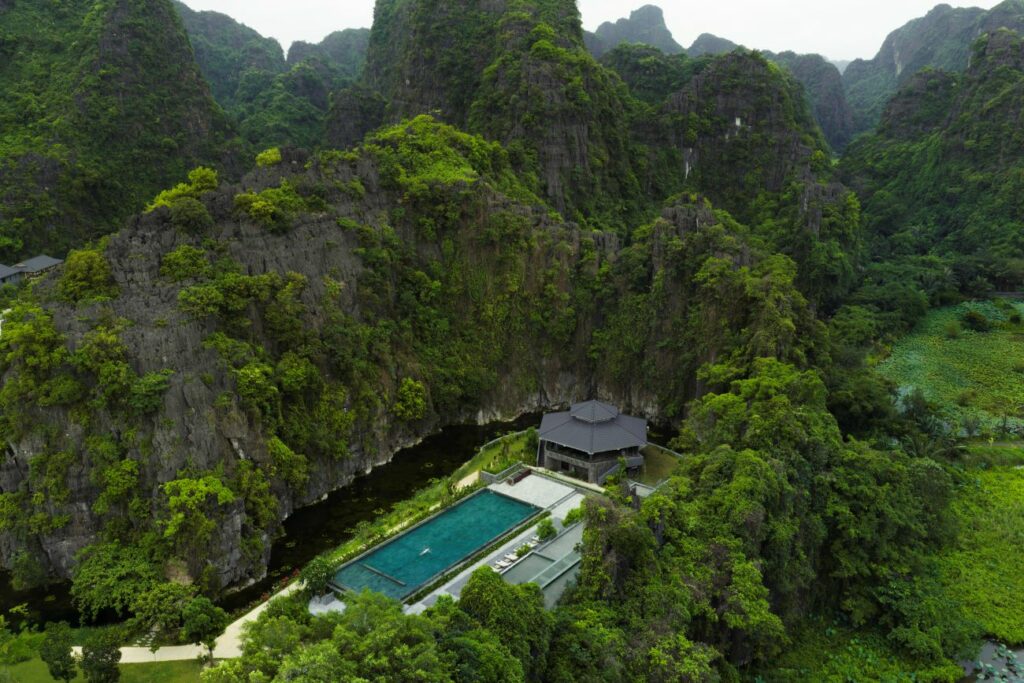
lies Jiva Hoa Lu Retreat, built like a North Vietnamese village
below the cliff wall. From both the bathtub and the balcony we look towards
the mountain while a small stream gurgles
passing outside the suite.
The afternoon offers a tea ceremony led by Tea Master Miss Sui, where the lotus flower is at the center. A film projection is shown where she steps into the water to pick the flowers, which are then filled with
green tea leaves and let it rest.
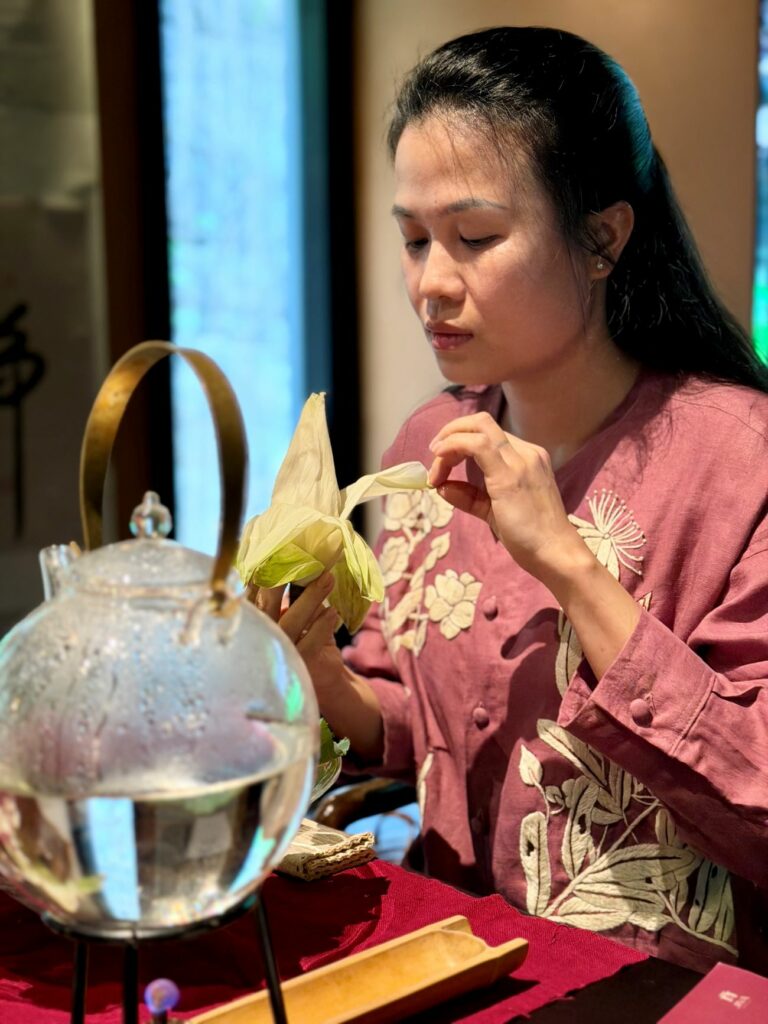
Now she opens one of the flowers, gently leaf by leaf. She pours hot water over the petals, lets it steep, and then serves the lotus infusion in small glass cups. The flavor is subtle and soft, the lotus flower's presence is felt rather than dominating. Traditionally, the lotus symbolizes energy and purity, and is a symbol used by Vietnam Airlines.. It was on board the trip here, in Business Class, that I tasted this tea for the first time, albeit in a simpler form.
The next morning we wake up early, go to the pool and swim into the sunrise. The feeling is magical, as are the mountains. Vietnam has now offered so many memorable experiences that I am seriously considering whether there is room for another one. After breakfast, a boat trip awaits in Tràng An, also a world heritage site on the UNESCO World Heritage List.
The boats that the women row here can hold four people. To cope with the long days, they row with their feet instead of their hands. They also wear vests with built-in fans to cope with the heat. It is really hot when we row away. Pretty soon we reach a long cave passage.
We are told when we need to bow down. On the other side a new landscape opens up. The journey is slow. The cliffs are beautiful, the mountains are covered in greenery and the water is emerald green. There are several temples to visit here. We stop at one of them, order a matcha ice cream and enjoying the environment. It starts to rain. The woman continues to row. She points to an island in the middle of the lake and says that this is where the King Kong movie Kong: Skull Island was filmed. Then she continues to row. After sitting in the boat for almost two hours now, my body is tired. Rowing also feels completely impossible. Into the car and on towards Hanoi, the last stop of the trip.
We check in at InterContinental Ha Noi Westlake by Hồ Tây, the city's largest lake. The water lies still, like a mirror as if it retains the heat of the day. If we had wanted to reconnect with Bill Bensley here too, it would have been at Capella Hanoi that we checked in, but that will have to be another time.
The next day we visit the Thang Long Citadel. The biggest impression is the underground communications center D67, where North Vietnam's top military command directed the war. Maps, telephones and coffee cups still stand – as if time hesitates to move on. The air is thick, almost electric with the absence of life, but the presence of everything that once went on.
VIETNAM AIRLINES
Vietnam Airlines flies direct from Copenhagen to Ho Chi Minh City
Minh City three times a week, flight time approx.
11 hours and 40 minutes. The line is the first direct line
from the Nordic countries.
On board the Boeing 787–9, Economy, Economy Plus and
Business Class.
We traveled Business Class and enjoyed Vietnamese cuisine
before we slept well and arrived rested in the morning in
Vietnam. Here we then flew on with Vietnam Airlines to
Da Nang. On the way home we first flew from Hanoi to Ho Chi
Minh City before the return trip to Copenhagen.
WHEN THE TRAIN COMES
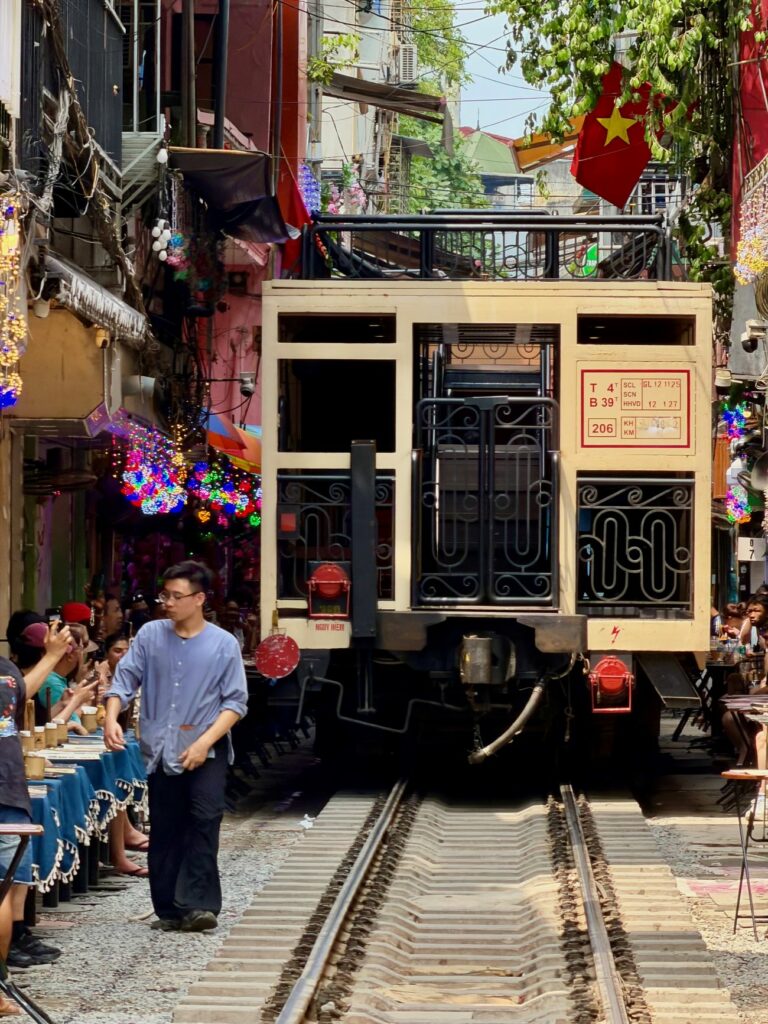
We ask our guide Sunny to keep an eye on the timetable to Hanoi Train Street. After lunch we roll into the neighborhood where the tracks cut right through everyday life. A railway drawn through a residential area, lined with cafes, small shops and homes where life continues just a few inches from the steel. Here it is everyday life and attraction at the same time, without anyone really seeming to choose one over the other.
Suddenly everything changes. Voices are raised, hands point, chairs are pulled back and in. Someone grabs my legs and moves them closer to the table. Seconds later the train arrives. It fills the entire street, the air, the body. A roar that doesn't just pass by – but takes up space in everything around. We hold our breath until the last set of carriages disappears.
The rails were laid by the French 1902, but it is only in recent years that the place has become a global attraction. When the last carriage has disappeared, the sounds gradually return, as if someone is slowly turning up the volume on life again.
The coffee cups are put back. The conversations pick up where they left off. And Hanoi continues, as if it had never been interrupted.
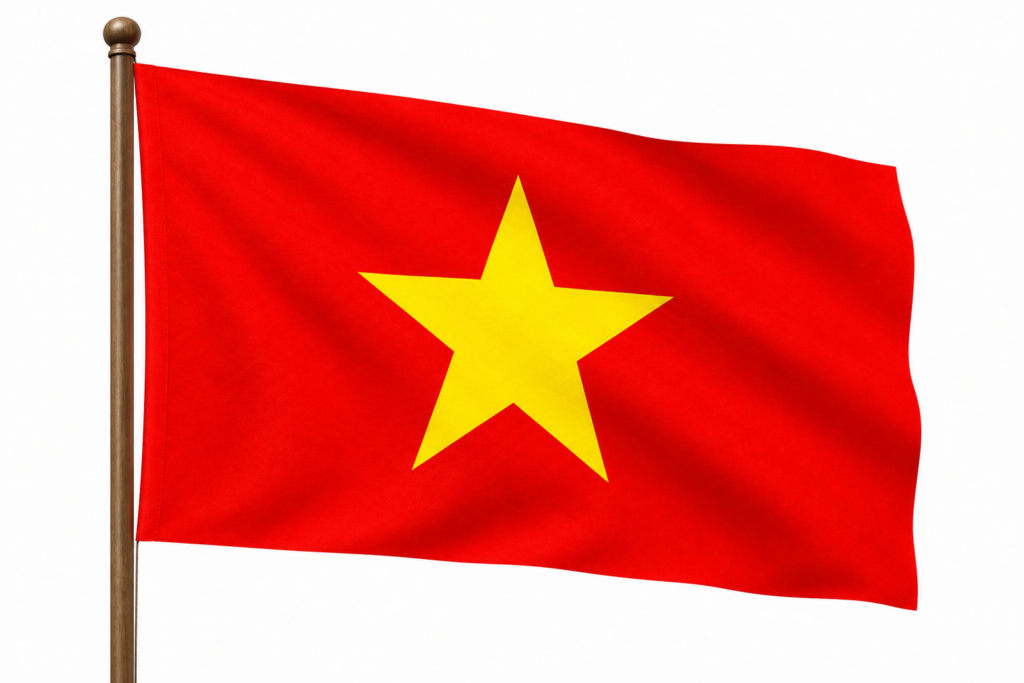
FLAG OF VIETNAM
The red color symbolizes revolution and struggle. The yellow
The color is symbolic of the Vietnamese people.
The five capes symbolize: workers, farmers, soldiers,
intellectuals and young people.