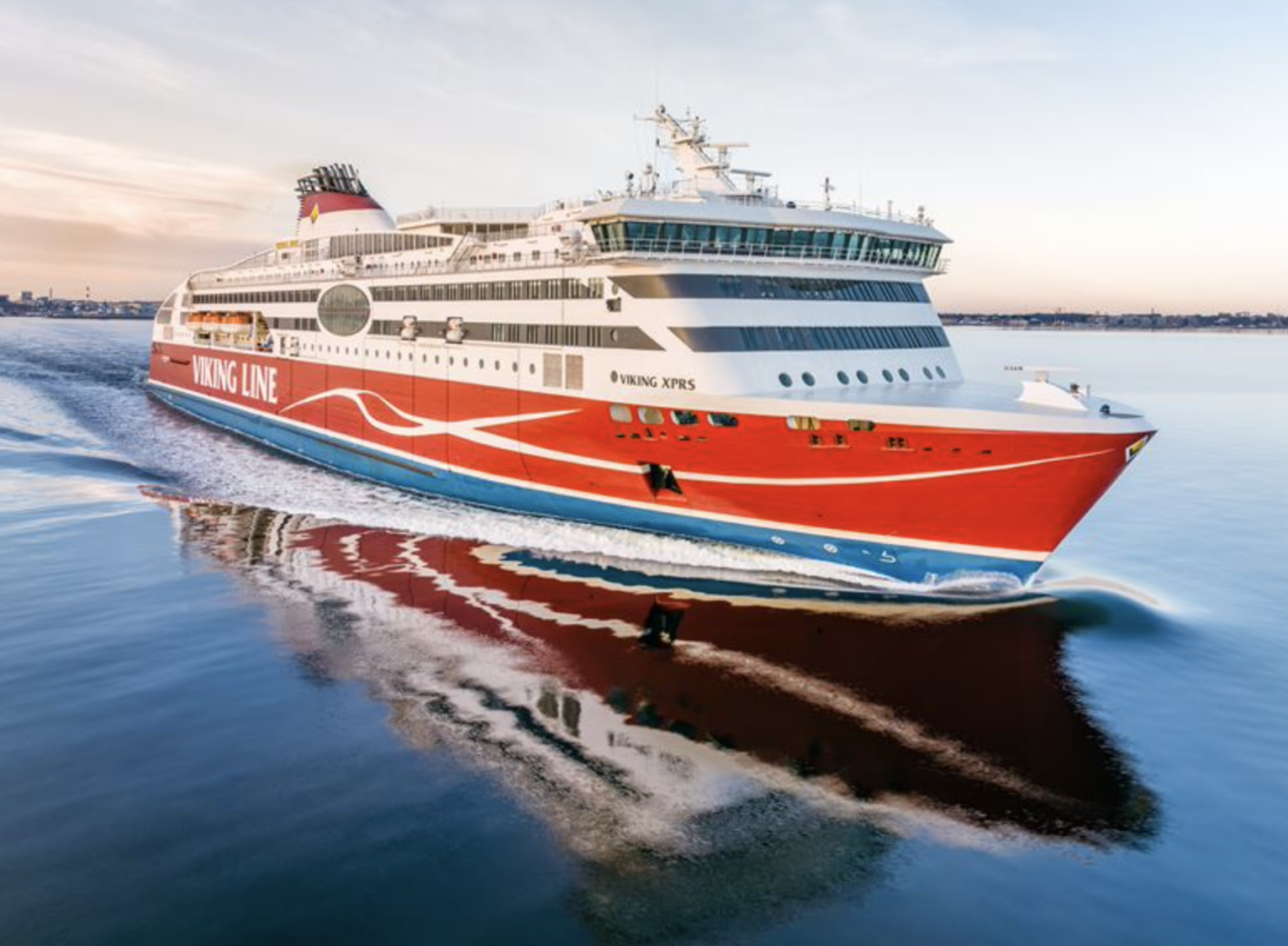




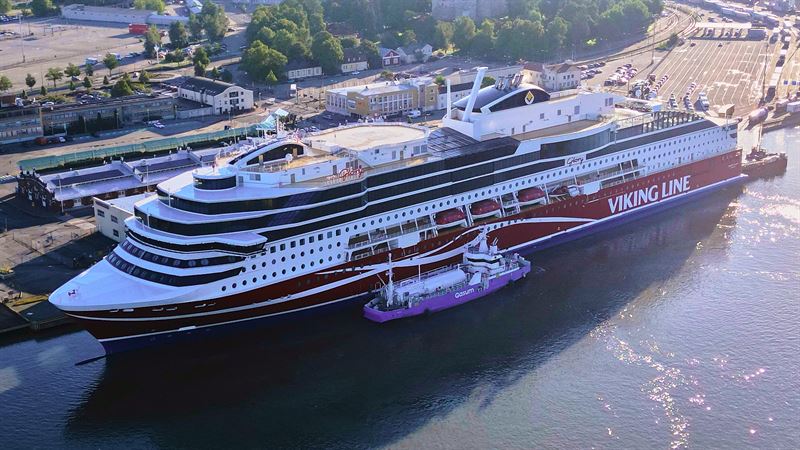
All Viking Line passengers and freight customers have the opportunity to travel completely fossil-free for the first time as the shipping company significantly increases the use of biofuel. Viking Line has been developing the biofuel market in collaboration with the energy company Gasum for several years.
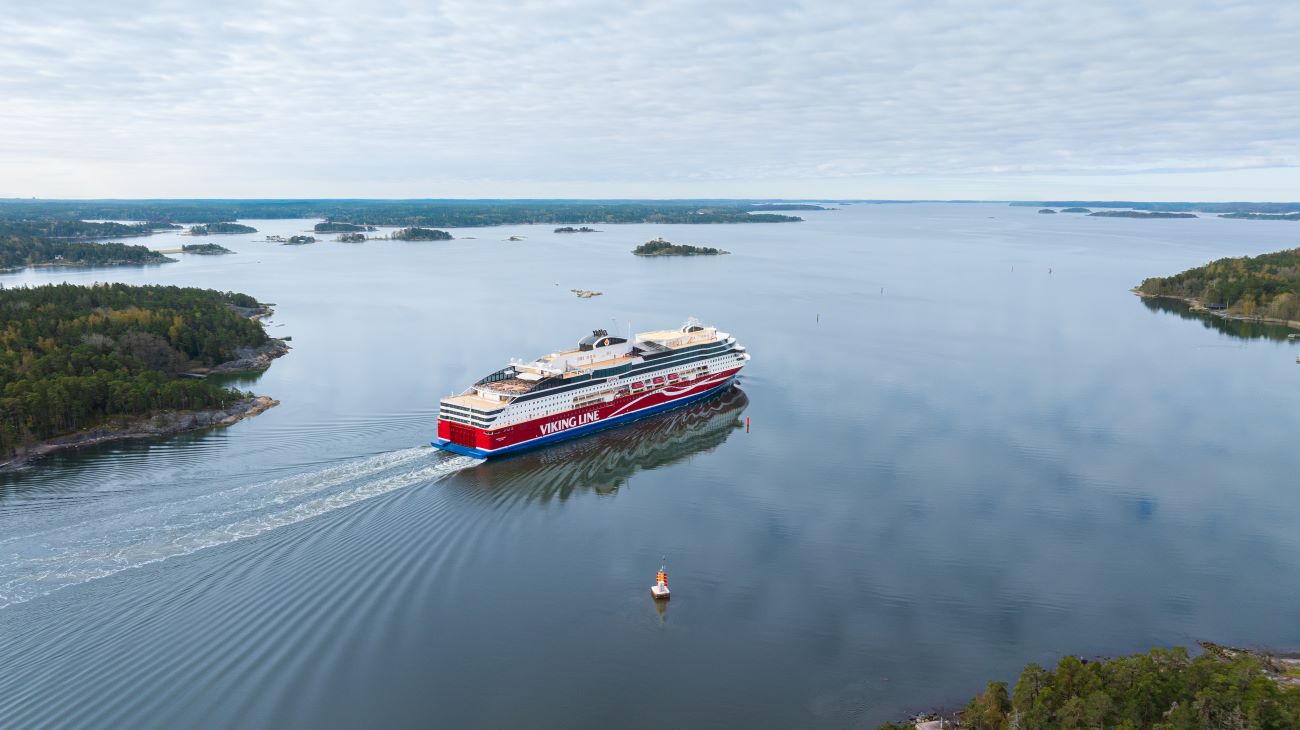
Viking Line will increase its purchases of renewable biogas (bio-LNG) sixfold this autumn, which means purchasing European biogas equivalent to the entire fuel consumption of Viking Glory. The biofuel is used on the Turku–Stockholm route, on Viking Glory and Viking Grace. Liquefied natural gas (LNG) is also bunkered as a supplement. These fuels generate virtually no sulfur or particle emissions that are harmful to human health. The use of biogas also contributes to a circular economy, as the raw material consists of waste streams from food or agricultural waste.
”"By running on biogas, Viking Line contributes to emission reductions for Gasum's FuelEU Maritime pooling service, which is used by ships that cannot use biofuels themselves. Viking Line is thus helping the entire shipping sector to reduce emissions. From the beginning of 2025, ships must reduce their emissions by two percent, but the reductions required will increase up to 80 percent by 2050. We therefore need pioneers like Viking Line, who can pave the way for others," says Jacob Granqvist, Vice President Maritime at Gasum.
Viking Line has been working with Gasum for several years. In 2023, the shipping company bunkered 10 tons of biogas and last year around 600 tons. This year, the use of biogas will increase at least sixfold to 3,800 tons. At the same time, Viking Line's greenhouse gas emissions will be reduced by 17,000 tons, which is equivalent to the annual carbon footprint of almost 1,700 average Finns.
”"We have helped create the market for biogas. Now the supply has increased to a level that enables the use of renewable fuel to a significant extent. We have now been able to agree on purchases until October, and our goal is to continue at the same level. In addition, the amount of bio-LNG used is increasing thanks to the fossil-free sea voyages our customers purchase," says Viking Line's Head of Sustainability Dani Lindberg.
Travelers can influence emissions
In line with the significantly increasing use of biofuel, Viking Line is enabling fossil-free sea voyages on all routes for the first time. For an additional fee, both passengers, conference guests and freight customers can choose to make their voyage fossil-free, meaning that the voyage does not generate any fossil emissions at all.
”In the Laivalikinken 2025 (Sea Traffic 2025) survey, conducted by EPSI Rating, 45 percent of respondents stated that they will make more sustainable choices when traveling in the future. These options will only become a reality through long-term development work, courageous investments and good cooperation. For example, the increased use of biofuel and the resulting reduced overall emissions have been made possible thanks to investments of EUR 450 million in Viking Glory and Viking Grace,” says Dani Lindberg.
Part of the development of the Baltic Sea's green shipping corridors
Viking Line is involved in developing a green shipping corridor between both Turku and Stockholm and Helsinki and Tallinn. Green shipping corridors are transport routes where goods and passengers travel in a climate-neutral manner. In early June, the shipping company presented a concept for a fully electric passenger car ferry on the Helsinki–Tallinn route, which could be put into service as early as the early 2030s.
”"We want to be among the pioneers when Finnish shipping shows the way towards a fossil-free future for the rest of the world. Major investments in sustainable solutions require predictability in operations and good cooperation both within the entire maritime cluster and with public actors," says Viking Line's CEO Jan Hanses.
According to the press release.