





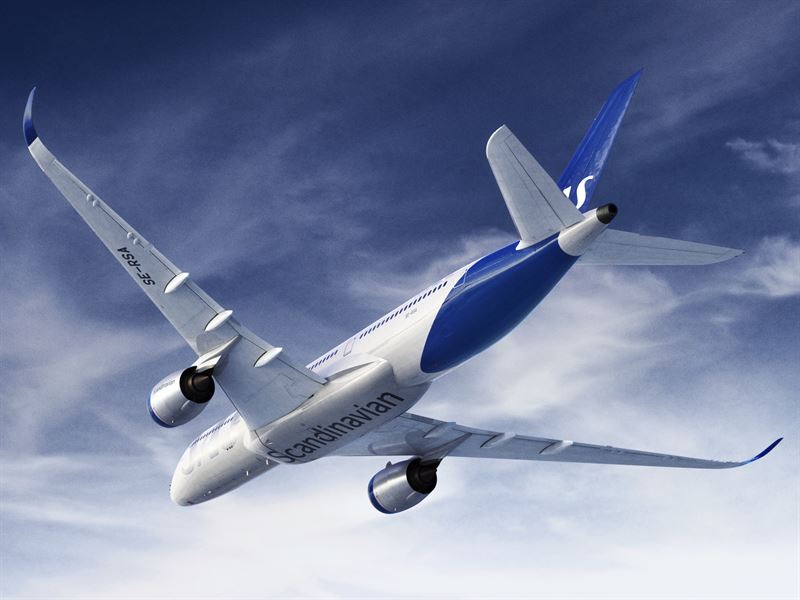
It will be a difficult and costly process to restart SAS operations when demand slowly returns, says CEO Rickard Gustafson. This will, among other things, place great demands on the remaining workforce in the crisis-stricken airline.
In the quarterly report presented on Thursday, SAS writes that "productivity improvements of 15-25 percent will be required in all collective agreements to adapt to changing market conditions and seasonal variations.".
This clearly means greater demands for flexibility and efficiency on the part of the staff who remain working, and that changes will be required in local agreements and older agreements, Rickard Gustafsson said at the report conference.
”It's not that salary levels in themselves are a problem, it's primarily about making the most of our workforce.”
SAS has previously given notice of layoffs to 5,000 of its employees.
It is clear that SAS expects a slow recovery in the aviation market, and that the ”new normal” expected in 2022 at the earliest is a smaller business than it was before Covid-19. To meet the new reality, SAS will focus even more on its core customers and business travelers. Rickard Gustafson believes that business travel will also have normalized in 2022.
”"We are in close dialogue with our largest corporate customers and they can hardly wait to get out again and meet their customers. They say they want to come back as soon as possible, and then as SAS customers."”
Regarding whether the SAS boss sees any consequences of behavioral changes in the form of more digital meetings at the expense of reduced travel, he says that this change was already visible before Covid-19.
”There will be a need for essential travel in the future as well.”
In connection with the report, SAS also makes it clear that more money will be needed to keep the airline afloat through the crisis, and it has also been clear that support from the Swedish and Danish governments will be required. SAS hopes to present the details of the refinancing in June.
Are you worried that states will gain greater influence in SAS?
”"They will play an important role in this for us to succeed with the recapitalization," replies Rickard Gustafson.
Asked to look into the crystal ball, Rickard Gustafson was also asked about his view of the European aviation market and the competitive situation in Europe on the other side of the corona crisis.
”Given how expensive it will be to restart flight operations, it will put a strain on all airlines, but it remains to be seen how many will remain once the situation stabilizes.”
He further notes that there are likely to be a number of new owners, states, among others, in the airlines who may not be interested in remaining in the companies in the long term and that this could lead to consolidation and opportunities.
Source: di.se