




The recovery of aviation continued at Swedavia's ten airports during December and the number of passengers increased by eight percent compared to 2024. The full year 2025 was characterized by strong demand for international and domestic travel and during the year a total of eight new airlines and 37 new scheduled flights were established, the majority at Arlanda. After weaker growth at the beginning of the year, growth for the full year remained at two percent compared to 2024.
–The strong growth in passengers at our airports continued in December with a total of eight percent more passengers than the corresponding month last year. At Arlanda, international travel increased by nine percent and the number of international passengers was thus five percent more than in December 2019 before the pandemic. It is pleasing that many of our existing and new airline customers are choosing to continue investing in the Swedish market and with the expected economic recovery, we are positive about developments next year, says Jonas Abrahamsson, Swedavia's President and CEO.
Line development – full year 2025
A total of 37 new scheduled flight routes were added in 2025, of which 23 flights were at Stockholm Arlanda Airport and nine flights were at Gothenburg Landvetter Airport. During the year, 23 new destinations were opened, of which 15 were at Arlanda and six at Landvetter. Swedavia also welcomed eight new airlines, of which four were established at Arlanda and one at Landvetter. In addition, five new charter destinations were opened during the year.
December 2025
- Norse Atlantic opened a new route from Stockholm Arlanda to Phuket
- Edelweiss started a new route from Zurich to Luleå
Freight volumes have also strengthened during the year (plus 5 percent), compared to 2024.
Air travel – December 2025
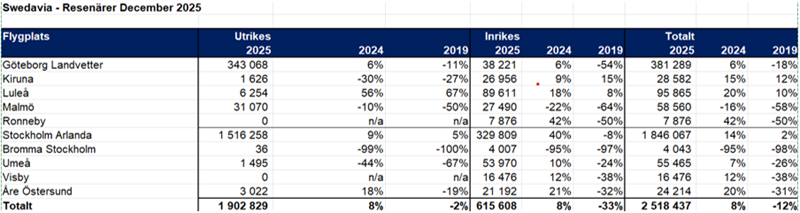
During the month of December, just over 2.5 million passengers travelled via Swedavia's ten airports. This is an increase of eight percent compared to December 2024. Both international and domestic travel increased by eight percent each during December. All airports, with the exception of Bromma and Malmö, had strong demand for domestic travel compared to December 2024.
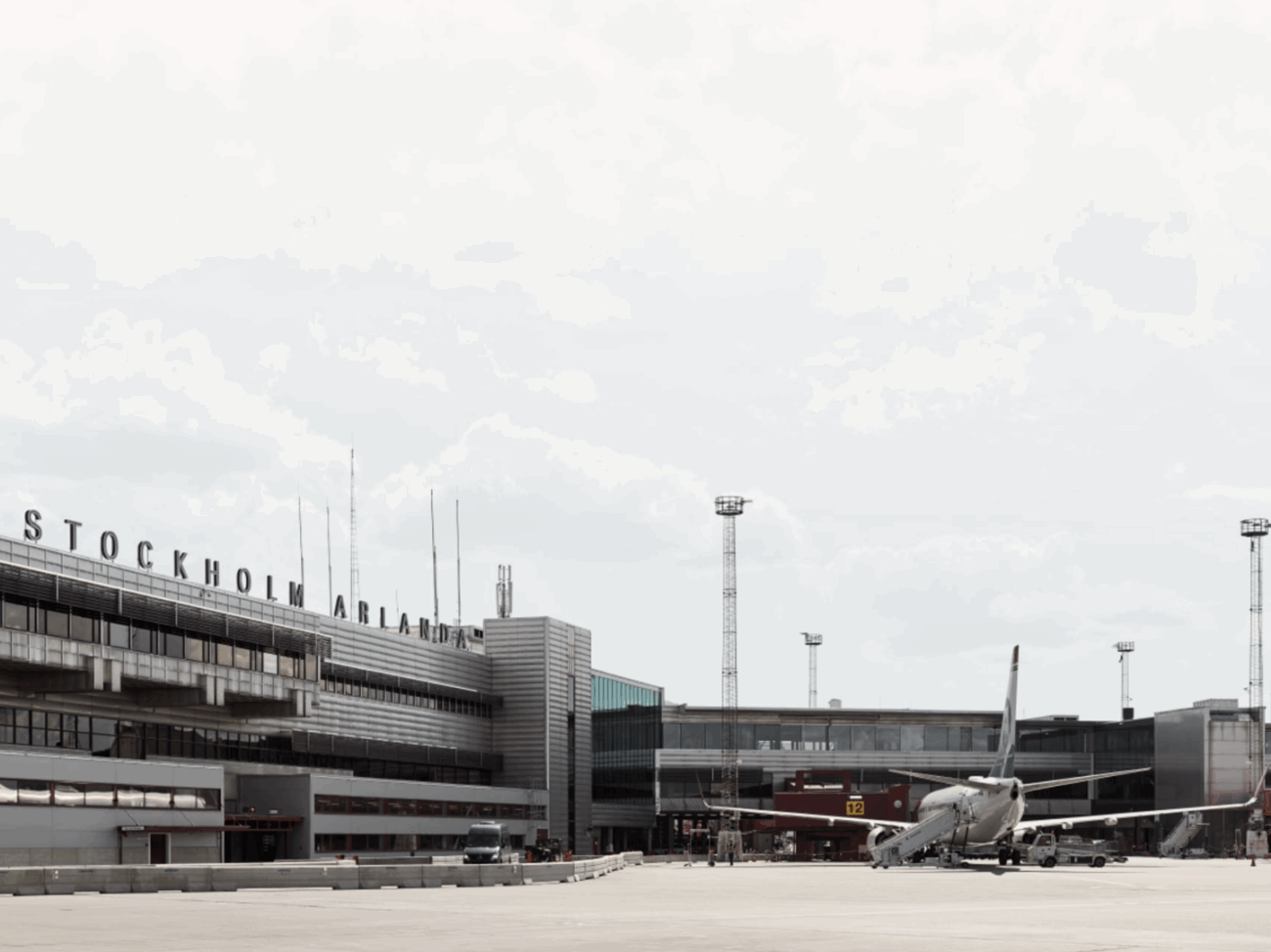
In December, a total of just over 1.8 million passengers flew through Stockholm Arlanda Airport, Sweden's largest airport. This is an increase of 14 percent compared to December 2024. Just over 1.5 million passengers traveled abroad, which is an increase of nine percent. Domestic travel increased by 40 percent to just under 330,000 passengers.
A total of just over 380,000 passengers travelled via Gothenburg Landvetter Airport, Sweden's second largest airport, in December. This is an increase of six percent compared to December last year. International travel increased by six percent to just over 340,000 passengers. Domestic travel also increased by six percent, reaching 38,000 passengers.
Overall, international travel approached 2019 levels in December 2025. Arlanda, as an individual airport, noted an increase in international travel of five percent in December compared to 2019.
Overall, approximately two-thirds of domestic travel has recovered compared to 2019 in December 2025, with large differences between different airports and between northern and southern Sweden. Kiruna and Luleå had higher demand for domestic travel than in December 2019, with increases of 15 and eight percent respectively, and at the same time recorded passenger records for a December month.
Air travel – full year 2025
For all ten of Swedavia's airports, traffic increased by two percent in total during the period January–December compared to the full year 2024. International traffic increased by three percent, while domestic traffic was on par with the previous year. In 2025, the total number of passengers at Arlanda increased by just under seven percent compared to the previous year, while Landvetter recorded an increase of just under two percent.
At Arlanda, international travel increased by just over three percent, while domestic traffic increased by almost 29 percent compared to 2024. The strong domestic development at Arlanda is primarily due to the airlines' planning of Stockholm traffic, the majority of which operates through Arlanda.
At Landvetter, the number of international travelers increased by almost three percent, while domestic travel decreased by around five percent compared to the previous year.
Airports in northern Sweden showed a strong increase in domestic traffic, with Kiruna and Luleå growing by double-digit percentages, by ten and 14 percent respectively.
According to the press release.