



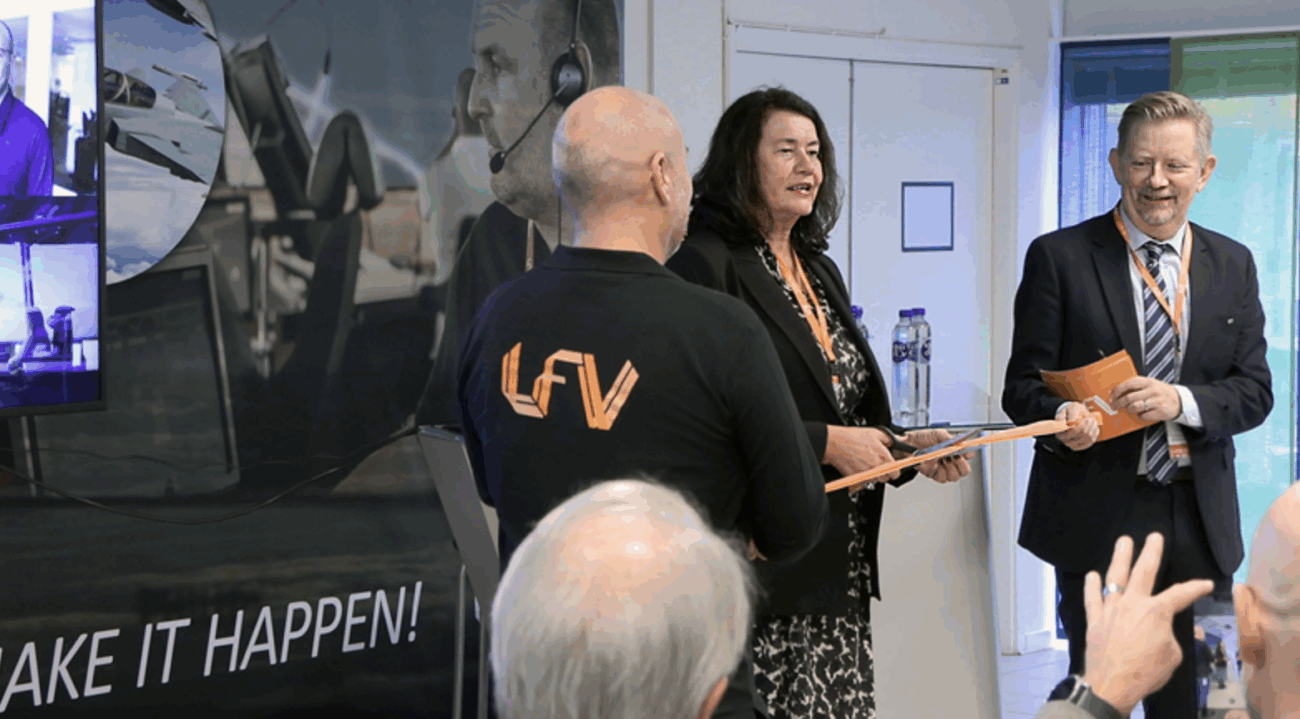
The Swedish Civil Aviation Administration, LFV, has inaugurated a unique environment for advanced air traffic simulation, research and innovation. LFV's research and innovation activities are conducted based on a number of strategic development areas that are based on the future challenges of air traffic control. The goal is to develop concepts and solutions with clear benefits for aviation that increase safety, efficiency, capacity, availability and sustainability in air traffic control services.
With our research, we want to understand what needs to be developed, why and how – and in this way lay the foundation for future solutions within air navigation services.
– This center is an important milestone for LFV. By combining our long experience with new technical possibilities, we are creating the conditions for the air navigation service of the future. I am proud of the work that has already been done and look forward to following the development and innovation that will emerge here, says Ann Persson Grivas, Director General of LFV.
Research and innovation activities take place both under our own auspices, but also within the framework of collaborations with universities, other authorities and organizations both within and outside Sweden.
The Swedish Transport Administration and Horizon 2020, the EU's framework program for research and innovation (SESAR), are the largest financiers. Other partners are Vinnova, CINEA and universities and colleges operating within LFV's research and innovation areas.
Examples of ongoing research projects within LFV
- AI-Prat: Voice-controlled AI for automated flight information service in uncontrolled airspace.
- UTM-City: Testing the integration of drone traffic in urban environments with simulators that connect manned and unmanned aviation.
- LARA: Testing how digital coordination of airspace between civil and military actors can be integrated with the real-time air traffic management system TopSky.