

In a time of geopolitical unrest, economic uncertainty, and rapid technological advancement, people's views on travel are changing. This is shown by Visit Sweden's trend forecasts for 2026, which indicate a clear shift: from pace, status, and consumption – to meaning, trust, and quality of life.
Travel is increasingly being used as a way to manage a complex everyday life, seek context, recovery and social community, rather than ticking off experiences and places.
– We are seeing more and more clearly how travel is increasingly less about achieving, seeing, doing and experiencing a lot, and more about creating balance, understanding and security in a time when much else feels uncertain, says Susanne Andersson, CEO of Visit Sweden.
From performance to perspective
Sweden's latest trend report for 2026 shows that travellers are increasingly opting for slower travel with greater presence, moving away from fast-paced and over-planned holidays. Phenomena such as Slow travel moving from niche to norm, where quality is valued higher than quantity and where time itself becomes a central part of the experience.
At the same time, travel is used to reconnect relationships. Community, shared experiences, and time together are prioritised over individual or extreme activities. Travel thus also becomes a response to increased loneliness and social fragmentation in society.
Trust, the local and the human
In a world where large systems are perceived as complex and difficult to grasp, trust is shifting closer. Travellers are seeking places that feel understandable, human, and rooted in everyday life and local contexts. Personal encounters, local stories, and authenticity are gaining greater importance than polished images and standardised concepts.
– When trust in global structures is challenged, the local and everyday become more important. This doesn't just apply to travel, but reflects broader societal development, says Susanne.
Technology with human conditions
The view of technology is also changing. Digital solutions are appreciated when they create calm, clarity, and security – but questioned when they contribute to stress or information overload. Travellers are not asking for more technology, but better-balanced technology that supports human needs.
Travel as a mirror of society
Visit Sweden's trend analysis shows overall how travel has become a mirror of larger shifts in values within society. Less focus on status, more on content. Less on appearance, more on context.
Four trend forecasts and one future forecast
External factors
The world is characterised not by a temporary crisis, but by a more permanent state of uncertainty. Geopolitics, economics, climate, and technology affect everyday decisions – and travel becomes a way to create security, structure, and context when other things feel overwhelming.
Travellers are increasingly prioritising meaning over achievement and quality over quantity. What previously signalled status (long lists, many places) is losing its appeal in favour of experiences that provide rest, focus, and direction.
1. Slow travel – from niche to mainstream
Holidays are increasingly being used to slow down, not maximising. “Slow travel” isn't about doing less, but about doing what is experienced as relevant and meaningful – with fewer choices, longer pauses, and greater presence.
Social feedback replaces experience hunting
After years of distance, digitalisation and individualisation, travel is being used for to re-establish relations. Shared experiences, community, and time together are valued more highly than unique or extreme activities.
3. Technology should create calm – not noise
Travellers don't want more technology, but the right technique. Digital solutions are appreciated when they simplify, create security and reduce cognitive load – but quickly lose value if they are perceived as intrusive or controlling.
4. Trust shifts from global systems to the local
When the world feels complex and abstract, people seek what is close, human and understandable. In travel, this means increased trust in local contexts, everyday life and personal encounters – rather than polished narratives and standardised concepts.
A forecast: Cultural discovery
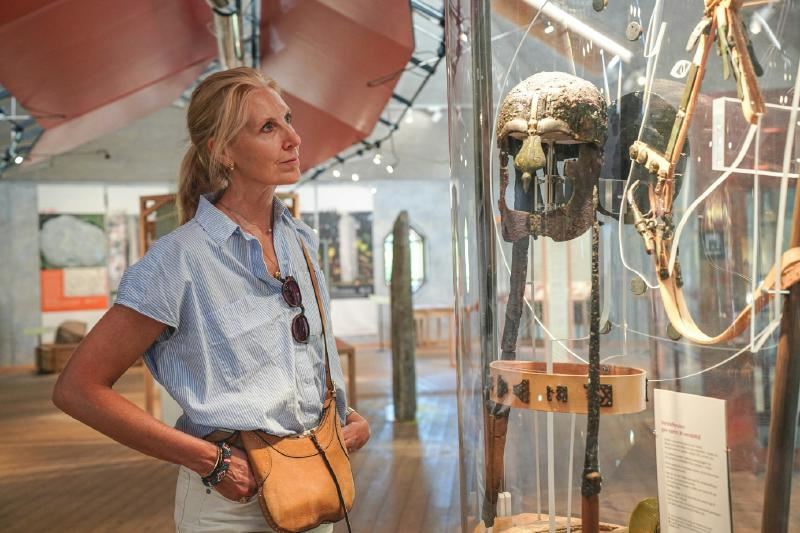
Interest in other cultures is increasingly about understanding, context, and identity, rather than sights. Holiday travel may increasingly be used to understand how people live, rather than to tick off places or attractions. Travellers want to interpret places through stories, history, contemporary expressions, and everyday life.
Hela Visit Swedens trend scanning: https://corporate.visitsweden.com/kunskap/trender/trendspaningar-2026/