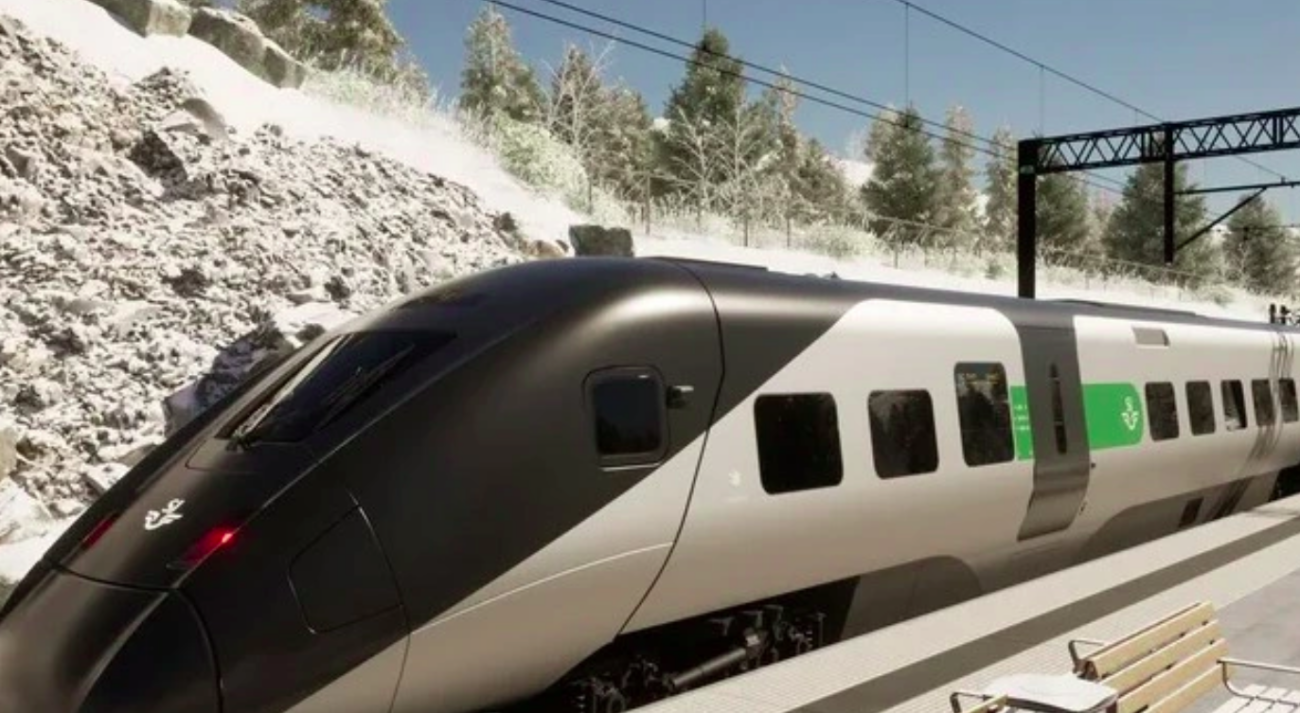





Stockholm-Gothenburg in two hours and Stockholm-Malmö in two and a half.
This is how you will be able to travel by train when the high-speed railway is completed. The multi-billion-kronor investment will relieve the current network and create new travel patterns that increase growth.
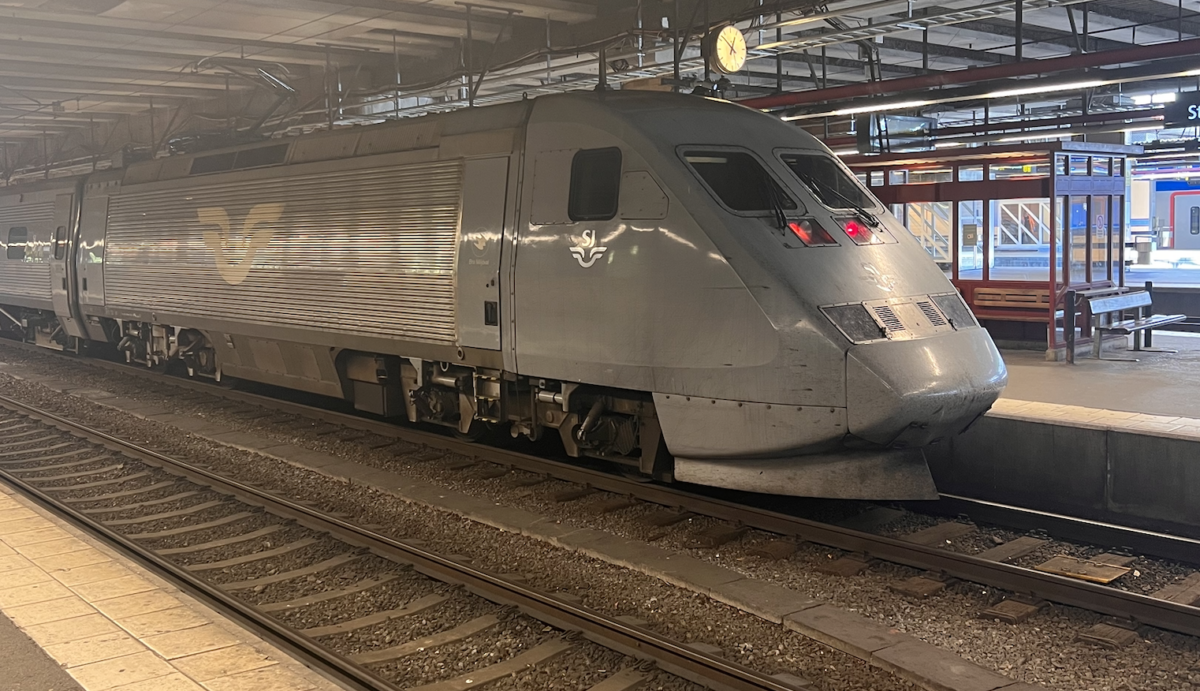
Swedish rail traffic has increased significantly over a long period of time. Many routes are so heavily loaded that punctuality and maintenance are difficult – and regional traffic has no room to move. To ensure the need for rail-based travel and transport, capacity must increase.
The state has chosen to invest in the country's first high-speed railway, which is called A New Generation of Railways. It will run between Stockholm and Gothenburg and Stockholm and Malmö, respectively, and be fully developed by 2035.
The responsibility for developing proposals for an expansion strategy and principles for financing rests with the so-called Sweden Negotiation. The assignment also includes increasing public transport, improving accessibility and increasing housing construction in the metropolitan regions; Stockholm, Gothenburg and Skåne. The goal is to enable the construction of 100,000 homes.
When the alliance parties in 2014 united behind the high-speed rail project, a stable political majority was created for the initiative, but that does not mean that the debate has quieted down.
Not least because the cost is estimated at SEK 230 billion (in 2015 prices), plus or minus SEK 30 billion. To reflect the complexity of the issue – for example, challenges, price tag and expected effects – Norconsult I Dag talks to three people with connections to high-speed rail; Peter Uneklint (program manager at the Swedish Transport Administration), Åsa Hansson (associate professor of economics at Lund University) and Marcus Horning (director of urban planning in Lund).