


Tallink Grupp today published its passenger and freight statistics for Q4 and December 2025. Compared to the fourth quarter of the previous year, the number of passengers decreased by 0.3 per cent, while the number of passengers in December increased by 0.2 per cent compared to the same month last year. The statistics also provide an overall picture of the full year 2025, where passenger volumes were in line with 2024.
During the full year 2025, Tallink Grupp transported a total of 5,531,132 passengers on all routes, corresponding to a decrease of 0.9 per cent compared to 2024. Passenger numbers increased by 1.8 per cent on the Estonia–Finland route, while they decreased by 12.5 per cent on the Sweden–Estonia route and by 2.4 per cent on the Sweden–Finland route. The larger decrease on the Sweden–Estonia route is explained by two vessels operating the route during the summer of 2024, compared to one vessel during the summer of 2025.
– 2025 was a year marked by challenges, from a generally unfavourable economic climate in the region to continued weak consumer confidence. Our results were particularly affected by developments in our largest market, Finland. Against this backdrop, the outcome for 2025 is satisfactory, although some reservations remain. Internal decisions have helped us to adapt flexibly to the.
The total number of freight units in 2025 was 245,004, which corresponds to a decrease of 19.2 percent compared to the previous year. Freight volumes decreased on all routes, with the largest declines on the Sweden–Finland routes (22.8 percent) and Estonia–Finland routes (20.0 percent). On the Sweden–Estonia route, the decrease amounted to 11.5 percent.
– Within freight transport, we can simultaneously note that the decline has gradually subsided compared to the initial months of the year. This could be a sign of recovery in our home markets, says Paavo Nõgene.
By 2026, Tallink Grupp aims to maintain its market position and increase revenue.
– Strengthening sustainability on all routes while improving profitability is an ambitious task, but we are ready for it. Although some economic recovery is expected, we must consider the full costs of purchasing CO₂ emission allowances that apply from this year. At the same time, our Shuttle vessels are expected to fully transition to the use of liquefied biogas (LBG), a more environmentally friendly fuel that helps reduce emissions costs. Our social partnerships and our continued support for culture and sports reflect our responsibility to give back to society, concludes Paavo Nõgene.
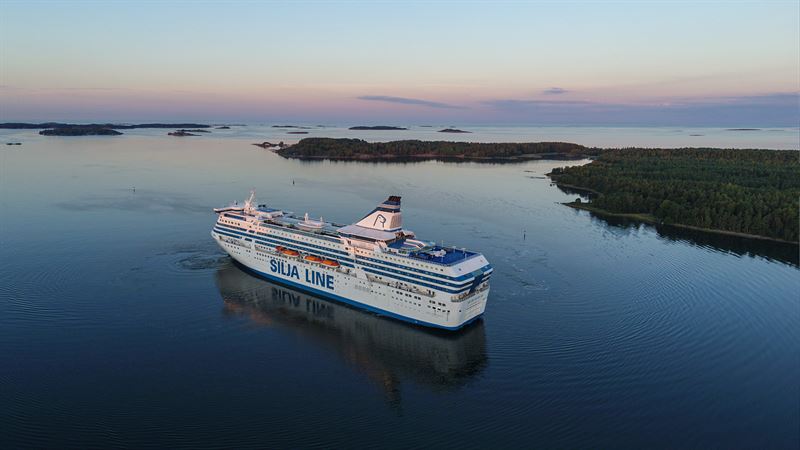
Tallink Grupp continues to provide economic contributions to sea rescue operations and social causes, while maintaining its commitment to culture and sports. During the year, several vessels are scheduled for maintenance, enabling technical upgrades and increased efficiency. In January, maintenance of the passenger ship Silja Symphony on the Sweden–Finland route begins; this year marks the ship's 35th anniversary.
According to the press release.