
In the recently completed survey we conducted among representatives of Swedish travel and meetings companies, we can conclude that the situation is not just black but completely pitch black. It is almost sad when you think back to the happy, almost carefree days of the eighties when proud travel agency signs were a natural part of the cityscape. In all the years since then, shock waves have come and gone and hit our industry. In 2008, many travel companies lost almost half of their turnover during the financial crisis. In 2010, the volcano with the name that is barely pronounceable became world famous – Eyjafjallajökull, its volcanic eruption with subsequent ash clouds paralyzed air traffic in Europe. In 2015, Seifiddine Rezgui Yacoubi went berserk with a Kalashnikov at a tourist hotel in Sousse in northern Tunisia, leaving behind 38 dead and 39 injured guests. And not to mention the horror experienced nineteen years ago after two hijacked planes were flown into the World Trade Center and one into the Pentagon. In 2019, the term "flight shame" was coined and of course the climate in all its glory, we should absolutely protect our environment but we must be able to do so in parallel with the fact that we can continue to visit and get to know other cultures, have new experiences and meet people with different backgrounds. A common denominator in all this is that, our industry, the travel industry, is always in the first place when these black swans sail in. Travel companies usually have to pay dearly. But despite all these events, the industry has survived so far and not only that, in a market with new technology and fierce competition, we have seen a development that over the years has given us an even sharper service line that increasingly and more effectively provides customers with attractive alternatives based on all kinds of needs and wishes.
Then came corona, first as a vaguely worrying gust of wind about a local outbreak far away in the Chinese city that few had even heard of before, Wuhan. Many expressed concern, but it is hard to believe that anyone could fully foresee how that gust of wind would turn into a brutal hurricane that would inexorably quickly sweep across the earth in just a few weeks. In the wake of the hurricane, we found ourselves in a situation with canceled flights, closed airports, advice against traveling outside the municipal borders, and a rising fear of infection and death. Not only did the travel industry take a beating, the entire world economy was suddenly in turmoil, the stock markets crashed in the US, in Asia, in Europe, and dark comparisons were made that we are now heading towards a recession as brutal as the one that followed Black Thursday on Wall Street on October 24, 1929.
Now, seven months later, the world economy is tending to make up for lost ground, the stock markets are back at the same sky-high levels as before corona. The latter as a result of gigantic stimulus measures from every small central bank around the world, trillion after trillion has been loaded in to get the economic system flowing again and for humanity to escape the final abyss – ragnarok. Industry after industry has begun to see a light around the corner and with the help of government support can feel confident. However, there is one industry that is not on this only train that is rolling forward – our industry, the travel and meetings industry, continues to stumble on its knees towards what now seems the only possible end – the pitfall.
The survey we conducted during the last week of September and the first of October shows that travel agencies and tour operators have so far, despite short-time work and transition support, had to say goodbye to 44 % of their colleagues and the assessment is that in just six months this figure will be over 60 %. The travel industry is to some extent special in its nature as there are a multitude of smaller companies, companies that have found a niche to attract specific target groups. In addition, there are a couple of large players with foreign interests. But even the latter, despite significantly greater financial strength, are not standing firm and one therefore does not need much imagination to understand the situation of the smaller companies – the industry is facing a bloodbath.
In the survey, nearly 70% of decision-makers at travel agencies and tour operators also assess that their financial situation will even be worse in six months than it is today. This future scenario is also confirmed by other surveys we conduct. The quarterly survey ”Nordic Business Travel Index” conducted among buyers of travel services at companies and business travelers gives an equally bleak picture. In the Swedish part of the survey for quarter three, 73% of those surveyed assess that they will travel less in twelve months’ time than today. In other words, this crisis is far from over, even if the rest of the economy is seeing a brightening.
Many of the travel companies have nevertheless been able to take advantage of the support that has been offered – subsidized short-time work, adjustment support, reduced employer contributions, rental support and extra owner contributions, but what the survey shows is that these are far from sufficient. What the industry is emphasizing is, to begin with, that support for short-time work be extended after the new year and also that the 80 % level be reinstated, but what everyone wants to see most of all is targeted support for the industry based on loss of turnover. This should be a pressing issue for the Swedish government for several reasons. Even though the industry is in the midst of a structural transformation, corona is not structural in nature and the travel industry is undoubtedly one of those hit hardest by far. The travel industry is an industry that in many cases is a first stop for young people on the labor market, a path into working life. If nothing happens in Sweden, large parts of the business risk ending up in foreign hands, partly because of large, well-capitalized players such as booking and hotels.com and partly because support for the national travel industry is provided in several of the countries in our vicinity. In addition, the situation can almost be seen as the industry being placed under a business ban as the Ministry of Foreign Affairs rather bluntly issues an advice against travel to basically ALL countries outside the EU, a devastating measure for those who make a living from people traveling.
What the industry, according to the results of the survey, is asking for in addition to purely financial support is a more nuanced policy of advising against travel, where the Ministry of Foreign Affairs, with the support of experts from our industry, draws up guidelines for where and under what conditions one can travel to different countries. The industry will definitely assist the Ministry of Foreign Affairs with its expertise to achieve this. Furthermore, they want to see a review and change of the "Package Travel Act", which in its current form puts tour operators in a foxhole where they do not get money back from the airlines but are forced to compensate the customer for cancelled trips.
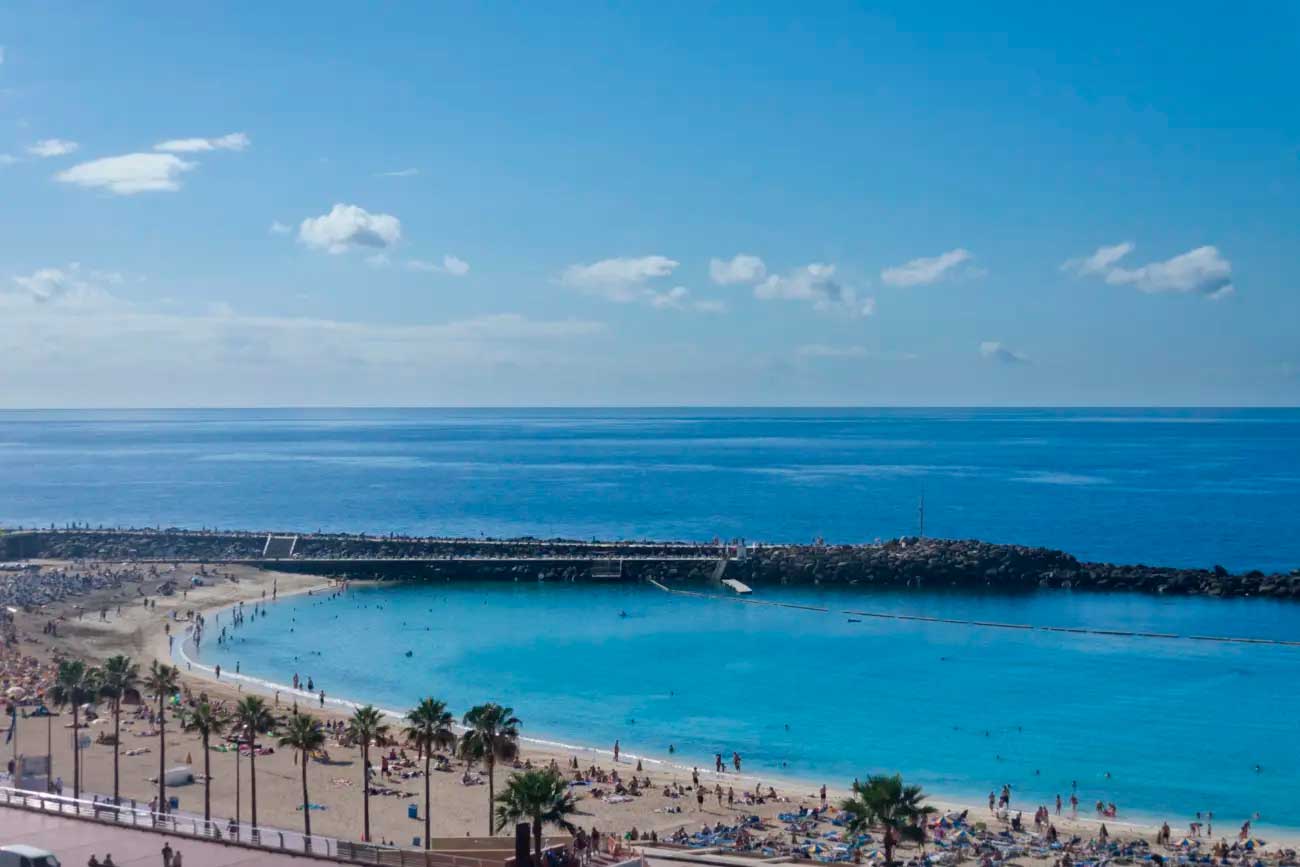
Last but not least, and of course unfeasible in an open society with freedom of the press and expression, one wishes the media could give a more nuanced picture of the situation. After all, it is not the case that sick people are lying in droves along the beach promenades of the Costa del Sol.
Text: Jan Ogner, Nordic Bench