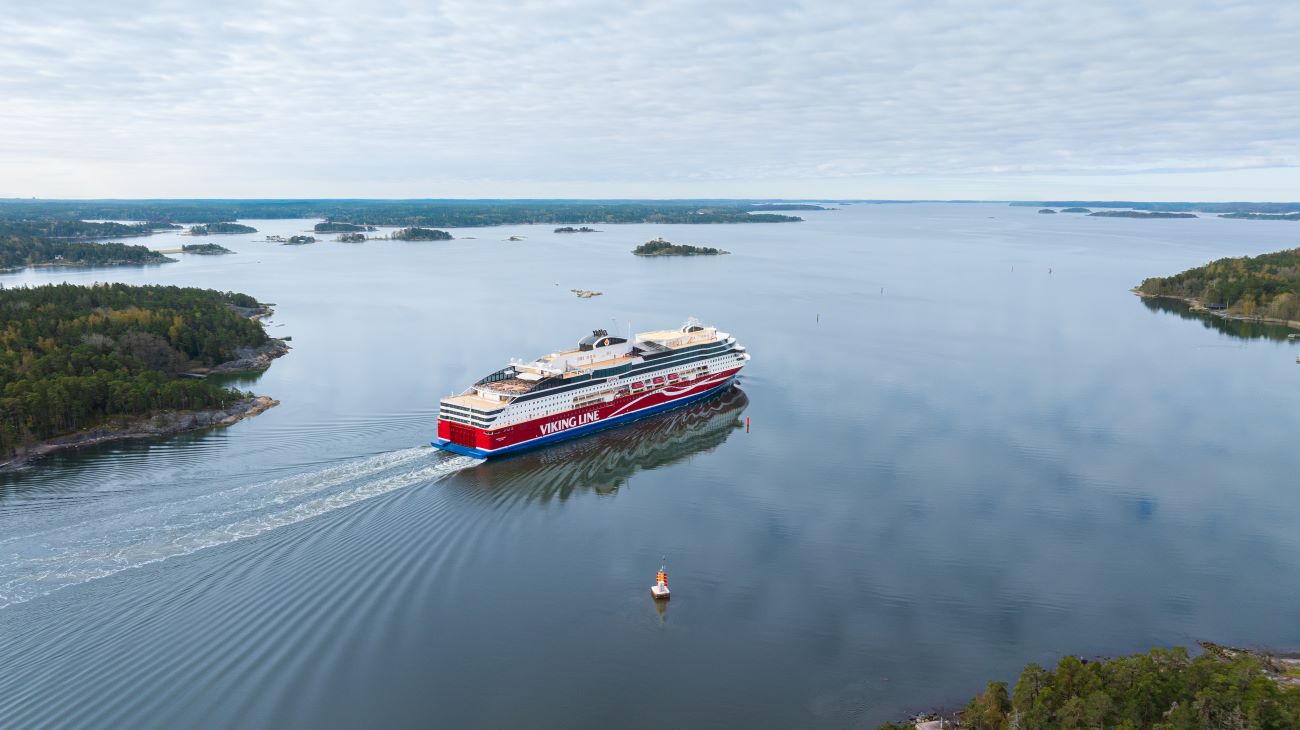

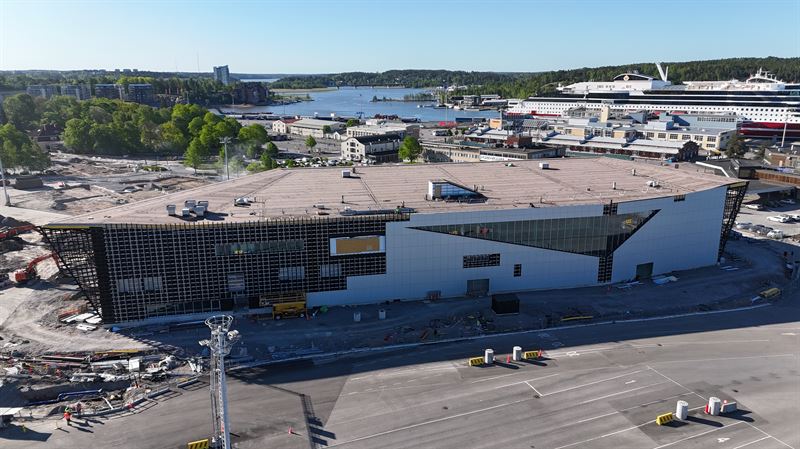
When Viking Line's vessel docks in the port of Turku, a hectic hour awaits before it sets sail again. The ongoing port investments, totalling over 200 million euros, including the construction of the shared Fregatten terminal, are streamlining operations in the port. Along with Viking Line's own extensive sustainability measures, these initiatives are also helping to make the green maritime corridor between Turku and Stockholm a reality.
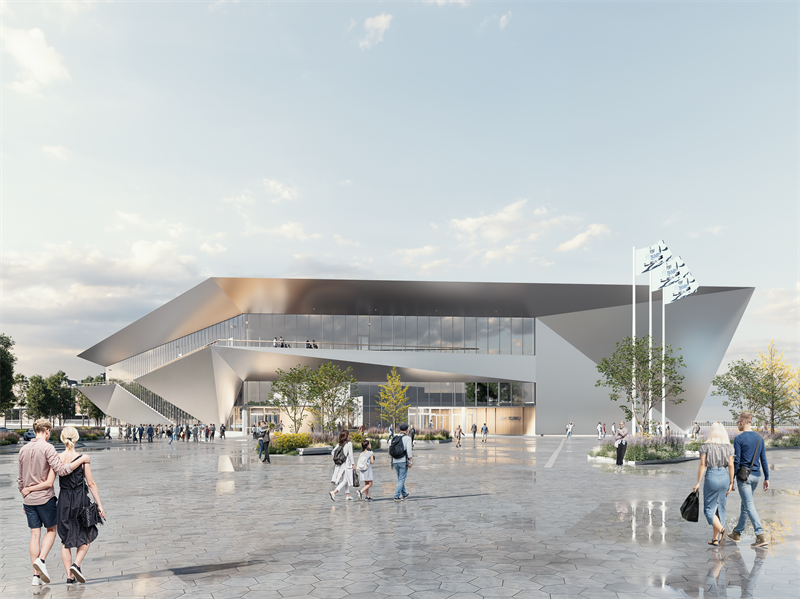
The Port of Turku and other stakeholders are investing over €200 million in the renewal of the port area. From 2028, the new Fregatten terminal will be used by up to 8,000 daily passengers boarding or disembarking from Viking Glory and Viking Grace. The number of lorries at each departure corresponds to a queue of approximately 1.5 kilometres. During the port call of just over an hour, Viking Line's vessels are refuelled, provisioned and cleaned.
”When our ships are in the Port of Turku, not a minute is wasted – and every minute saved during port stays reduces fuel consumption at sea. Therefore, smooth and efficient port operations are very important to us. As the port's largest customer, we are very pleased that it is being fundamentally renewed to meet the needs of today and the future,” says Viking Line's Communications Director. Johanna Boijer-Svahnström.
From 2028, both Viking Line and Tallink Silja will operate from the new Fregatten terminal. Leaving the current two separate terminals and vehicle areas will simplify and streamline operations in several ways. Viking Line's upcoming berth S2 will be equipped with automatic mooring systems based on vacuum technology, which will speed up the ships' arrival and departure.
New solutions are making traffic smoother
Every year, around 80,000 lorries and 230,000 cars travel to the Port of Turku. When the modernisation is complete, up to 48 parallel vehicle lanes will lead to the quay areas. Arrival at the port will be clearer thanks to the City of Turku's traffic solutions and new technology being implemented at the port.
”From now on, travellers will be able to drive into the port where their vehicle will be automatically identified and digitally directed to the correct lane. Public transport will also be improved, as the platforms for trains serving the port, the bus stop and the upcoming tram connection will be located in direct proximity to the terminal. The aim is to make arriving at the port as smooth and clear as possible for all users,” says the Technical Director of the Port of Turku. Markku Alahäme.
The green corridor to the sea will be built in cooperation with several actors
Viking Line, Port of Turku and Ports of Stockholm are working to establish a fossil-free shipping corridor between Turku and Stockholm by 2035.
Viking Line has invested a total of €450 million in the climate-smart vessels on the Turku route, Viking Glory and Viking Grace, and today bunkers with a fuel mix consisting of half biogas (bio-LNG) and half liquefied natural gas (LNG). Both fuels result in very low sulphur and particle emissions that are harmful to human health. The shipping company is currently conducting a feasibility study on the installation of batteries on the pair of vessels.
”It's no exaggeration to say that Turku is world-class when it comes to reducing shipping emissions. Thanks to our investments in the Turku ferries, we can already offer a completely fossil-free option to all our travellers and freight customers. The modernisation of the port helps the green shipping corridor take a big step forward. As traffic to the port becomes smoother and the vehicle decks can be loaded more efficiently, emissions generated both on the city's traffic routes and in the port area will also decrease,” says Johanna Boijer-Svahnström.
Several sustainable choices have also been made in the terminal building itself. The building will utilise fossil-free district heating and cooling, as well as climate-neutral electricity. The aim is to achieve a high classification level in Rakennustieto's environmental classification.