





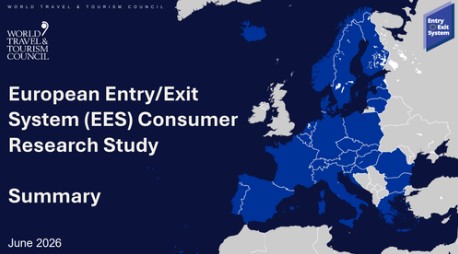
The World Travel & Tourism Council (WTTC) warns that the introduction of the EU's new Entry/Exit System (EES) could have significant consequences for Europe's tourism industry if it leads to recurring long waiting times at border controls.
A new survey of over 2,500 travellers from the UK, USA, Canada and Australia reveals that a third of respondents would be less likely to travel to the Schengen Area – or would not travel at all – if border queues regularly exceeded three hours.
WTTC's analysis indicates that as much as 41 million visitors and corresponding $45.4 billion (approximately 475 billion kronor) in tourist spending This could be at stake if the delays become a lasting problem.
Brits most sensitive to long queues
Resistance to long waiting times is greatest among British travellers. Of those surveyed, the following stated:
- 39 percent of Britons said they would avoid the Schengen Area with queues of three hours or longer.
- 33 percent of Americans.
- 33 per cent of Canadians.
- 27 per cent of Australians.
Support for the EEA – but awareness is low
Despite concerns about queues, the survey shows that passengers are generally positive about the new system.
- 65 per cent support the EEA after being given information on how the system works.
- Only 6 per cent are very opposed to biometric border controls.
- 87 per cent are willing to put up with some initial disruption if it makes future journeys smoother.
At the same time, knowledge of the new system is limited:
- 55 per cent have little or no knowledge of the EEA.
- 49 per cent do not know what requirements will be imposed on them on entry and exit.
WTTC: The focus must be on implementation
WTTC’s Managing Director and Chief Executive Officer Gloria Guevara emphasises that the EEA is an important step towards modernising Europe’s border controls and strengthening security.
“The challenge is not whether the EES should be introduced, but how governments, border authorities and the travel industry can work together to make its implementation as smooth as possible,” she says.
The WTTC’s three recommendations
To minimise the risk of disruption, the WTTC urges EU Member States to:
- Speed up the introduction of digital pre-registration via the Travel to Europe app.
- Carry out information campaigns in key markets such as the UK, the US, Canada and Australia.
- Ensuring operational readiness with adequate staffing, functioning equipment, and efficient processes at border crossings.
Important question for European tourism
EES is one of the biggest changes to Europe's border system in decades and will record biometric data for travellers from outside the EU and Schengen.
The WTTC's conclusion is that travellers largely welcome more modern border controls, but that success will be determined by how well the implementation is managed. If long queues become commonplace, Europe risks losing market share to other destinations where travel is perceived as easier and smoother.