




At the same time, a Danish survey shows that those who choose to drive cause up to three times as much carbon dioxide emissions as those who choose to fly.
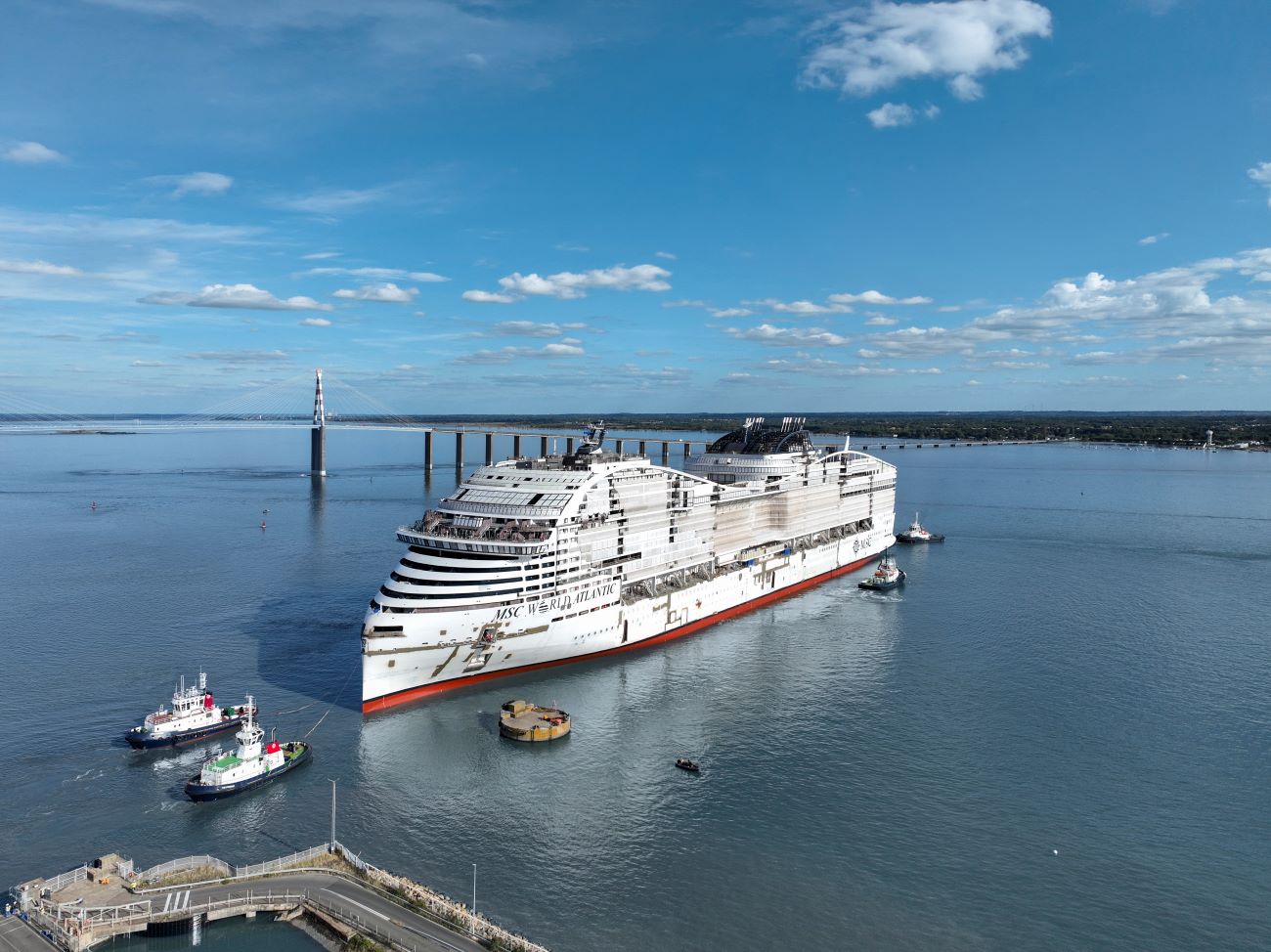
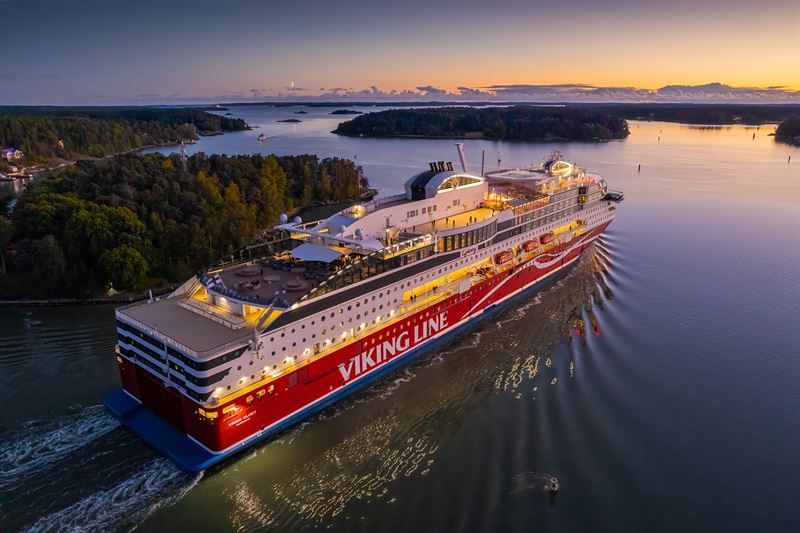
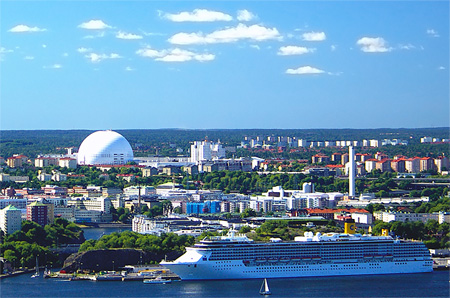
Several of the major travel companies are advertising cruises as floating amusement parks – but beneath the surface, a different picture is hidden, according to a new survey.
A Danish consultancy for marine operations, HOK Marineconsult, has produced figures showing that a cruise ship causes up to three times as much carbon dioxide emissions per passenger and kilometre as an aeroplane. The results are based on average emissions from 157 cruise ships of varying sizes.
According to Hans Otto Kristensen, who is behind the measurement, the figures are based on oil consumption and speeds that the shipping companies themselves reported up until 2014, but which he considers to be representative even today.
”I was myself surprised that the levels were so high. Cruise ships have almost lived their own lives and few have really cared about their carbon dioxide emissions. It's an old problem, but it's only recently that the industry has started to address it,” Kristensen tells TT.
He says that the emissions have to do with the actual transport on water. It’s not possible ”to move a luxury hotel out at sea without using large resources,” he points out.
”It sounds banal, but that is fundamentally what causes the high energy consumption. It is also why a faster vessel consumes more energy per unit of transport.”
Cruises are also becoming increasingly popular.
”It’s a fantastic development and a fantastic product. As I see it, cruising is climate-smart because you have many people on the same vessel, and we in the Baltic Sea region are one step ahead in becoming even more environmentally friendly,” says Stefan Scheja, cruise manager at Ports of Stockholm.
In the Baltic Sea region, ship fuel can contain at most 0.1% sulphur by weight. Internationally, the limit is 3.5%, which is to be lowered to 0.5% in two years.
But the regulations are far from always followed, according to Johan Mellqvist, associate professor of Optical Remote Sensing at Chalmers University of Technology. He states that a ship that cheats on emissions can save millions of kronor per voyage. His research shows that approximately one in ten ships in international waters are cheating on the requirements.
”Even if you discount sulphur dioxide, huge amounts of energy are consumed. Then there are local consequences. Just look at Venice, for example, which many cruises visit and which has ruined the air in half the city. These are big problems we're talking about,” says Johan Mellqvist.
However, experts do not agree on the environmental impact of cruise ships. Cruises differ from other modes of transport in that the journey itself is the purpose — whereas a flight is usually followed by a holiday during which the traveller may have other impacts on the environment.
”When you travel on a large cruise ship, it's quite a few tonnes that need to transport one person. If such a ship is half empty, the environmental impact is significant. I believe people are generally less aware of the environmental impact of cruises as there isn't enough statistical data available at present,” says Jonas Allerup, climate analyst at the Swedish Environmental Protection Agency.
Hans Otto Kristensen has worked with ships for almost 40 years. He stresses that he doesn't want to tarnish the cruise industry as such, and that there are bigger environmental polluters.
”It should be noted that cruise ship emissions account for only a small proportion of total carbon dioxide emissions at sea. But I want the climate debate to be based on facts. And I have to say that emissions from cruise ships are high, just as emissions from aeroplanes are high,” he says.
Source: TT