
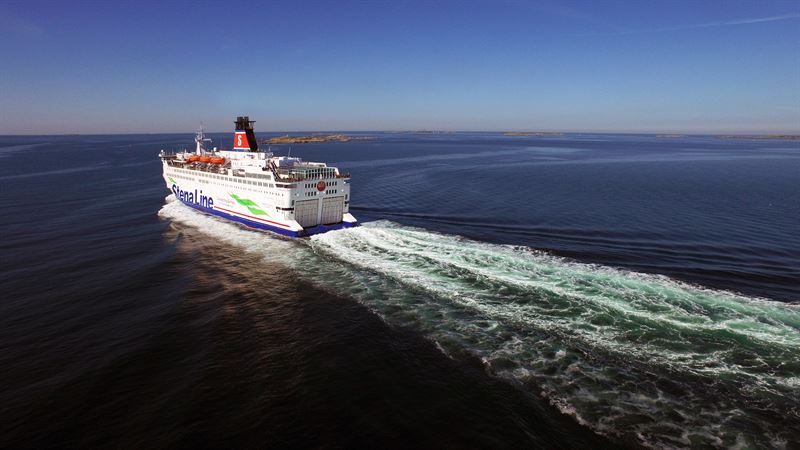
The Gothenburg-based shipping company Stena Line has secured continued train ferry traffic between Sweden and Germany through an agreement with the Swedish Transport Administration.
”The route has for many years been an important part of exports and imports between one of our most important trading partners, Germany,” comments Elisabeth Lönne, Commercial Manager at Stena Line.
The agreement means that traffic on the Trelleborg–Rostock route can continue until 31 December 2031, according to a press release.
This is stated to be Sweden's only existing regular train ferry line. No financial details of the agreement are apparent.
”Stena Line is very pleased that our assignment on the Trelleborg–Rostock route will now have the conditions to continue. We view our role in the transport system in general, and the vital rail link to the continent that our ferries represent in particular, with pride and great seriousness,” comments Elisabeth Lönne.
According to the Swedish Transport Administration General Director Roberto Maiorana stated that train ferries have drastically reduced over the past 20 years due to weak economic profitability.
”Since the Öresund Bridge opened, the majority of freight train transport to and from the continent now goes across Öresund rather than by ferry. However, the ferries are still needed, which is why the state is now providing funding through Trafikverket to secure continued services,” says Roberto Maiorana in the press release.
Since 1998, Stena Line has operated the Trelleborg–Rostock route with two train ferries, M/S Skåne and M/S Mecklenburg Vorpommern.
February announced Stena Line is to close the ferry route between Halmstad and Grenå in Denmark due to a lack of profitability. Stena Line's Swedish ferry network comprises six ferry routes and 12 vessels: Gothenburg–Fredrikshamn, Gothenburg–Kiel, Trelleborg–Rostock, Karlskrona–Gdynia, Nynäshamn–Ventspils, and as of February 2026, Umeå–Vasa through the recently acquired Wasaline.
Stena Line has 8,750 employees and an annual turnover of approximately 20.2 billion Swedish kronor.
Source: DI.SE