
Air travel at Swedavia's ten airports continues to increase during the month of July. During July, just over 3.2 million passengers flew via one of Swedavia's airports. This is 1 percent higher than in July last year. At Arlanda, passenger levels for international traffic are basically back to pre-pandemic levels. During July, international travel at Arlanda increased by 8 percent and at Landvetter by 9 percent. International travel increased overall by 6 percent, while domestic travel had a weaker development and decreased by 21 percent at Swedavia's airports.
– Despite the recession and other uncertainty factors in our world, demand for international travel at our airports remains strong. At Arlanda, the number of international travelers increased by 8 percent compared to last year, which means that international travel at the airport is now basically back to pre-pandemic levels. Domestic travel continued to decline in July, partly due to lower demand, says Jonas Abrahamsson, Swedavia's President and CEO.
For a couple of weeks in July, Bromma Stockholm Airport and Kiruna Airport were temporarily closed due to planned runway work, which also had a somewhat negative impact on domestic travel.
During the month, Japan's largest airline, ANA, announced that the airline will establish itself at Stockholm Arlanda Airport with a direct route to Tokyo Haneda, Japan's largest airport, starting on January 31, 2025. ANA's venture will be an important link connecting the Swedish capital with one of the most important markets in Asia.
The airlines at Swedavia's airports invested heavily in strengthening accessibility to Sweden during the summer season. In this year's summer traffic program, a total of 25 new routes were launched, of which 17 are new routes via Stockholm Arlanda Airport and 8 are new routes via Gothenburg Landvetter Airport. At Malmö Airport, Åre Östersund Airport, Umeå Airport and Luleå Airport, charter operations will be added during the summer.
Swedavia's top 10 largest countries (regular, excluding Sweden):
- Germany
- Spain
- UK
- Norway
- Finland
- Poland
- Denmark
- France
- Italy
- Turkey
During July, just over 3.2 million passengers travelled via Swedavia. The result in July is 1 percent higher compared to July last year. International travel increased by 6 percent to just over 2.7 million passengers, while domestic travel decreased by 21 percent to just over 450,000 passengers. Total travel at Swedavia's airports during the month of July is at 86 percent of pre-pandemic levels, 2019.
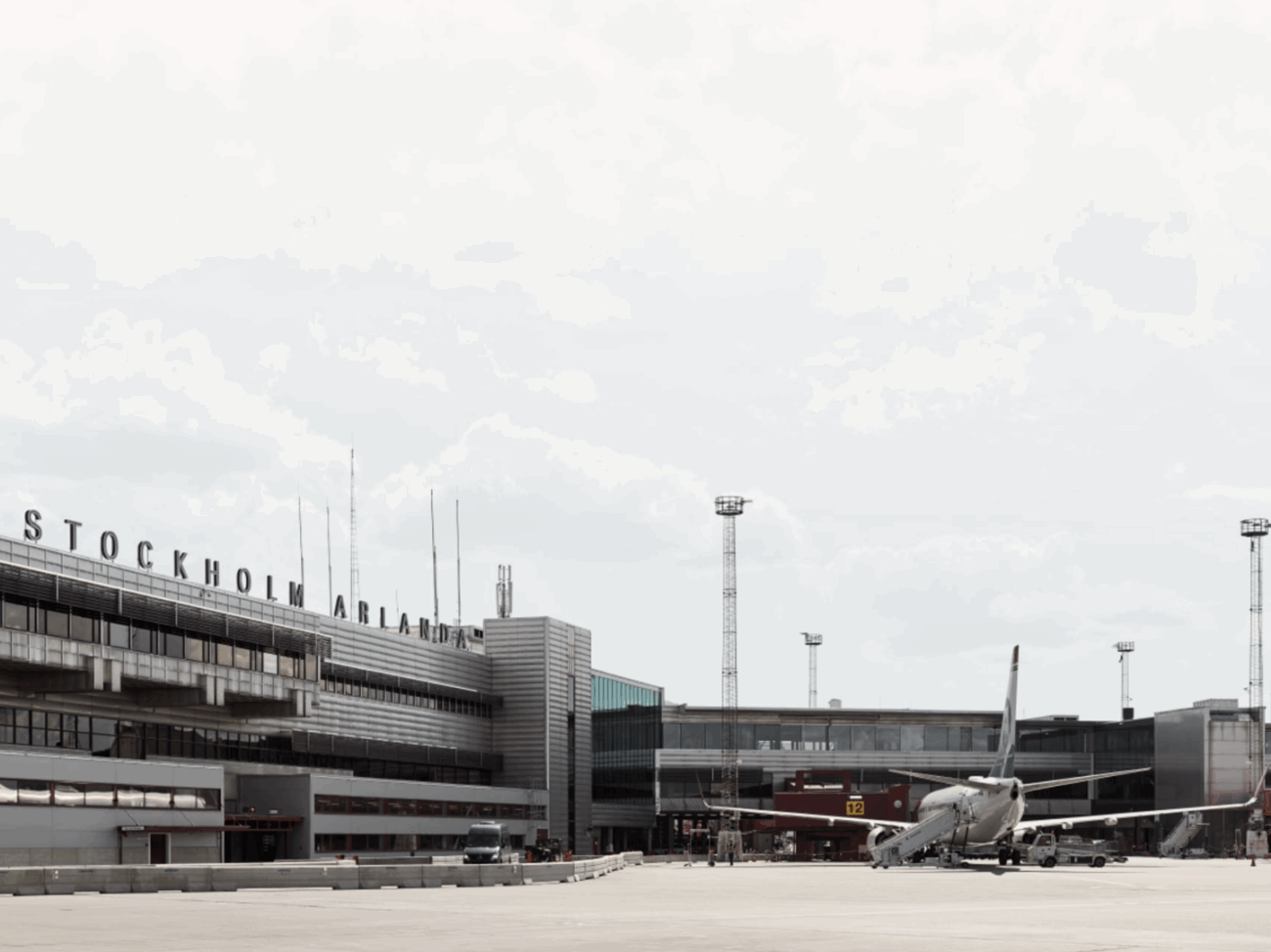
Sweden's largest airport, Stockholm Arlanda Airport, had a total of just over 2.3 million passengers in July. This is an increase of 5 percent compared to July 2023. International travel increased by 8 percent to just over 2.1 million passengers, while domestic travel decreased by 16 percent to just over 198,000 passengers. Passenger levels at Arlanda in July are overall at 94 percent of pre-pandemic levels.
Gothenburg Landvetter Airport had a total of just over 601,000 passengers in July, which is 6 percent more passengers compared to July last year. International travel increased by 9 percent to just over 569,000 passengers, while domestic travel decreased by 33 percent to just over 31,000 passengers. Passenger levels at Landvetter in July are at 88 percent of pre-pandemic levels.
Other Swedavia airports had a varied development during the month of July. Ronneby Airport, followed by Umeå Airport had the best passenger development in July compared to July 2023. Luleå Airport, followed by Umeå Airport had the best passenger development in July compared to pre-pandemic levels. Kiruna Airport, followed by Bromma Stockholm Airport had the weakest development in July compared to July last year. Both Bromma and Kiruna were temporarily closed for a period in July due to planned runway works.
Traffic development in July – number of passengers: